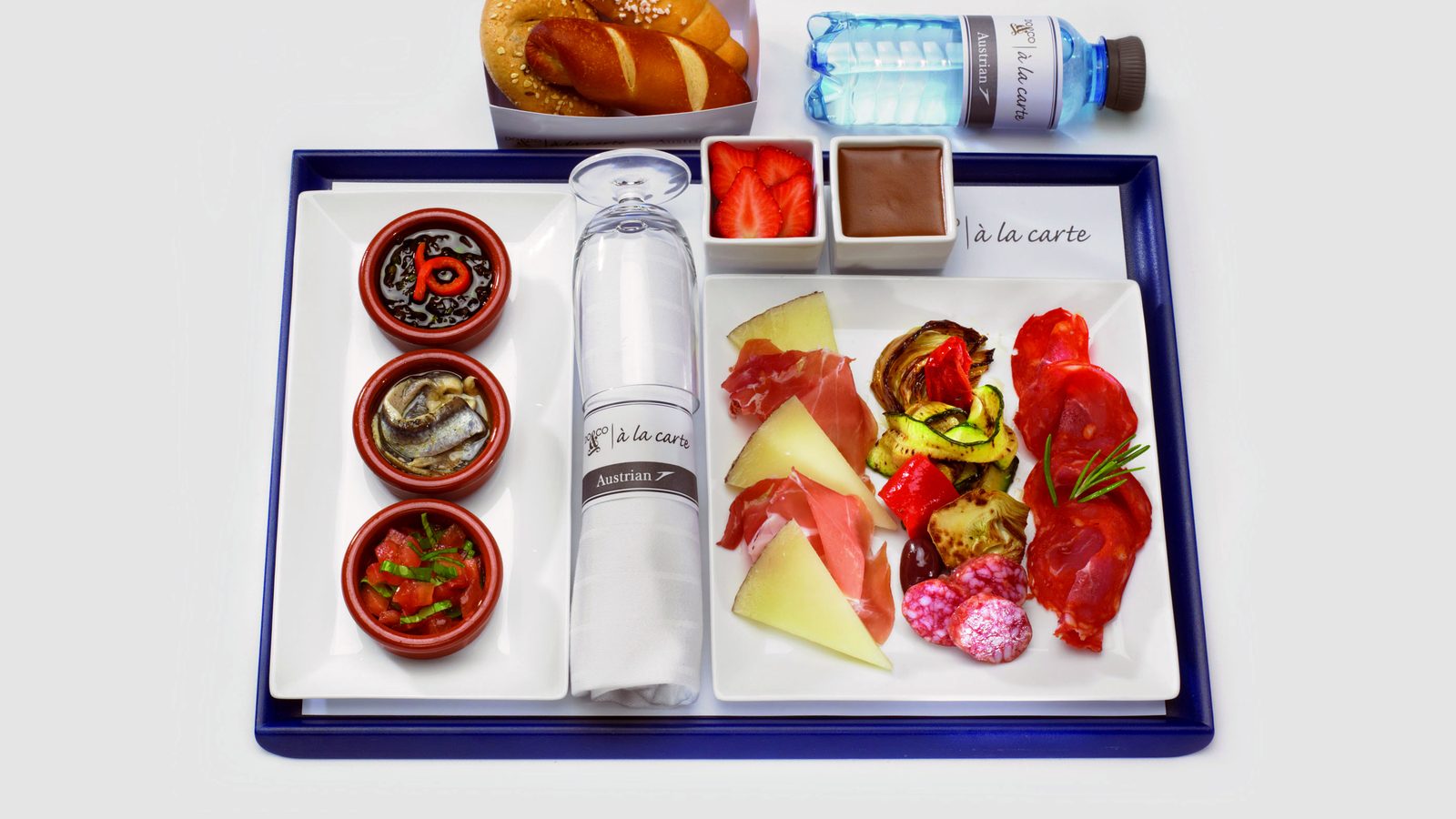
Why does a Business Class ticket cost 5–10 times more than Economy? Part of it is the lie-flat seat. Part of it is the lounge. But a surprisingly large slice of that premium goes into something most passengers never think about: the inflight food — and the gap between cabins is far wider than you might expect. We break down 19 concrete differences that explain why Business class dining is genuinely called fine dining at 35,000 feet.
Most of us have done it — walking through the Business class cabin on the way to your seat, catching a glimpse of a flight attendant pouring Champagne into a crystal flute, white linen already set, a proper china plate waiting. You tell yourself, "one day." Then you check the price and keep walking.
We felt the same way — until a long-haul flight from Bangkok to London finally landed us in Business. That trip made the price difference make sense. Here are the 19 differences that turn Business class dining into genuine fine dining, not just a slightly better version of the tray in front of you.
1–5: Tableware & Cutlery
Economy serves everything on a plastic tray sealed with foil — plastic fork, plastic knife, plastic plate. It works, and no one is complaining about a mid-haul snack, but the experience feels like a school lunch.
Business arrives with Royal Doulton or Wedgwood china, heavy stainless steel cutlery (some carriers go silver-plated), a white linen tablecloth, and a cloth napkin. The moment the table is laid, the cabin feels like a restaurant.
6–10: The Main Meal
Economy offers two menu choices — typically chicken, fish, or vegetarian — delivered on a single tray with a plastic-wrapped bread roll, a foil butter pat, and a small dessert cup. Everything arrives at once; there is no course structure.
Business offers 5–7 choices plus à la carte options — appetizer, soup, salad, main, cheese platter, dessert, and fresh fruit, all served course by course at whatever pace suits you. Bread comes warm, in three or four varieties; butter is fresh, salted or unsalted on request.
11–15: Drinks
Economy gets still water, juice, and instant coffee. Business gets Champagne at the level of Krug or Dom Pérignon, served as long as you want it, alongside five to eight wine options curated to pair with the menu. Coffee comes from a real espresso machine. Tea selections run to ten or more varieties. Sparkling water arrives in branded bottles — Evian, Voss — poured into Riedel crystal.
This is arguably where the gap is most visible. A single bottle of Krug Champagne retails for roughly $200–300. Business class passengers can work through several glasses over a long-haul flight, no charge.
16–19: Service Experience
Economy service moves fast by design — a trolley passes down the aisle, meals are placed, and that is usually the end of it. Miss the round and you may wait a long while for anything else.
Business operates on demand. A flight attendant comes to you, walks through the menu, makes wine recommendations, and returns with each course individually — the same choreography as a good restaurant on the ground. The dining surface is a proper table with a linen cloth, not a fold-out tray barely wide enough for a plate.
Between meal services, Business cabin passengers have access to a 24-hour self-serve bar — snacks, fresh fruit, tea, coffee, soft drinks, and light bites available at any hour without asking.
Celebrity Chef Menus
Major carriers now partner with renowned chefs to design their Business class menus. British Airways works with Heston Blumenthal. Emirates brings in Wolfgang Puck and other culinary names. Singapore Airlines convenes a panel of Michelin-starred chefs from around the world. Qatar Airways has collaborated with Tom Aikens and Vineet Bhatia.
The result is that Business class food is not just "better airline food" — it is a collection of signature dishes developed by chefs who hold Michelin stars on the ground.
Caviar: The Ultimate Luxury Marker
Emirates serves Royal Beluga Caviar as a standard course in First and Business. Singapore Airlines Suites pairs caviar with Dom Pérignon Champagne. Qatar Airways Qsuite includes caviar canapés before the main course arrives. This is the category where no amount of Economy meal upgrades can close the gap — caviar service simply does not exist outside of premium cabins.
Is Business Class Worth It?
Worth it if:
- You are flying 8+ hours — a lie-flat seat lets you actually sleep and arrive functional
- It is a meaningful trip — a honeymoon, a milestone birthday, a once-in-a-while treat
- You have miles saved up — award upgrades cost far less than cash fares
- You are travelling for work — productivity in the air matters
Probably not worth it if:
- The flight is 2–4 hours — the food gap matters far less on short sectors
- You are paying full published fare — wait for a promotional or award rate instead
Bottom Line — Business vs Economy Food
The difference is not marginal. From tableware and ingredients to menu depth, Champagne, and caviar, Business class dining is genuinely a different world — a full fine dining experience that happens to take place at 35,000 feet.
Not ready to spend the full fare? Start with Premium Economy for a real step up, or save your miles for a Business class upgrade. Once you have experienced the difference, going back to a sealed tray feels like a different era of travel.
Cabin Class Comparison
| Feature | Economy | Premium | Business |
|---|---|---|---|
| Tableware | Plastic / foil tray | Ceramic plate | Royal Doulton / Wedgwood china |
| Cutlery | Plastic | Stainless steel | Stainless steel / silver-plated |
| Menu choices | 2 options | 3–4 options | 5–7 options + à la carte |
| Meal service | 1–2 meals (sealed tray) | 2–3 meals | Full 3–5 course dining |
| Bread | Plastic-wrapped roll | Fresh roll | Choice of 3–4 types, warmed fresh |
| Butter | Foil pack | Small dish | Fresh butter, salted or unsalted |
| Dessert | Pre-made cake / cookie | Fresh cake | Cheese platter + chef's dessert |
| Fruit | Fruit salad cup | Fresh fruit | Artfully arranged fruit platter |
| Water | Still water, bottle or cup | Mineral water | Evian / Voss + sparkling water |
| Coffee / Tea | Instant | Drip / brewed | Espresso machine + 10+ tea selections |
| Wine | None / paid upgrade | House wine | Champagne + 5–8 wine choices |
| Champagne | None | Entry-level | Krug / Dom Pérignon / Veuve Clicquot |
| Service style | Trolley, quick pass | Tray service | Course-by-course, dine at your leisure |
| Meal timing | One fixed service | One service + | On-demand — order whenever you like |
| Signature menu | Pre-order required | Pre-order required | Celebrity chef signature dishes |
| Caviar | Not available | Not available | Available on select airlines (EK, SQ) |
| Dining surface | Fold-out tray table | Larger tray + tablecloth | Wide table + white linen tablecloth |
| Glassware | Plastic cup | Glass tumbler | Crystal glassware (Riedel) |
| Mid-flight snacks | 1 round | 2 rounds | 24-hour self-serve snack bar |
Pros & Cons
- Business class offers a 3–5 course meal designed by celebrity chefs (Heston Blumenthal for BA, Wolfgang Puck for Emirates)
- Ceramic plates, white linen, and Riedel crystal glassware — the full fine dining atmosphere
- Premium Champagne (Krug, Dom Pérignon) served without limit throughout the flight
- On-demand dining — order any dish at any time that suits you
- 24-hour self-serve snack bar during the flight
- Caviar on select airlines, plus chef's special dessert creations
- Ticket price is 5–10x the cost of an Economy seat
- On short flights (2–3 hours) the food difference is far less pronounced
- Some airlines look impressive in photos but the food falls flat in reality
- Post-COVID cost-cutting has trimmed quality on several carriers
Booking Tips
- Singapore Airlines "Book the Cook" — Business class passengers can pre-order dishes like Lobster Thermidor or Beef Wellington up to 24 hours before departure. Widely considered the gold standard of inflight dining.
- Emirates "Dine On Demand" — order whenever you want, no fixed meal times. Perfect if you prefer to sleep first and eat later.
- Economy passengers can request special meals too — register a special meal (vegetarian, low-sodium, etc.) 24–48 hours before your flight. You'll be served first, and the quality is often better than the standard option.
- Upgrade with miles — using frequent flyer miles to upgrade from Economy to Business typically costs 50–70% less than buying a Business ticket outright.
- Try Premium Economy first — if a full Business ticket is out of reach, Premium Economy at 1.5–2x the Economy fare delivers a noticeably better meal experience without the full premium.