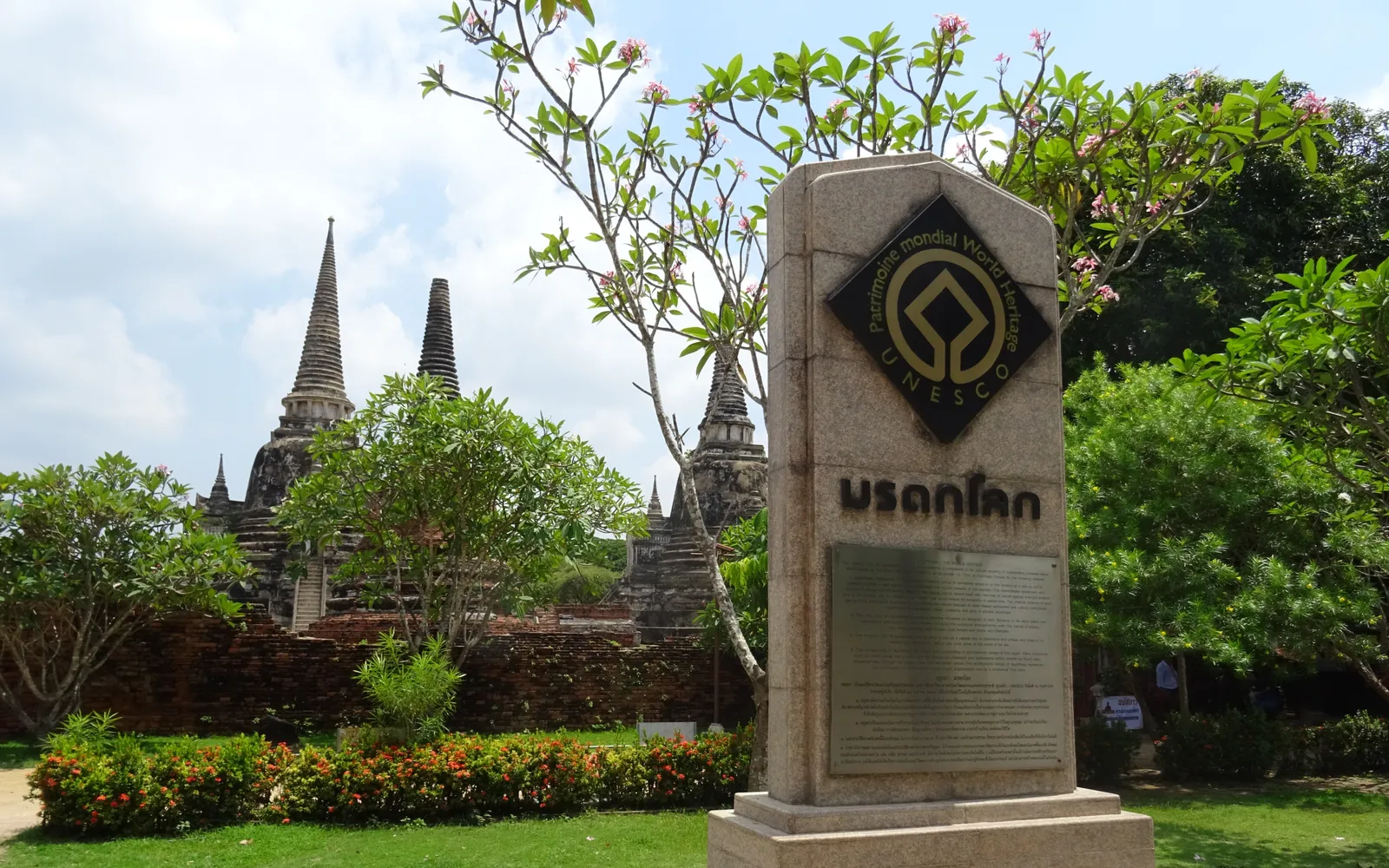
From the 14th century onward, Ayutthaya was one of Southeast Asia's great international trading hubs — Chinese, Indian, Middle Eastern, and European merchants all passed through, each leaving traces in the local food culture. That history is still alive in every bowl and plate. Boat noodles trace back to Chinese traders selling from canal boats during the kingdom's golden age; Roti Sai Mai is a uniquely Ayutthayan Muslim heritage sweet with no real equivalent anywhere else in the world.
 #1
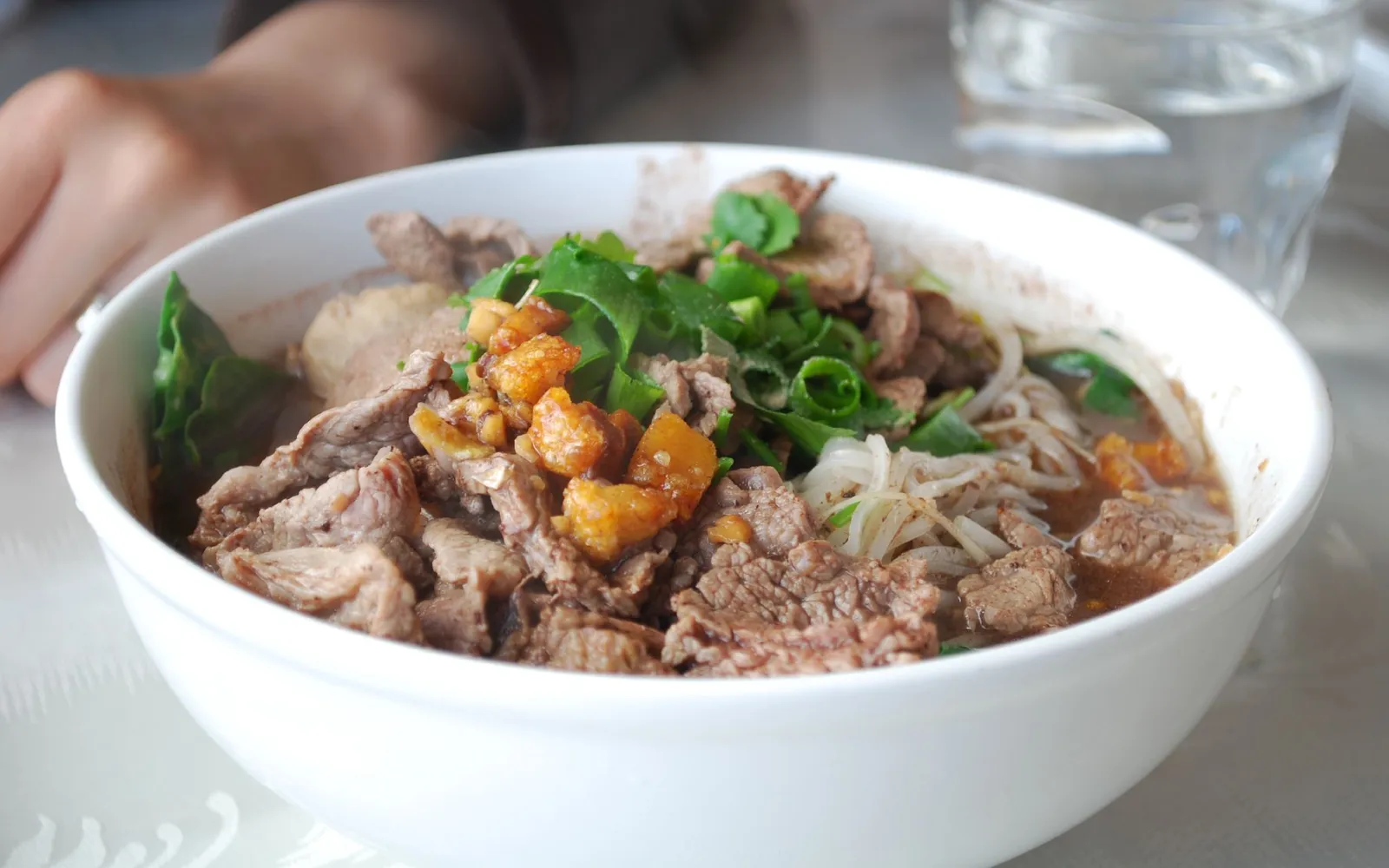
#1 Boat Noodles · Boat Noodles
Boat noodles are Ayutthaya's most famous dish, tracing directly back to Chinese traders who sold from boats on the canals during the kingdom's height. The broth is dark and deeply spiced — simmered with aromatics plus pork or beef blood — and served in small bowls by tradition, sized for easy eating on a rocking boat. Ordering five to ten bowls in a single sitting is completely normal.
- Order both pork and beef versions to compare — the pork broth is milder, the beef richer and more intense.
- Choose thin or wide rice noodles to your preference; some stalls also offer vermicelli.
- Each bowl runs 15–20 baht (under $1). Most people eat 5–10 bowls per meal.
 #2
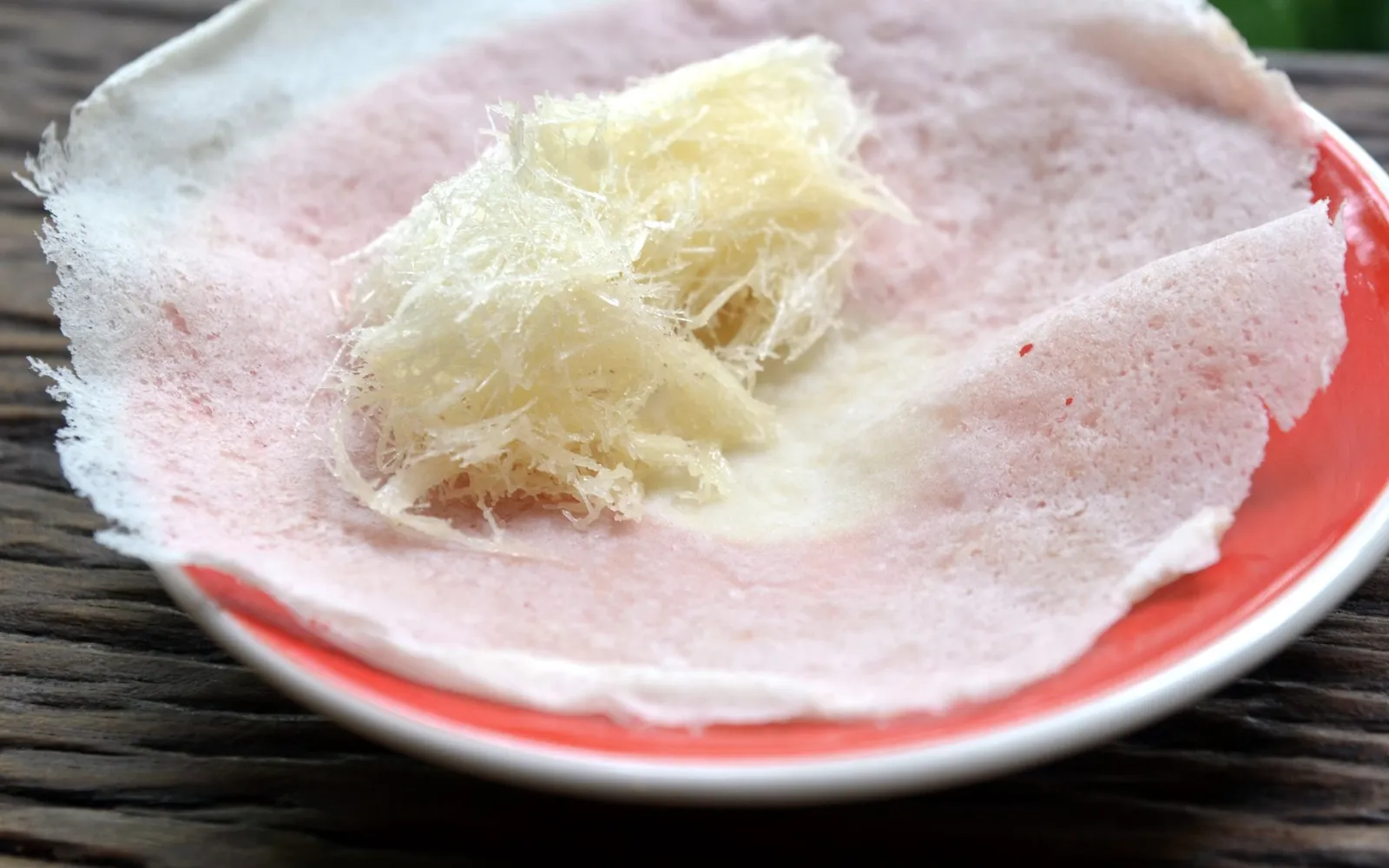
#2 Roti Sai Mai · Roti Sai Mai
Roti Sai Mai is a sweet with over 200 years of history in Ayutthaya's Muslim community. Thin, soft roti sheets are wrapped around coconut or palmyra sugar spun into gossamer threads — the sai mai — which come in white, pink, green, and yellow, each colored with natural herbs and flowers. The sugar threads dissolve the moment they hit your tongue.
- The most popular shops open early and can sell out before noon, especially on weekends.
- Pre-packaged gift boxes are available at reasonable prices if you want to bring some home.
- Eat it fresh at the stall — the texture is noticeably better than anything you carry away.
 #3
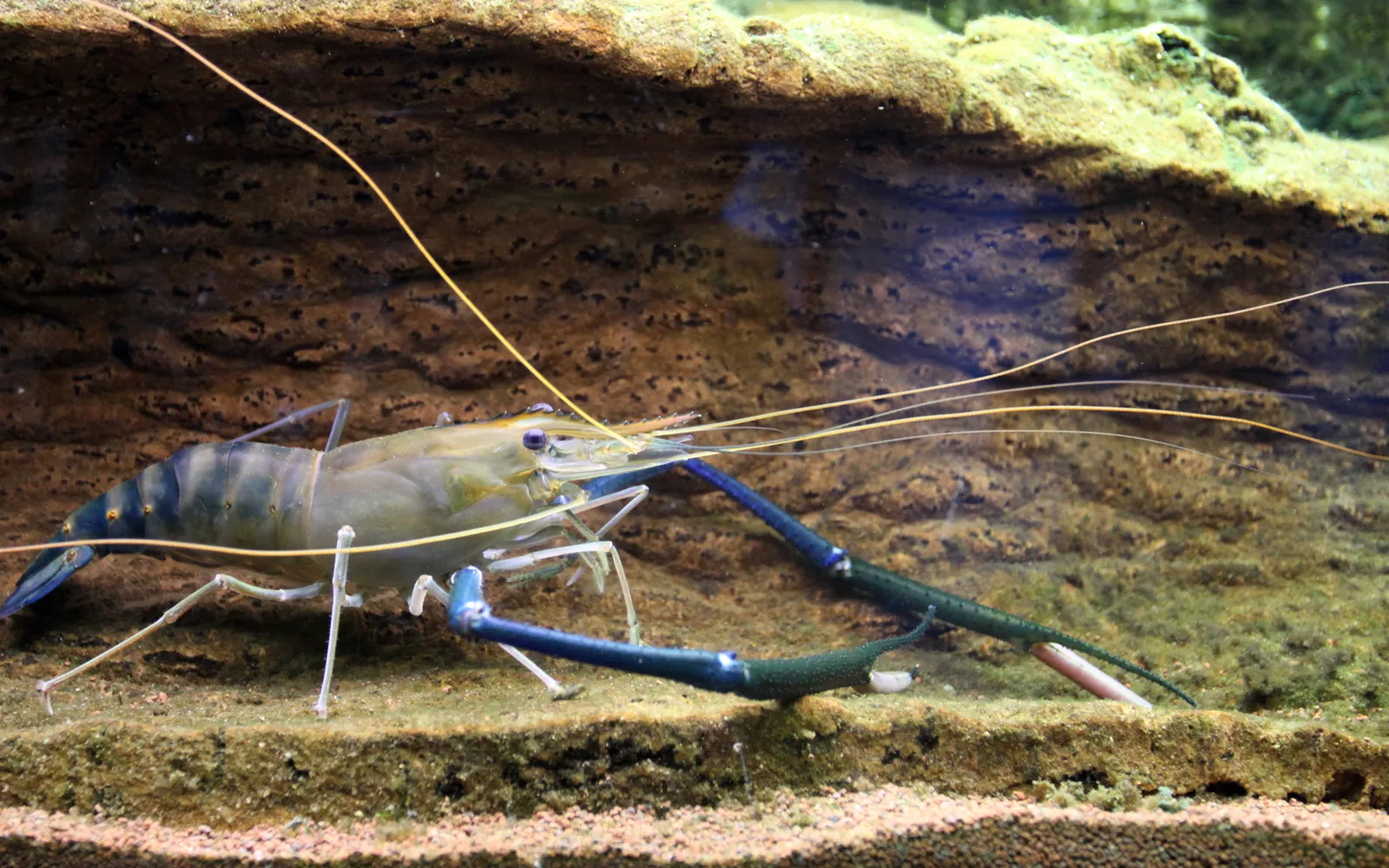
#3 Giant River Prawn (Kung Phao) · Giant River Prawn (Kung Phao)
Ayutthaya is the best place in Thailand to eat giant river prawns (<em>Macrobrachium rosenbergii</em>), farmed in ponds along the Chao Phraya. These things are enormous — forearm length is not unusual — and charcoal-grilled until the shell crisps while the meat inside stays tender and juicy. The yellow fat in the head is the richest, most intensely flavored part. This is Ayutthaya's luxury meal.
- Prices run 1,000–1,500 baht per prawn depending on size. Confirm the price before ordering.
- Ask specifically for charcoal grilling rather than gas — the flavor difference is significant.
- Eat with hot jasmine rice and the spicy-sour seafood dipping sauce that comes alongside.
 #4
#4 Kanom Jeen Nam Ya · Kanom Jeen Nam Ya
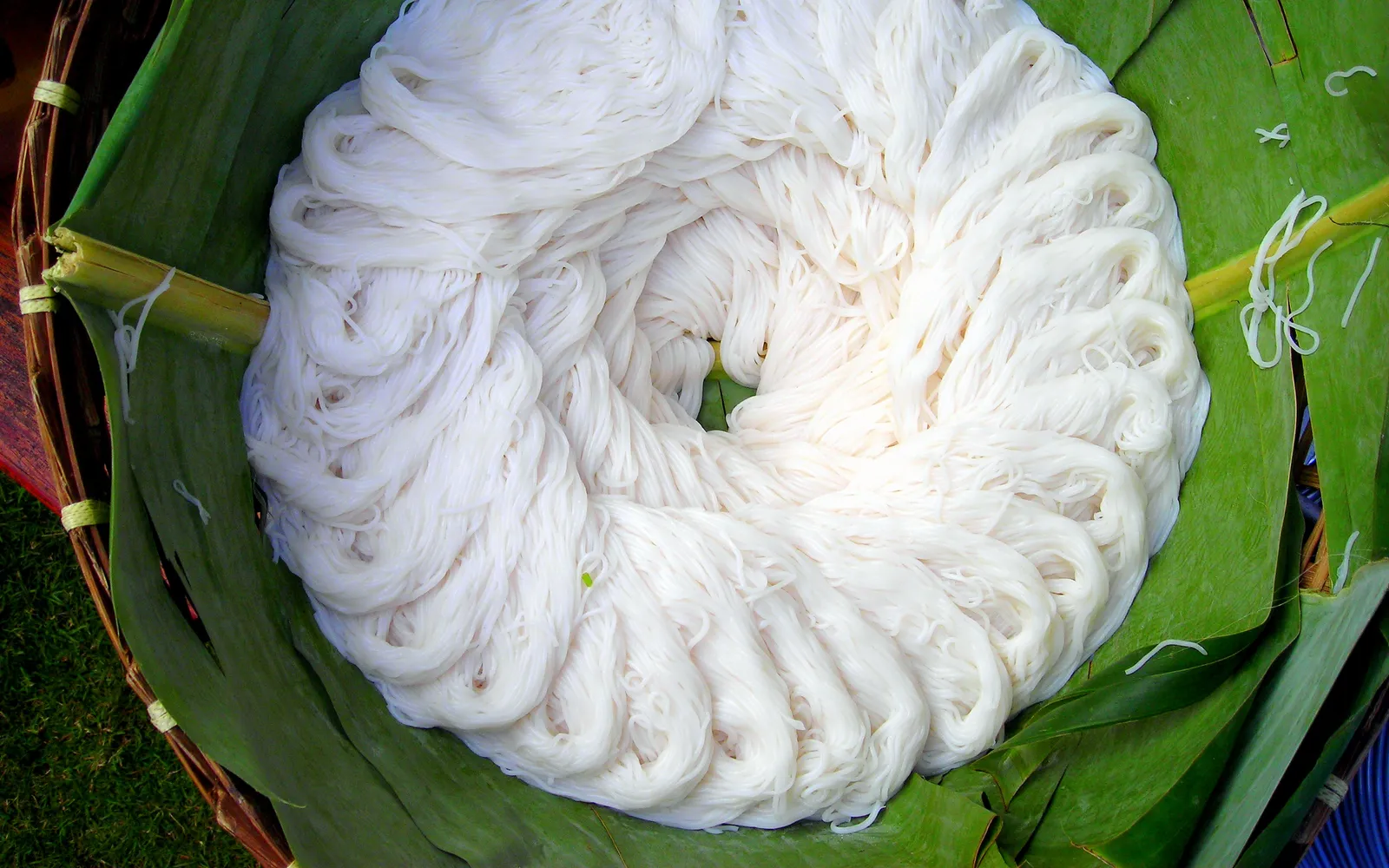
Ayutthaya's Kanom Jeen Nam Ya stands apart from the Bangkok version in one key way: the fish curry sauce is noticeably thicker and more concentrated. It starts with fresh snakehead or featherback fish, ground fine, then blended with coconut milk, shrimp paste, and a traditional curry paste recipe. The noodles are made fresh every morning, and the dish comes with a wide spread of fresh vegetables on the side. It has been the default breakfast in Ayutthaya for generations.
- Morning markets open from 5 am; the noodles sell out fast — arrive before 8 am.
- Most shops let you top up the sauce for free as many times as you like.
- Priced at 30–50 baht a plate. Filling and remarkably cheap.
 #5
#5 Khanom Bueang · Khanom Bueang
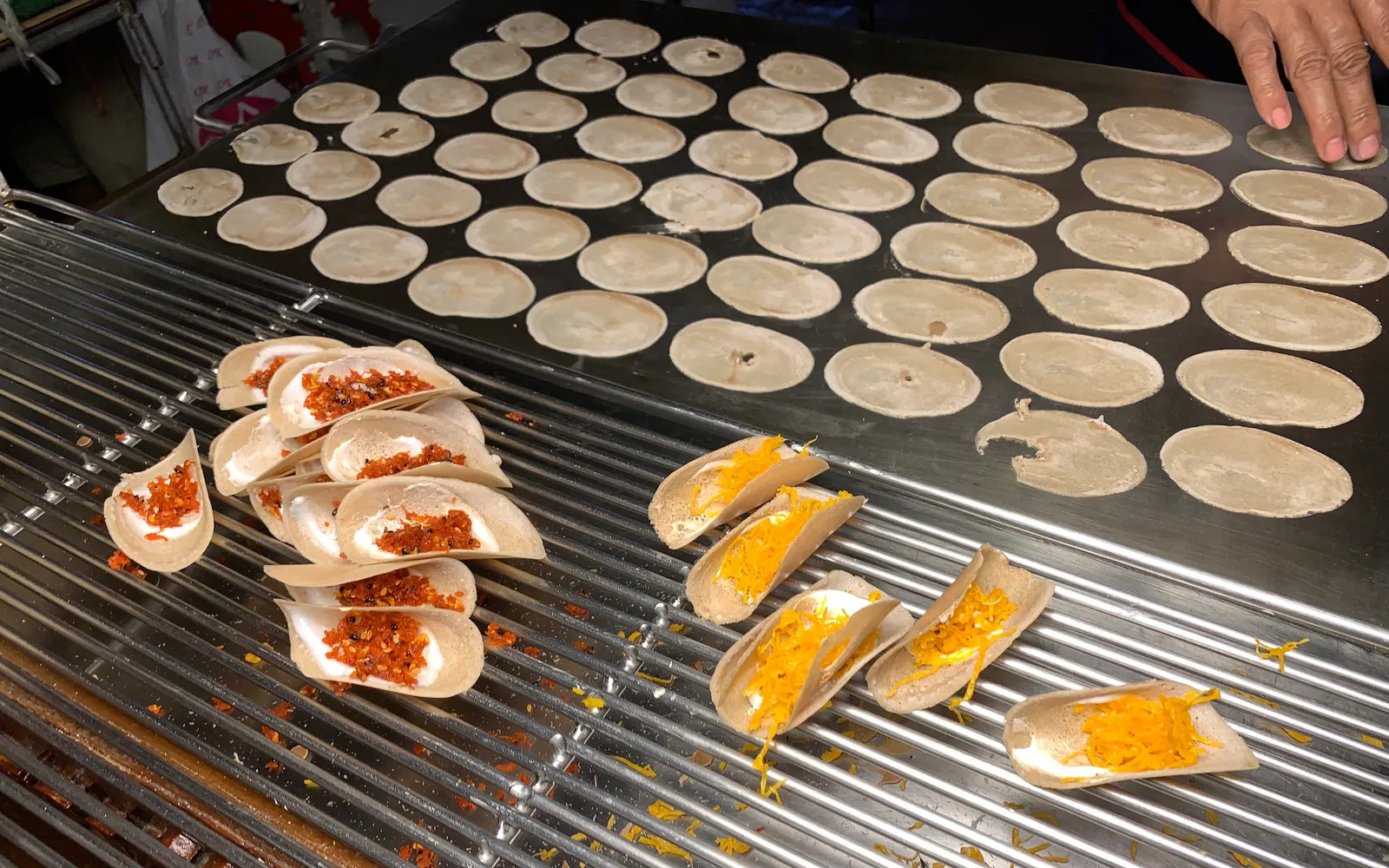
Khanom Bueang is an ancient Thai sweet that appears in the classical epic <em>Khun Chang Khun Phaen</em> and was once a delicacy of the royal court. A thin, crispy rice-and-mung-bean crepe is fried on a hot pan, topped with meringue and golden egg-yolk threads (<em>foi thong</em>) with shredded coconut, then folded in half like a taco. The result is crisp on the outside, slightly chewy within — sweet, fragrant, and gone in two bites.
- Eat it immediately after it's made. Leave it sitting and the crispness is gone within minutes.
- Try both the sweet version (meringue and foi thong) and the savory version (dried shrimp and shallot).
- Priced at 5–10 baht per piece. Buy several — they disappear fast.
 #6
#6 Khao Chae · Khao Chae
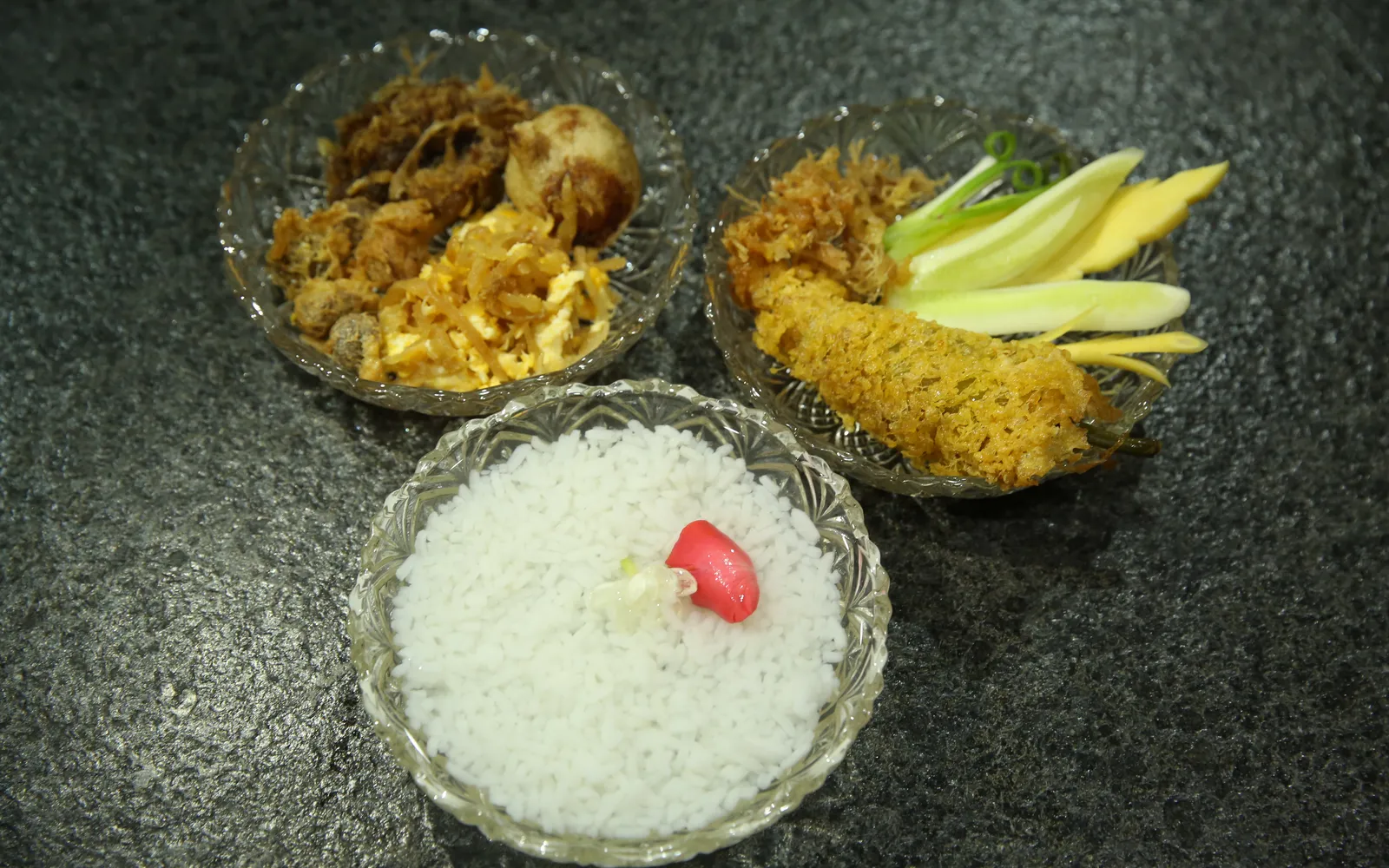
Khao Chae originated in the Ayutthaya royal court as a hot-season dish. Cooked rice is soaked in jasmine-and-flower-infused chilled water, then served with five to seven carefully prepared accompaniments: fried shrimp paste balls, crispy shallots, stuffed green peppers, candied palm fruit, and more. The preparation is labor-intensive and considered a showcase of classical Thai kitchen craft.
- Available only in the hot season — April through June. Don't expect to find it year-round.
- Reserve ahead at traditional restaurants, since the accompaniments take considerable preparation time.
- Priced at 200–400 baht per set — reasonable for the level of craft involved.
Where to stay in Ayutthaya for this trip
A well-located hotel means less commuting and more sightseeing. Here are real, top-rated stays in Ayutthaya — compare Agoda · Booking · Trip.com in one click.
Baan Tye Wang Hotel
Affiliate links — we may earn a commission at no extra cost to you. Details
Baan Thai House
Affiliate links — we may earn a commission at no extra cost to you. Details
Sala Ayutthaya
Affiliate links — we may earn a commission at no extra cost to you. Details
Phuttal Residence
Affiliate links — we may earn a commission at no extra cost to you. Details
Tours, tickets & activities in Ayutthaya
Day tours, attraction tickets and travel essentials for Ayutthaya — book ahead on Klook with mobile e-tickets.
Affiliate links — we may earn a commission at no extra cost to you.
Before You Pack
Ayutthaya's food is the most delicious kind of history lesson — every dish carries 400-plus years of trade, migration, and culinary exchange in it. If you're making the trip, work through all six.