Bangkok is a city where eating never stops. Street-food stalls charge under a dollar a plate and Michelin-starred restaurants sit in the same neighbourhood — you can do both in a single afternoon. Thai food in Bangkok isn't just delicious; it's a living record of 200-plus years of cultural layering — Chinese, Portuguese, Indian, and regional Thai influences folded together into something you won't find anywhere else on earth.
 #1
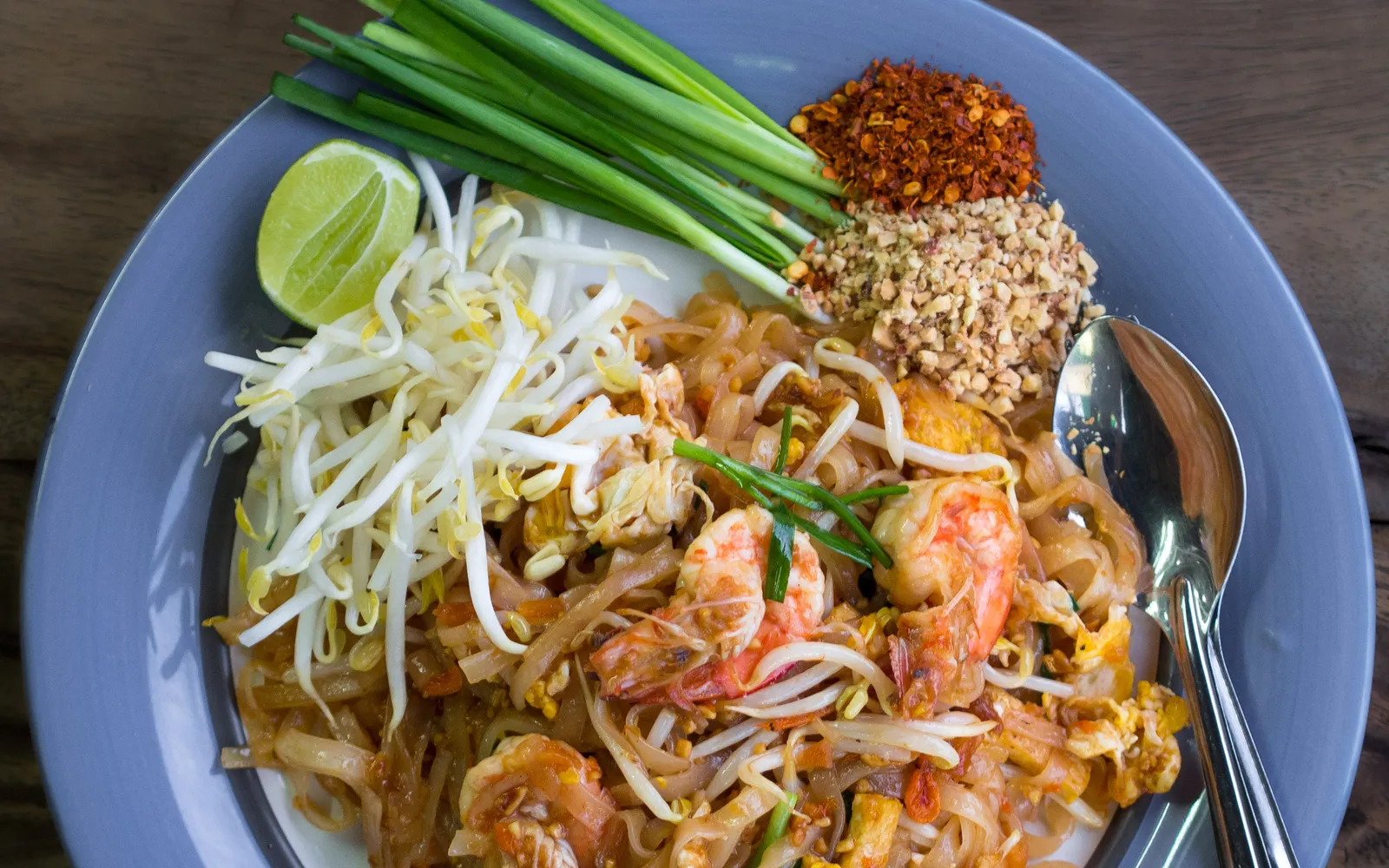
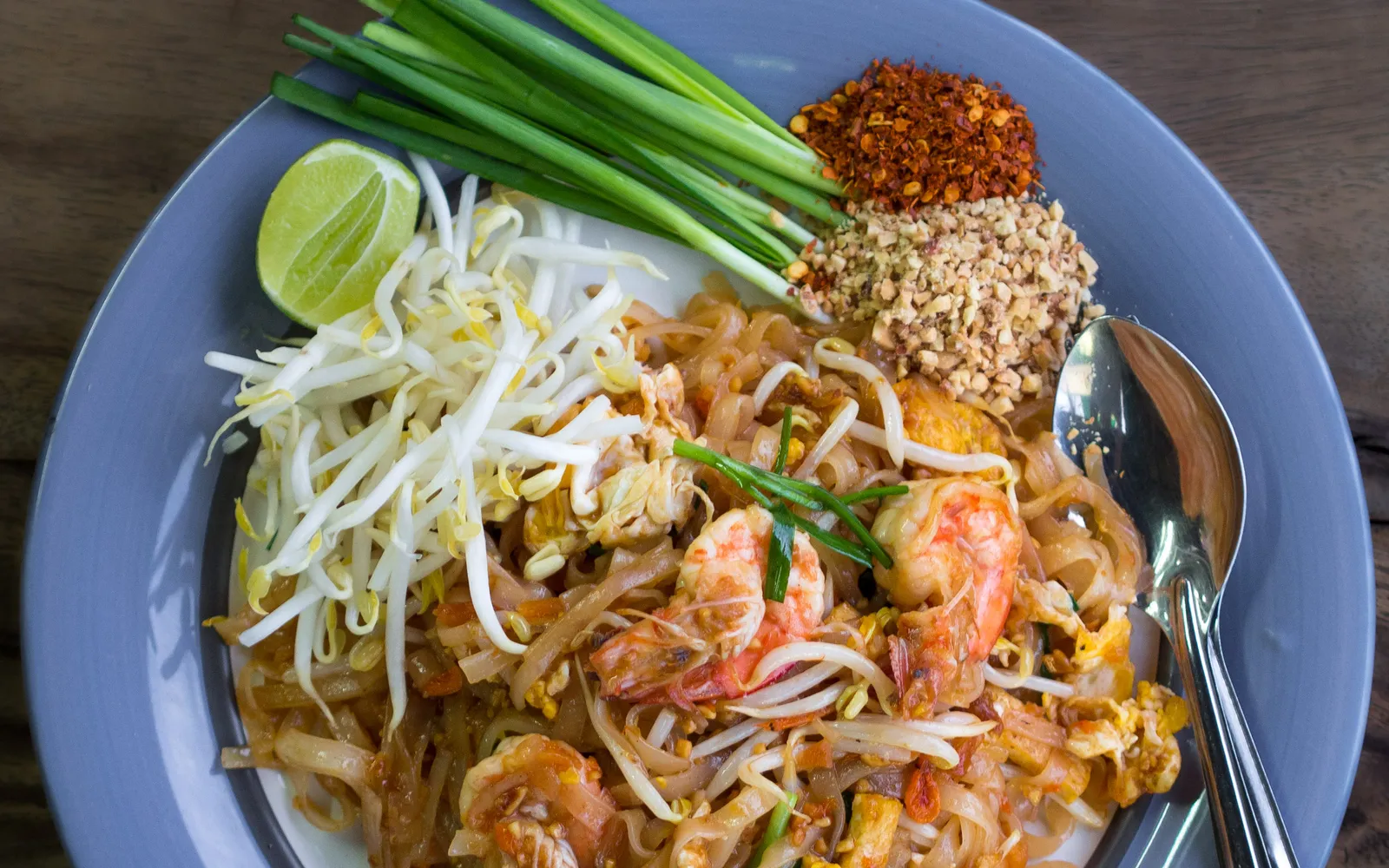
#1 Pad Thai — the noodle dish that became a national symbol · Pad Thai
The most internationally recognised Thai dish has a surprisingly political origin: a 1940s government campaign pushed rice-noodle dishes to reduce rice consumption during wartime shortages, and the recipe stuck. Authentic Pad Thai in Bangkok uses sen chan or thin rice noodles stir-fried in a screaming-hot wok with coconut oil, tamarind water, fish sauce, and palm sugar. Firm tofu, dried shrimp, egg, bean sprouts, and spring onions go in; crushed peanuts, chilli flakes, and sugar come on top. The balance of sour, sweet, salty, and rich is the whole point.
- Good Pad Thai shops fry one plate at a time, not a vat — it's slower, but the difference in flavour is stark.
- Thip Samai, near Wat Saket (the Golden Mount), has been making what many consider Bangkok's finest Pad Thai for 60 years.
- Order it egg-wrapped (hor khai) — the egg is folded around the noodles like an envelope. It's the traditional Bangkok style.
 #2
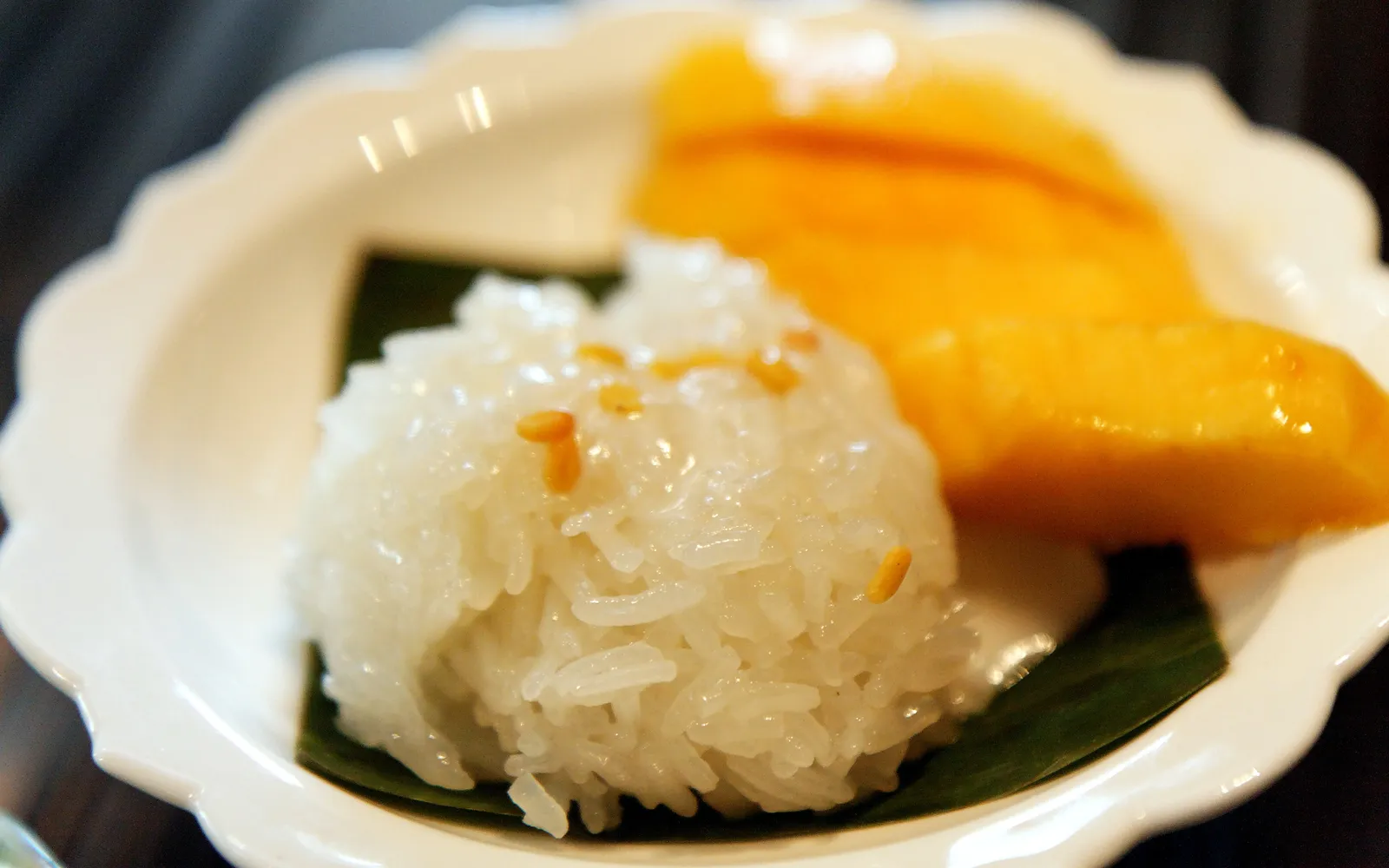
#2 Mango Sticky Rice — a Thai dessert with a global following · Mango Sticky Rice
This dessert keeps landing on global best-dessert lists, and it earns its place. Glutinous rice is steamed and soaked in sweetened coconut milk, then served next to ripe Nam Dok Mai mango and drizzled with lightly salted thick coconut cream; some shops scatter white sesame seeds over the top. The peak season runs April through June, when Nam Dok Mai mangoes reach their sweetest. In Bangkok you'll find it in fresh markets, night markets, and single-dish dessert shops that sell nothing else.
- Nam Dok Mai mangoes — greenish-yellow with a natural sweetness — are the variety that pairs best with coconut sticky rice.
- Or Tor Kor Market and Chatuchak Weekend Market both have several stalls selling this at honest prices.
- Outside mango season (October – March), some shops substitute durian or pomegranate — worth trying if you're visiting then.
 #3
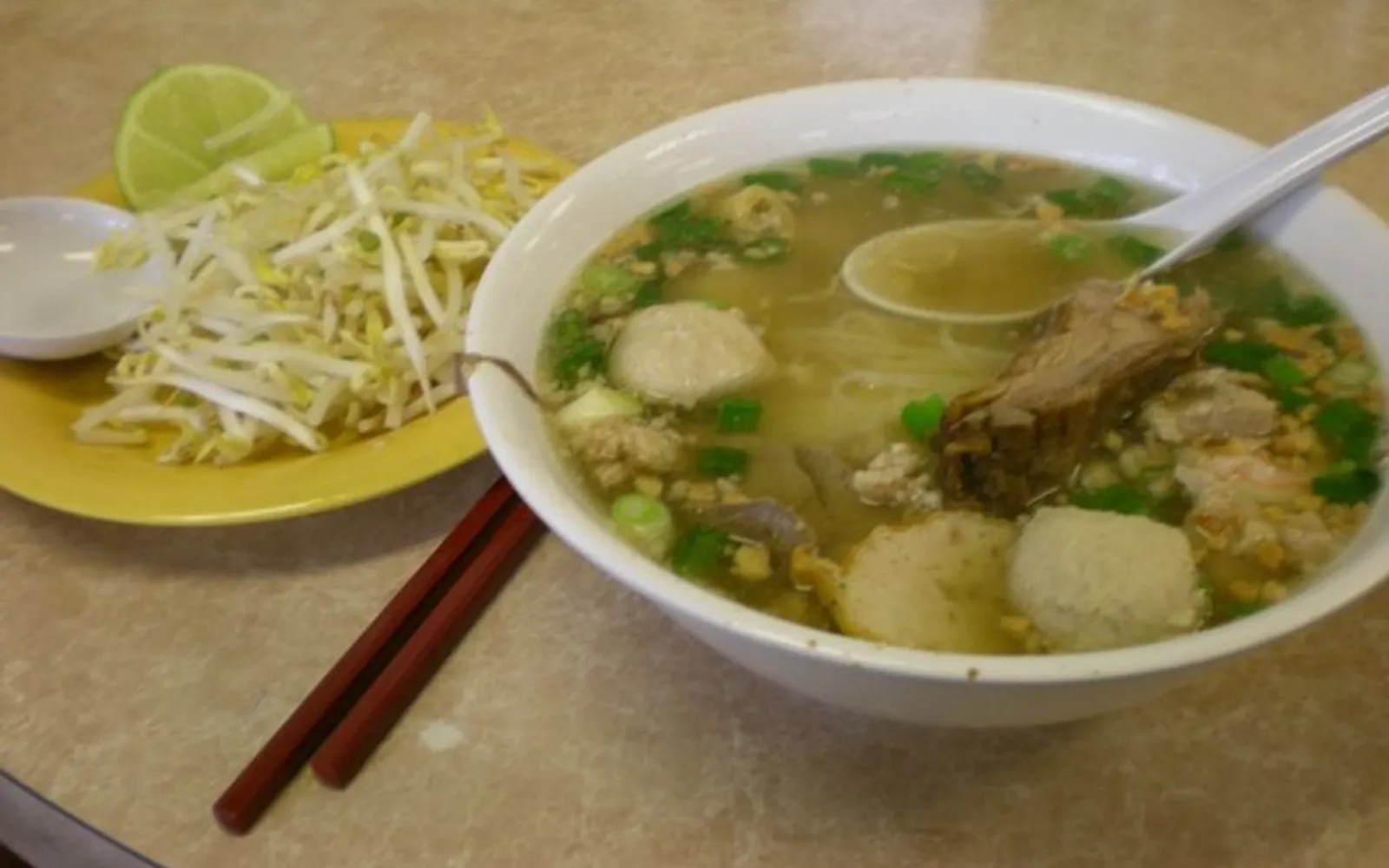
#3 Boat Noodles — intense broth from Bangkok's canal era · Boat Noodles
These tiny bowls of deeply concentrated broth were originally sold from boats drifting through Bangkok's canal network. The soup base is built from pork or beef blood, dark soy sauce, spices, and bones simmered overnight; it arrives in a small bowl sized for one or two mouthfuls. The traditional way to eat them is to order 4 or 5 bowls at once and keep adding as you go — each bowl is cheap enough that the count adds up fast. Crispy pork, fish balls, coriander, and chilli flakes are the standard toppings. It's the dish that best captures what old Bangkok canal life actually looked like.
- Rung Rueng near Victory Monument has been one of Bangkok's go-to spots for beef boat noodles for decades.
- Not a fan of blood? Tell the stall 'mai sai leuad' — the broth still tastes good without it.
- Keep a tally of your bowls — the stall will count them when billing you. Locals typically eat 5–8 bowls per sitting.
 #4
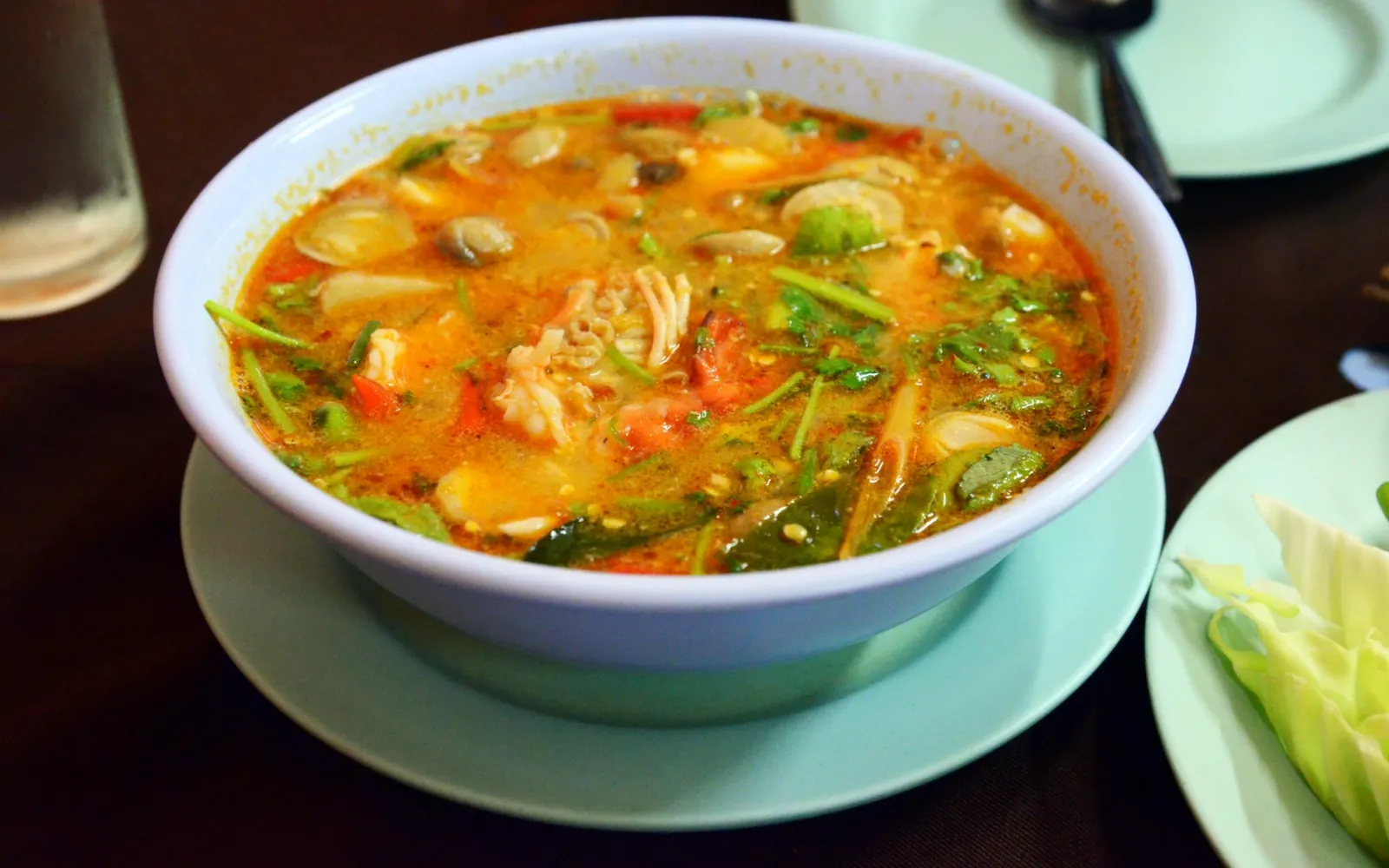
#4 Tom Yum Goong — Bangkok's famous hot-and-sour soup · Tom Yum Goong
Tom Yum ranks on multiple lists of the world's best soups, and the Bangkok version is notably stronger than what gets served outside Thailand. Traditional Tom Yum uses a clear shrimp-paste broth or a rich creamy version (nam khon, made with roasted chilli paste), fresh river prawns, straw mushrooms, lemongrass, kaffir lime leaves, galangal, chillies, and fish sauce. The flavour balance hits sour lime, hot chilli, salty fish sauce, and fragrant herbs all at once. In Bangkok you can find it at low-key rice-curry shops for under 80 baht or at upscale restaurants for many times that.
- Clear (nam sai) or creamy (nam khon) is personal preference — but the creamy version tends to be rounder in flavour.
- A packed rice-curry shop (khao gaeng) will usually serve a better Tom Yum than a flashy tourist restaurant.
- Good Tom Yum should hit you with lemongrass and kaffir lime the moment the lid comes off. If those aromas are faint, the kitchen used a pre-made powder base.
 #5
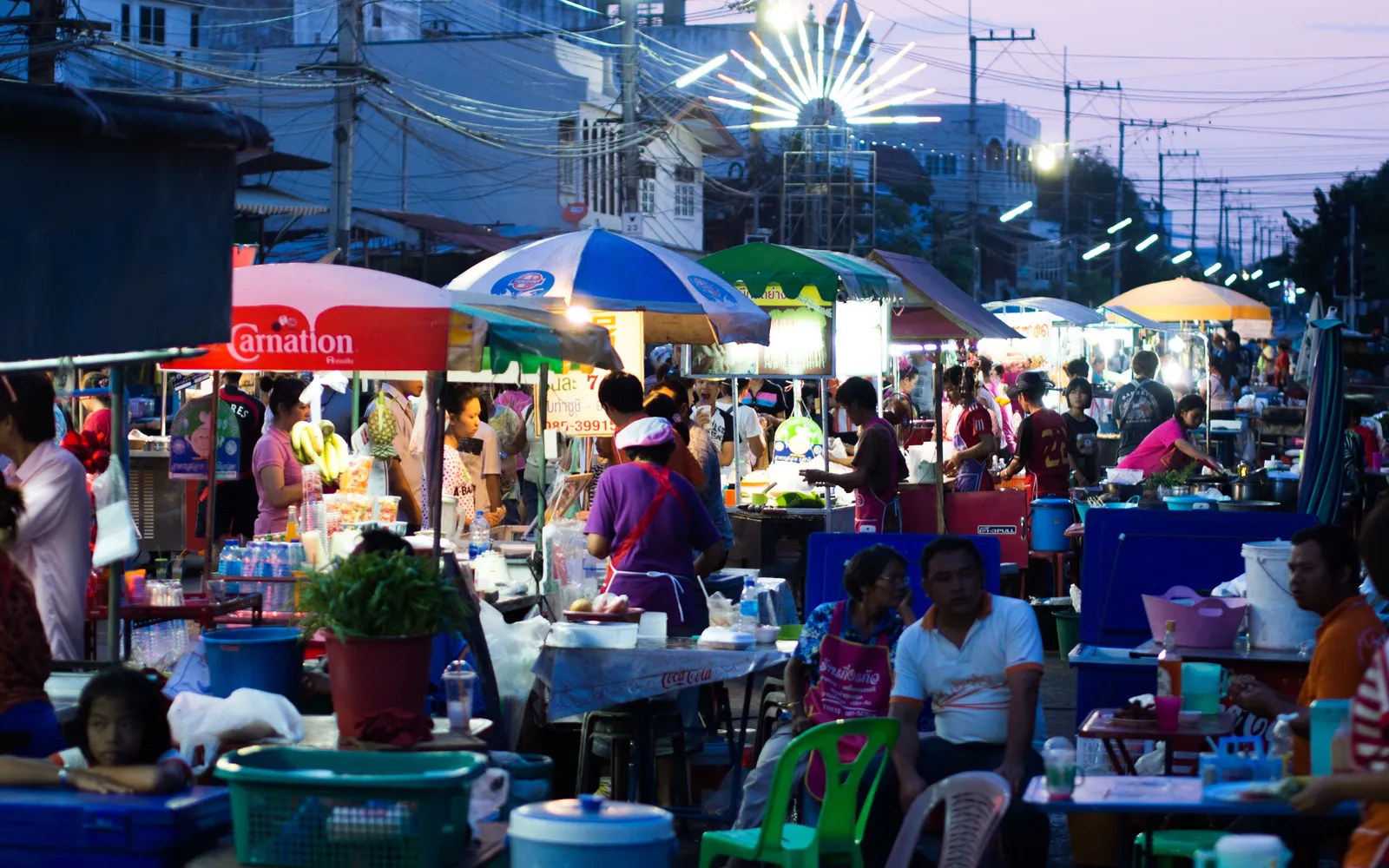
#5 Bangkok Street Food — the soul of eating in this city · Bangkok Street Food
Bangkok's street food has been called the best in Asia for decades, and the argument is hard to dispute. Chicken rice, pork satay, sticky rice with grilled pork, Hat Yai fried chicken, oyster omelette, som tam, and a dozen varieties of noodles — each stall has its own recipe it guards obsessively. Prices run 30–80 baht a plate (under US$2.50), and the flavour frequently outpaces restaurant meals costing ten times more. Bangkok residents eat street food as a daily routine, not a tourist attraction.
- Soi Ahan in Silom (near BTS Sala Daeng) runs weekdays at lunch only and packs 30-plus dishes across dozens of carts into one lane.
- Follow office workers — if a cart is full of people in button-down shirts, it's almost always good, fairly priced, and clean.
- Avoid carts parked directly in front of hotels or tour-company offices: prices there run 2–3 times the community-neighbourhood rate.
 #6
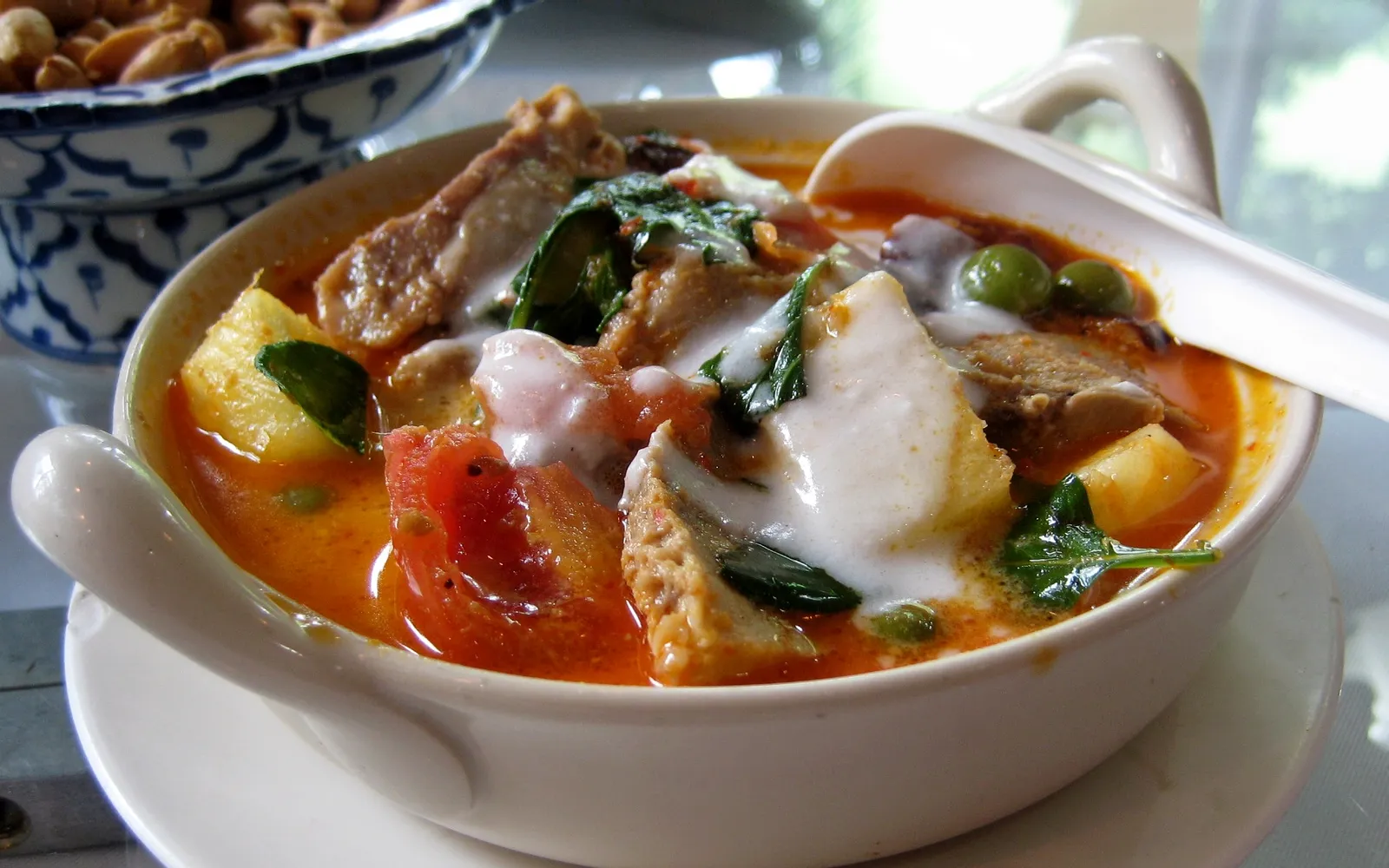
#6 Thai Curry with Rice — the everyday meal hiding serious depth · Thai Curry with Rice
Curry over rice is what Bangkok residents actually eat on a normal Tuesday. Green curry, red curry, massaman, phanaeng, and kaeng som each taste completely different — and authentic Thai curry uses freshly squeezed coconut milk, hand-pounded curry paste, and herbs that contribute both flavour and medicinal value. Good khao gaeng shops open early and close around 2–3 pm because they cook fresh every morning and sell out. Get there late and your first choice is already gone.
- Quality khao gaeng shops typically open at dawn and close by 2–3 pm — arrive before the best dishes run out.
- Massaman beef is the gentlest entry point for first-time Thai curry eaters: less heat than most, more rounded and slow-cooked in character.
- The best curry rice shops rarely look impressive. Old tables, an apron-wearing cook, no Instagram aesthetic — that's usually the signal you want.
Where to stay in Bangkok for this trip
A well-located hotel means less commuting and more sightseeing. Here are real, top-rated stays in Bangkok — compare Agoda · Booking · Trip.com in one click.
Mandarin Oriental Bangkok
Affiliate links — we may earn a commission at no extra cost to you. Details
Riva Surya Bangkok
Affiliate links — we may earn a commission at no extra cost to you. Details
The Peninsula Bangkok
Affiliate links — we may earn a commission at no extra cost to you. Details
Siam Kempinski Hotel Bangkok
Affiliate links — we may earn a commission at no extra cost to you. Details
Tours, tickets & activities in Bangkok
Day tours, attraction tickets and travel essentials for Bangkok — book ahead on Klook with mobile e-tickets.
Affiliate links — we may earn a commission at no extra cost to you.
Before You Pack
The best food in Bangkok is almost never inside a shopping mall. It's in the side streets, on the carts, and in the no-frills shops that close before 3 pm. Walk toward the smell, listen to what locals near you are ordering, and trust neighbourhood recommendations over review apps — the people who eat here every day know exactly which stall is worth the queue.