
Chiang Mai food is not ordinary "northern Thai food" — it is the culinary heritage of the Lanna Kingdom, shaped by Burmese, Shan, and Yunnan influences carried in along ancient trade routes. Intense flavors, aromatic spices, and fresh herbs give northern Thai dishes a character you will not find anywhere else.
 #1
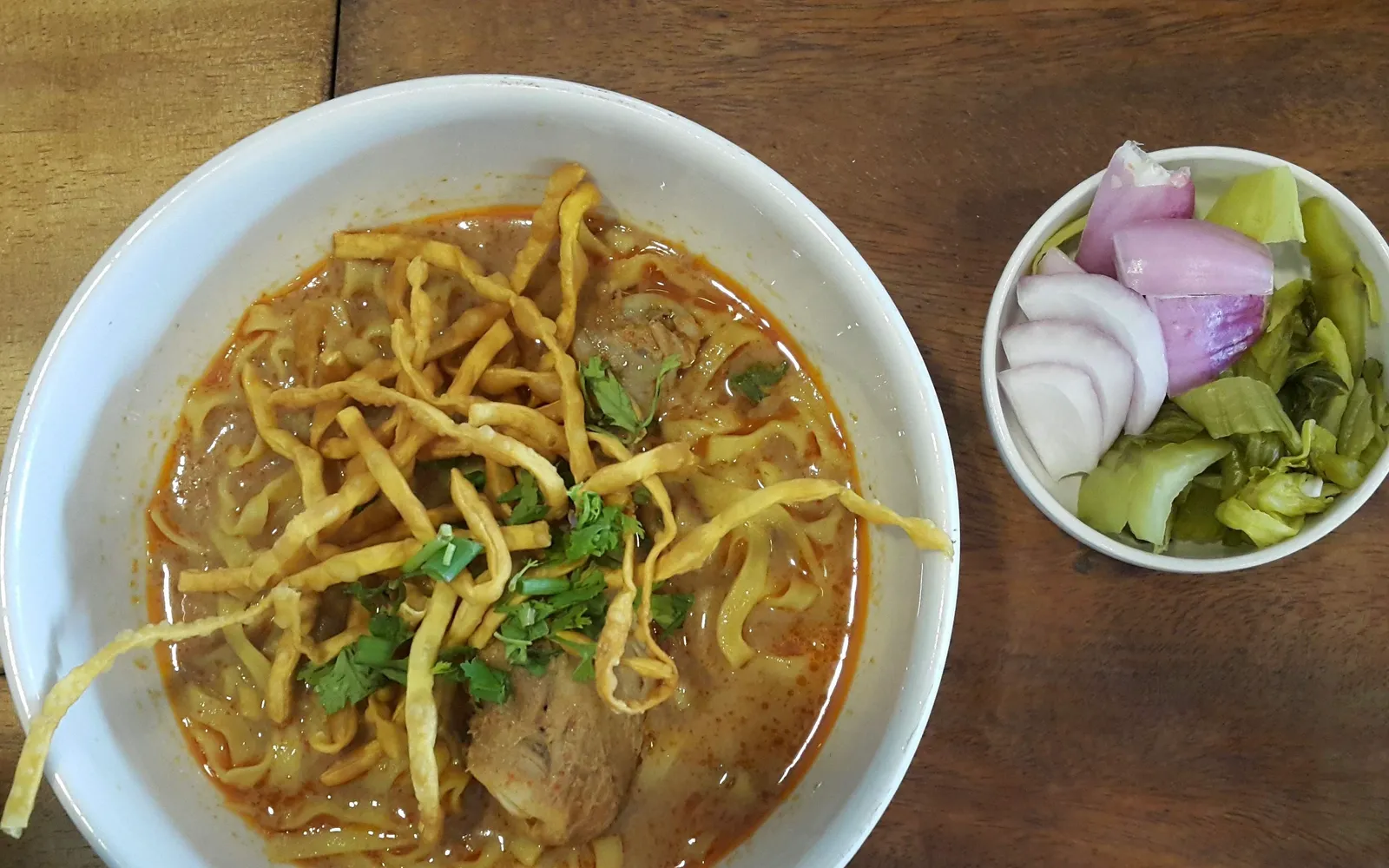
#1 Khao Soi · Khao Soi
Khao Soi is the soul of Chiang Mai food in a single bowl. Soft egg noodles sit in a deep-golden coconut curry broth loaded with spices and curry paste — rich and coconutty with a gentle kick of heat. Crispy fried noodles are scattered on top to give a contrast of textures within the same bowl. It comes with pickled shallots, pickled mustard greens, lime, and chili paste on the side. The recipe traces back to Chinese Muslim (Haw) traders who traveled the Silk Road through Burma.
- Khao Soi Lamduan Fa Ham and Khao Soi Khun Yai (Night Bazaar area) are the names food lovers mention most often
- Order beef if you want a deeper, more intense broth; chicken for a lighter version
- Eat it hot and add the condiments gradually so you can taste each element separately
 #2
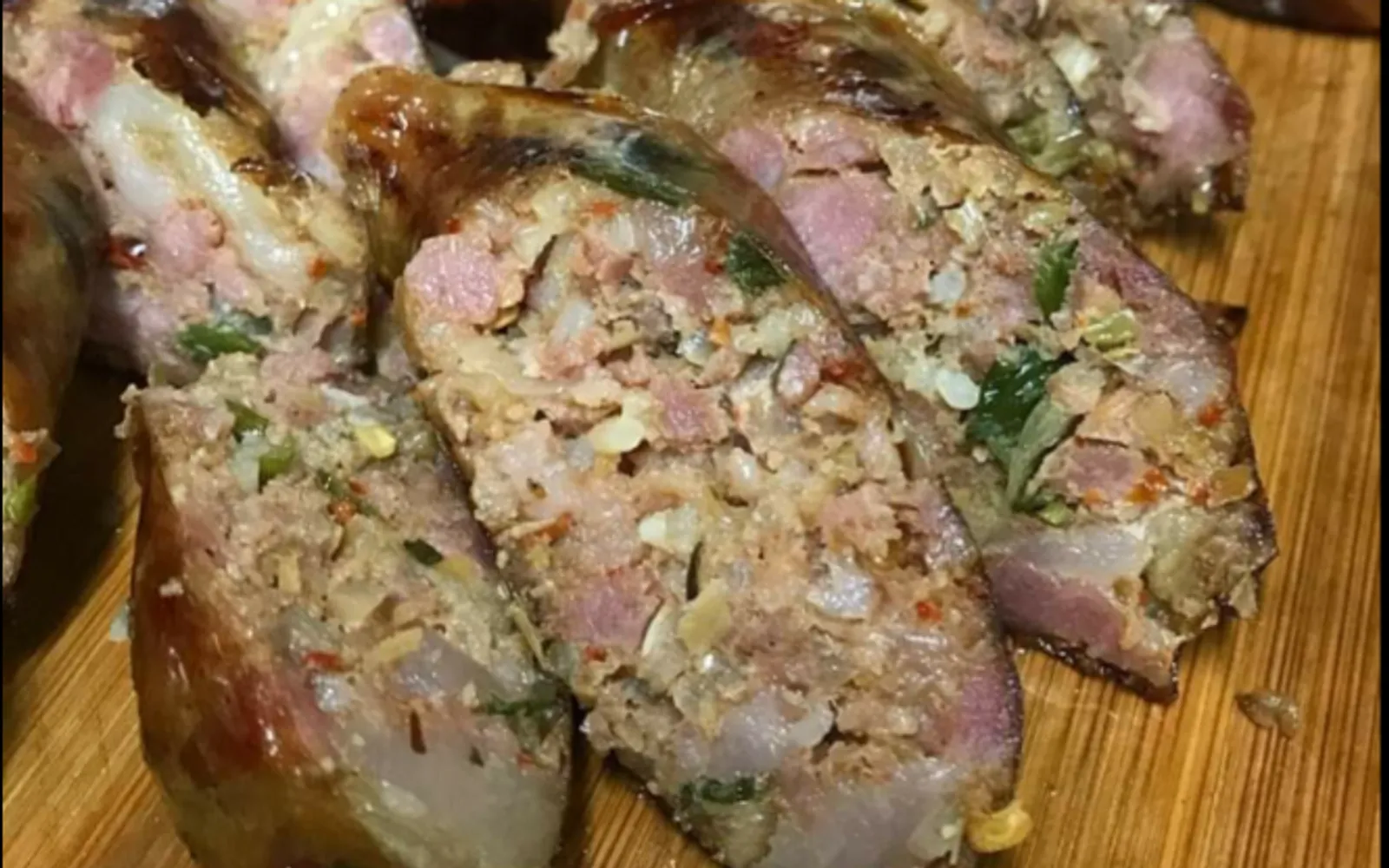
#2 Sai Ua · Sai Ua (Northern Thai Sausage)
Sai Ua is a northern pork sausage packed with fresh herbs — lemongrass, galangal, kaffir lime leaves, dried chili, shallots, garlic, and shrimp paste. Grilled over charcoal until the skin crisps and chars, the flavor is far more complex and juicy than any ordinary sausage. It is a core part of Khan Tok, the traditional Lanna ceremonial meal, and is eaten alongside Nam Prik Noom, pork cracklings, and sticky rice. It is also the most popular food souvenir travelers take home from Chiang Mai.
- Mae Hia Market is the spot food enthusiasts cite for the best Sai Ua in the city
- Buying fresh at Warorot Market costs nearly half what you would pay in the tourist-heavy areas
- If you are taking some home, ask the vendor to vacuum-pack it — it keeps for 3–5 days
 #3
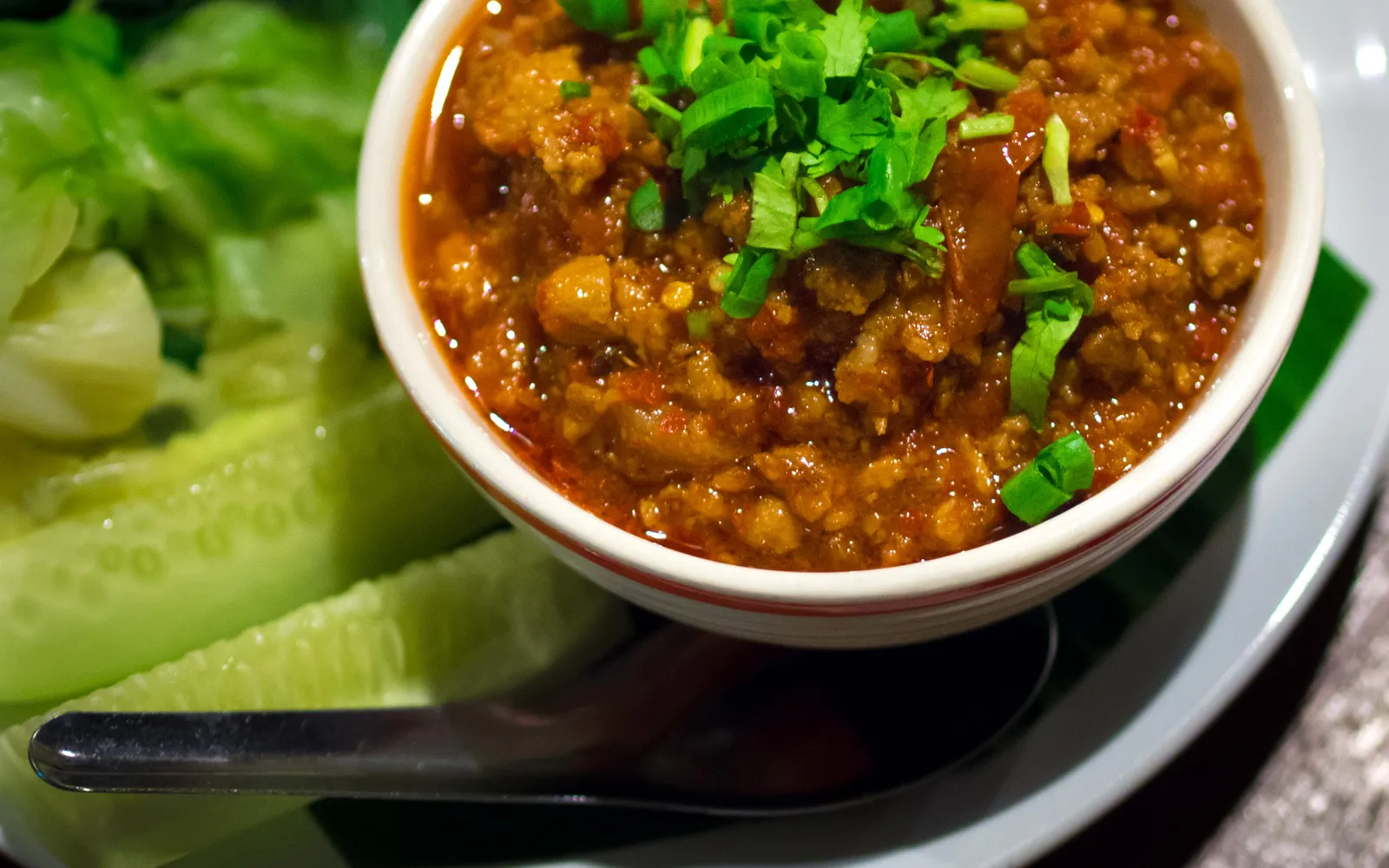
#3 Nam Prik Ong · Nam Prik Ong (Tomato and Pork Chili Dip)
Nam Prik Ong is a northern chili dip made with ground pork and tomatoes, pounded together in a mortar. The flavor is gently tart, mildly sweet, subtly spicy, and deeply savory from shrimp paste — rarely found outside the north. It is eaten with a spread of fresh vegetables such as long beans, cabbage, and cucumber, almost always with crispy pork cracklings on the side for dipping. The dish is a fixture of Khan Tok dining, the traditional ceremonial meal of the Lanna people.
- Order "Nam Prik 3 Yang" at most northern restaurants and you will get Nam Prik Ong, Nam Prik Noom, and a third dip all at once
- Versions pounded in a stone mortar taste noticeably different from blender-made ones — the texture and aroma are both better
- Eat it northern-style: pinch sticky rice into a small ball, not a scoop of steamed rice
 #4
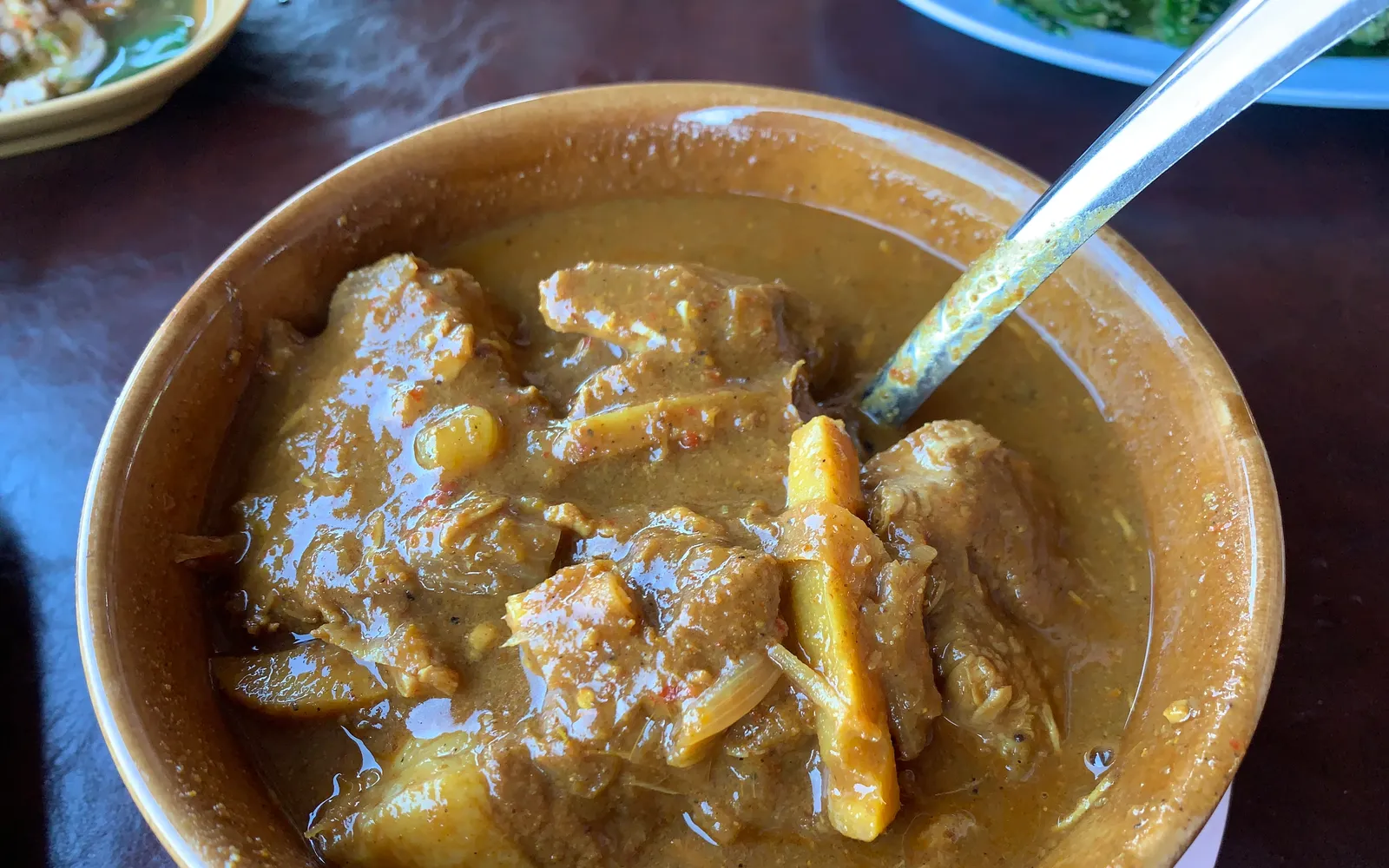
#4 Gaeng Hang Le · Gaeng Hang Le (Northern Pork Belly Curry)
Gaeng Hang Le is a pork curry with roots in Burma, introduced to the north by Shan communities. Pork belly or spare ribs are slow-braised in a dry-spice paste with no coconut milk — the flavor is salty and gently sour from tamarind, fragrant with ginger and pickled garlic, and the meat turns so tender it falls from the bone. It shares almost nothing with central or southern Thai curries. Traditionally served at celebrations and Khan Tok meals, Chiang Mai locals regard it as a defining dish of their identity.
- A proper Gaeng Hang Le is braised for at least 3–4 hours — look for meat that falls off the bone on its own as a quality signal
- Eat it with steamed jasmine rice, not sticky rice, unlike most other northern dishes
- Some restaurants serve fresh pickled ginger alongside; eating it between bites cuts through the richness of the pork
 #5
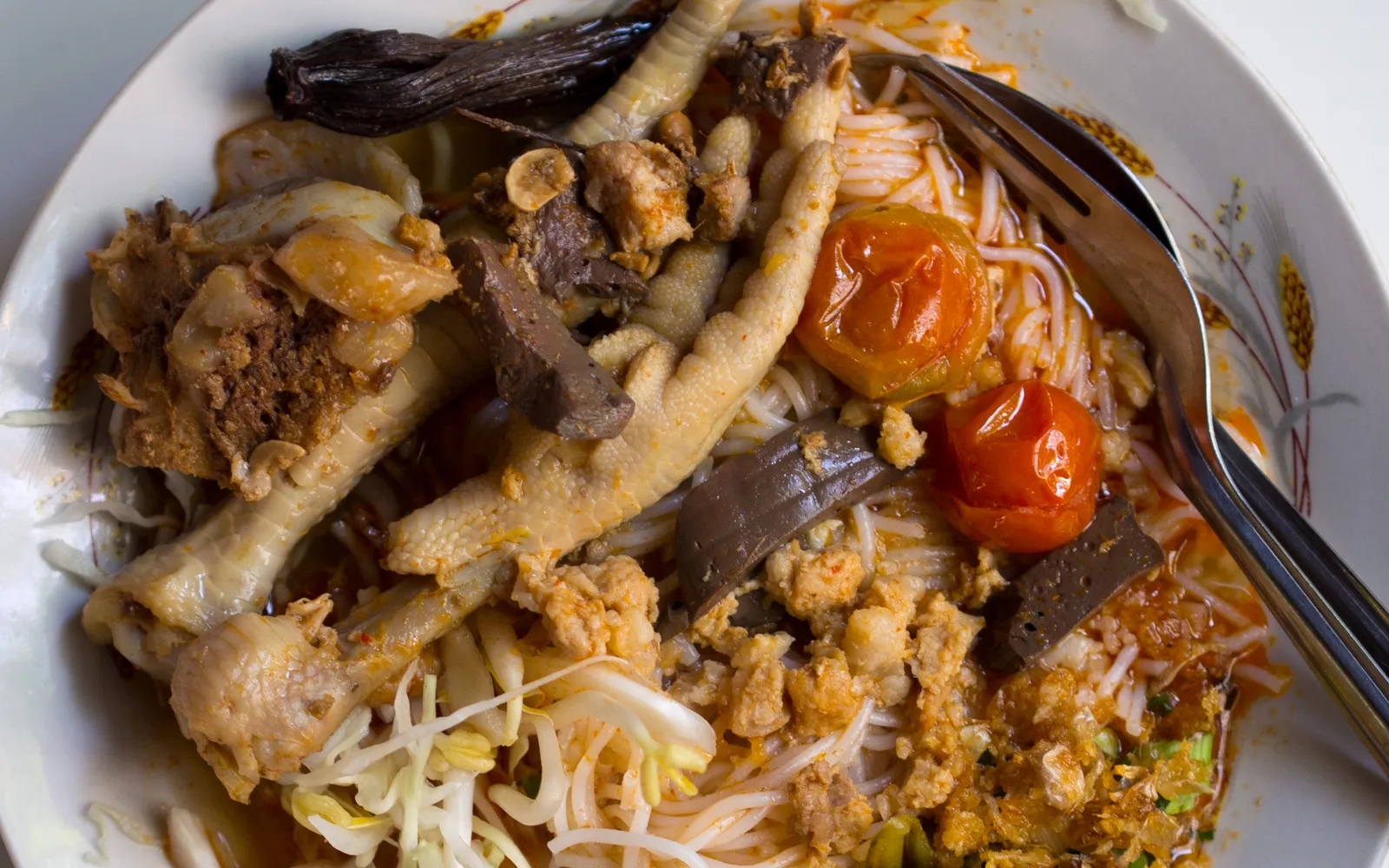
#5 Khanom Jeen Nam Ngiao · Khanom Jeen Nam Ngiao (Northern Spicy Noodle Soup)
Nam Ngiao is a spicy-sour noodle soup from the Shan people, bold and layered. The deep-red broth is built around pork ribs and minced pork in a tomato base, enriched with dried kapok flowers (which add a mild astringency), fresh blood tofu, fermented soybean paste known locally as tua nao, and large dried chilies. Served over rice-flour noodles, it is less famous among travelers than Khao Soi but more assertive in flavor — several regulars argue it is the better bowl if you like something with real depth.
- Warorot Market, Thai Thani Market, and the market in front of Chiang Mai University all have Nam Ngiao stalls open from early morning
- If you would rather skip the blood tofu, just tell the vendor — leaving it out is completely normal
- The key condiments are raw sliced shallots, lime, and blanched bean sprouts; add them to taste
 #6
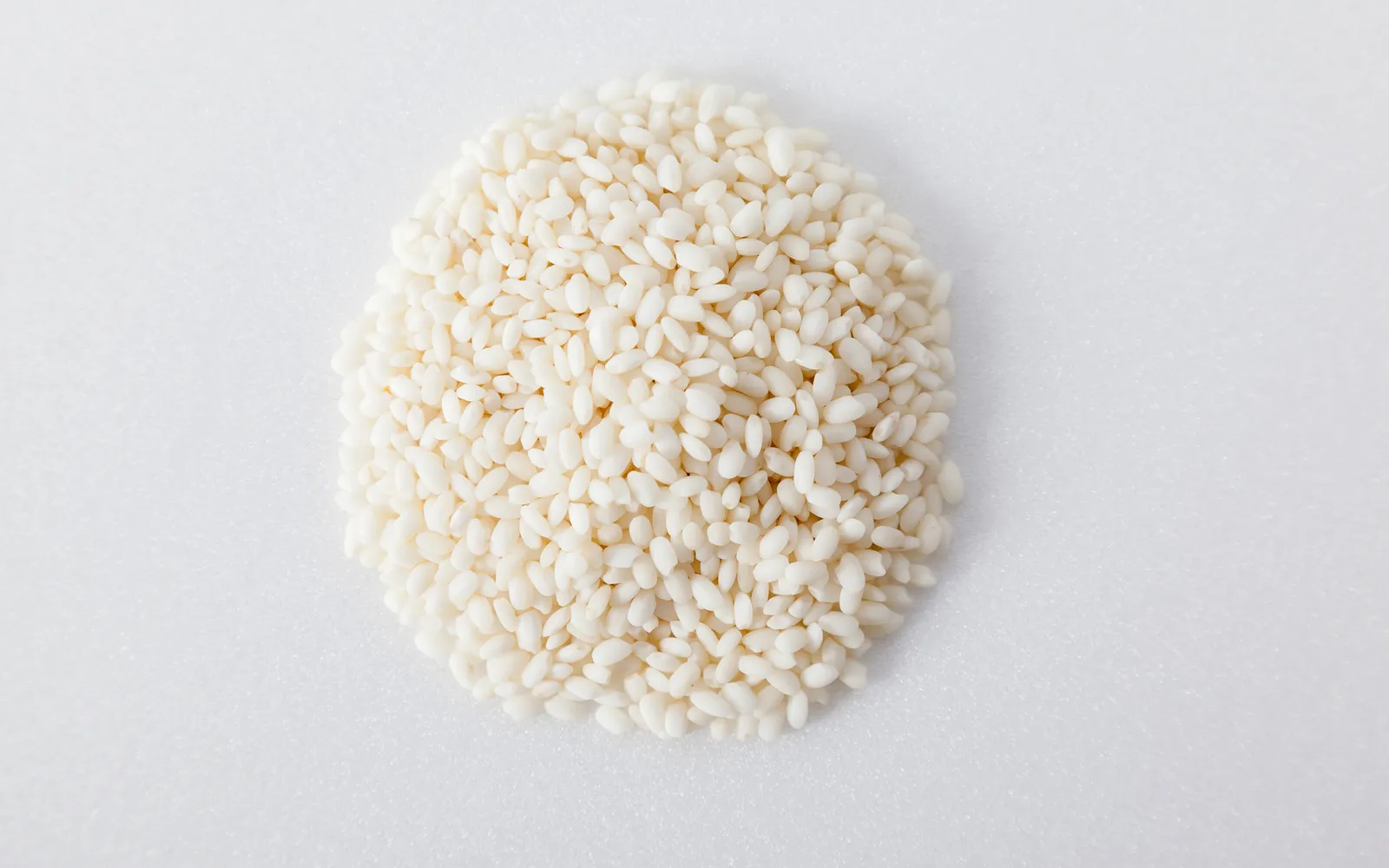
#6 Kaep Moo and Khao Niao · Kaep Moo and Khao Niao (Pork Crackling and Sticky Rice)
Sticky rice is the staple grain of the north — Lanna people have eaten it for a thousand years, not steamed jasmine rice. It is eaten by hand, rolled into small balls and dipped into chili pastes or curries, and carried to the fields all day inside a bamboo steamer basket called a kratip. Kaep Moo, crispy fried pork skin, is its constant companion. Some pieces are stuffed with minced pork or blood; it is the northern snack sold at every market. Together they form the standard breakfast of Chiang Mai residents, best before 9:00 AM.
- Good Kaep Moo should be completely crisp all the way through with no soft spots — buy from stalls that fry fresh each morning
- Sticky rice steamed inside a bamboo kratip basket tastes better than pot-cooked because the moisture is naturally controlled
- A sticky-rice-and-chili-paste set at a morning market costs 30–50 THB and is the most cost-effective breakfast in the city
Where to stay in Chiang Mai for this trip
A well-located hotel means less commuting and more sightseeing. Here are real, top-rated stays in Chiang Mai — compare Agoda · Booking · Trip.com in one click.
Smile Lanna Hotel
Affiliate links — we may earn a commission at no extra cost to you. Details
Melia Chiang Mai
Affiliate links — we may earn a commission at no extra cost to you. Details
U Nimman Chiang Mai
Affiliate links — we may earn a commission at no extra cost to you. Details
The Empress Premier Chiang Mai
Affiliate links — we may earn a commission at no extra cost to you. Details
Tours, tickets & activities in Chiang Mai
Day tours, attraction tickets and travel essentials for Chiang Mai — book ahead on Klook with mobile e-tickets.
Affiliate links — we may earn a commission at no extra cost to you.
Before You Pack
Fresh markets, walking streets, and roadside noodle shops are where you will find Chiang Mai food at its most honest. Do not judge by appearances — a small, decades-old restaurant with plastic stools is usually a better bet than a polished tourist-facing venue.