
Chiang Rai's food reflects a Lanna heritage shaped by Shan, Yunnanese, and highland-tribe influences. Khao soi and sai ua are the dishes most Thais already know, but Chiang Rai also has hyper-local specialties — khao kan chin and khanom chin nam ngiao — that are genuinely hard to find anywhere else. The authentic Lanna table runs deeper than you might expect.
 #1
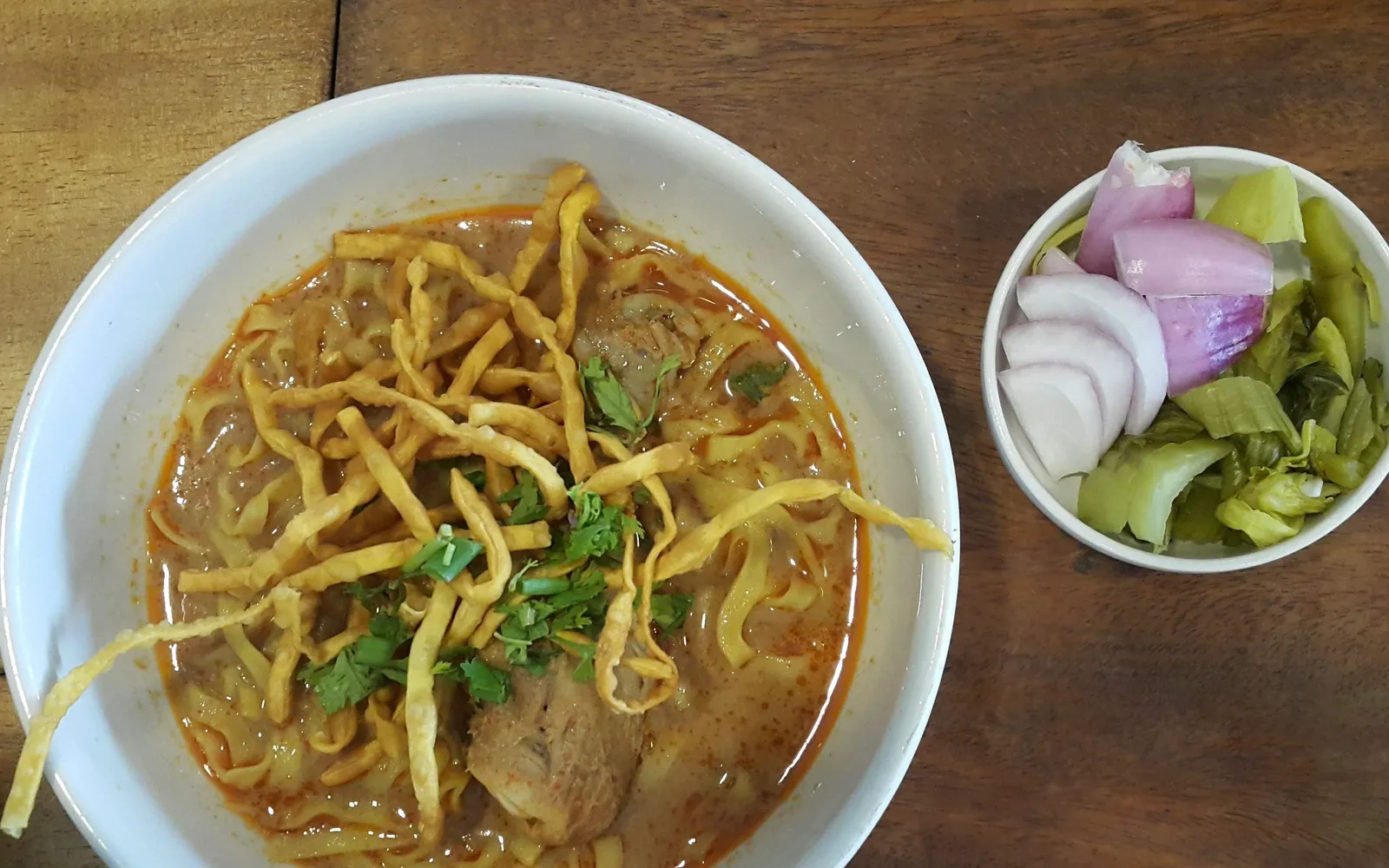
#1 Khao Soi · Khao Soi
Khao soi is the undisputed king of Northern Thai food — egg noodles in a coconut-panang curry broth, topped with crunchy fried noodles and served with shallots, pickled cabbage, chili paste, and lime. The dish traces back to Yunnanese Chinese and Shan traders along the old caravan routes. Chiang Rai's version tends to be richer and more spice-forward than the Chiang Mai style.
- Order chicken or beef — both are excellent, but chicken is softer and beef is bolder
- Squeeze the lime and add pickled greens to taste; the acidity cuts through the coconut fat
- A bowl runs 50–80 baht at a local shop; if you're paying over 120 baht, you're at a tourist-oriented place
 #2
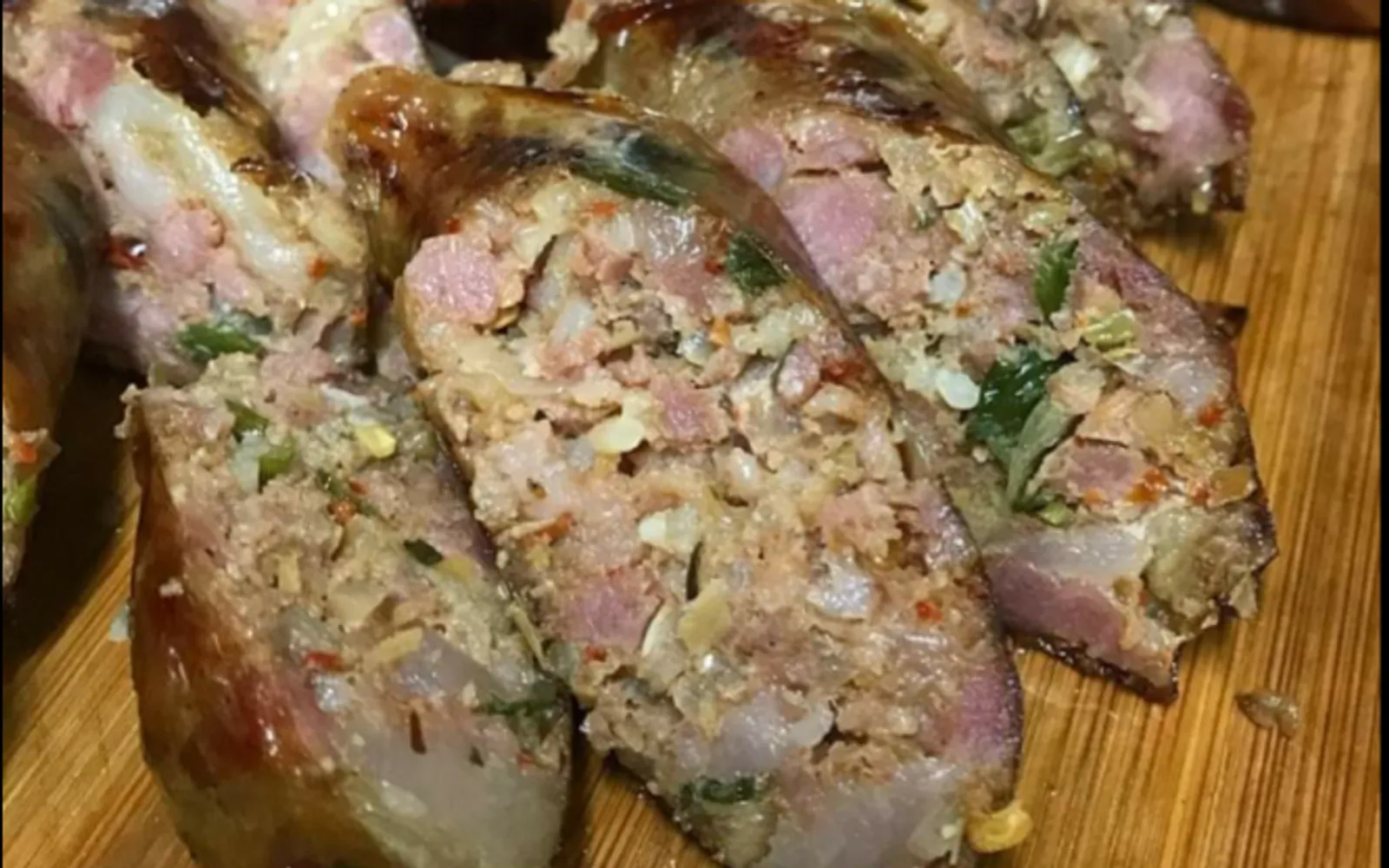
#2 Sai Ua · Sai Ua (Northern Thai Sausage)
Sai ua is a Northern Thai sausage made from minced pork blended with aromatics — lemongrass, galangal, kaffir lime leaf, shallots, chilies, garlic, and red curry paste. It's grilled over charcoal until the skin crisps and the herbs perfume the air. Nothing else smells quite like it. The dish is said to originate from Luang Prabang in Laos, but it became a defining dish of Lanna. Eat it with sticky rice or steamed rice.
- Buy from shops that grill fresh daily — avoid any that look dark or have been sitting out
- Eat it with nam phrik num (roasted green-chili dip) — the classic Lanna pairing
- Priced at 50–80 baht per 100 g at the fresh market; it keeps in the fridge for 3–5 days, making it a good take-home
 #3
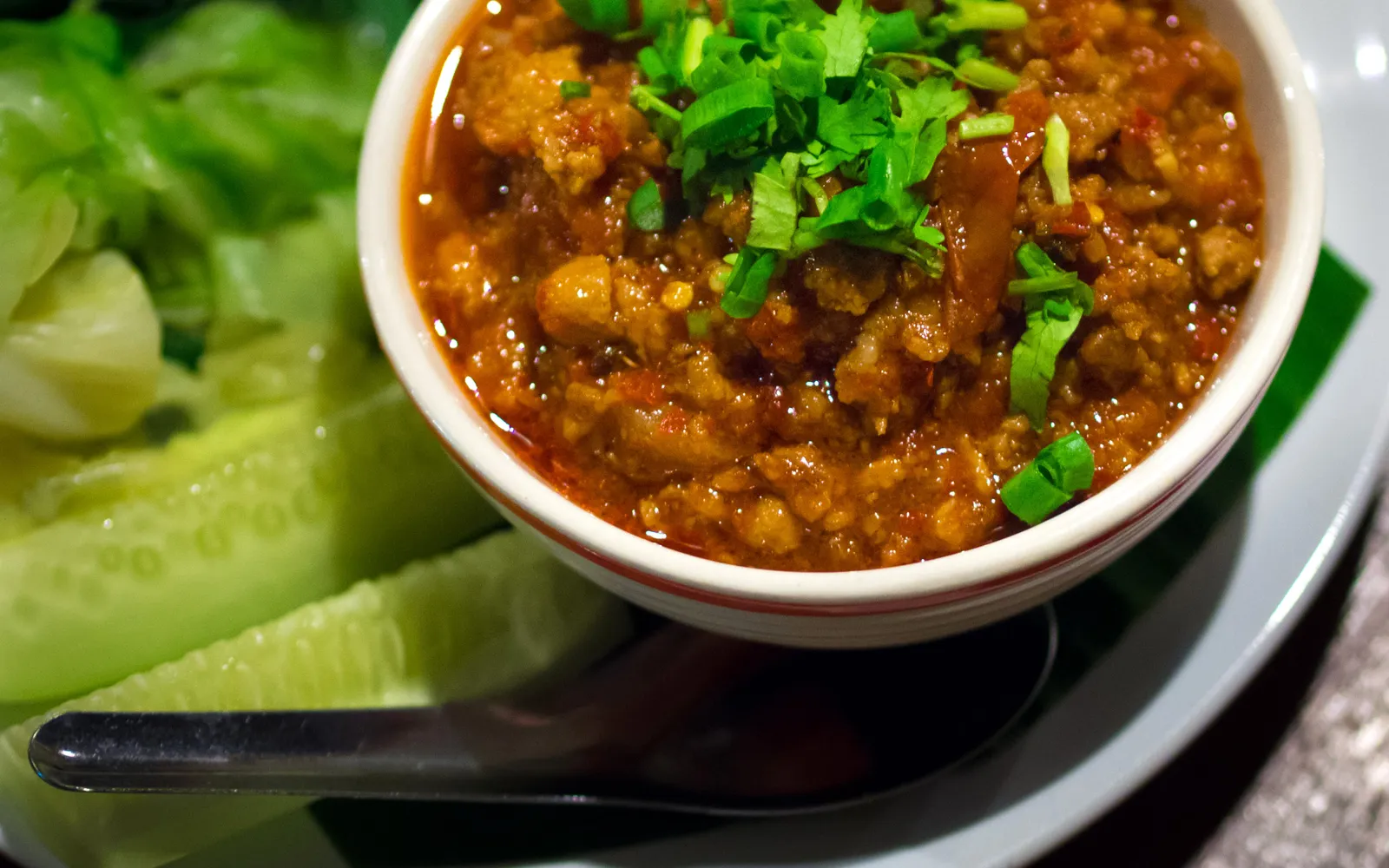
#3 Nam Phrik Ong · Nam Phrik Ong (Northern Tomato Chili Dip)
Nam phrik ong is the signature dip of Lanna cooking: minced pork stir-fried with dried chilies, garlic, shallots, tomato, and shrimp paste until it reduces to a deep red-orange, shrimp-paste-scented paste. It's served with fresh raw vegetables and crispy pork rinds. Some people call it a Thai Bolognese because the texture resembles a meat sauce — a fair comparison. Eat it with hot steamed sticky rice or blanched vegetables.
- Order the full set with fresh vegetables and pork rinds — it's the classic combination and good value
- Try scooping it with pork rinds instead of vegetables for a different crunch
- Packaged nam phrik ong is one of the most popular edible souvenirs; you'll find it in supermarkets citywide
 #4
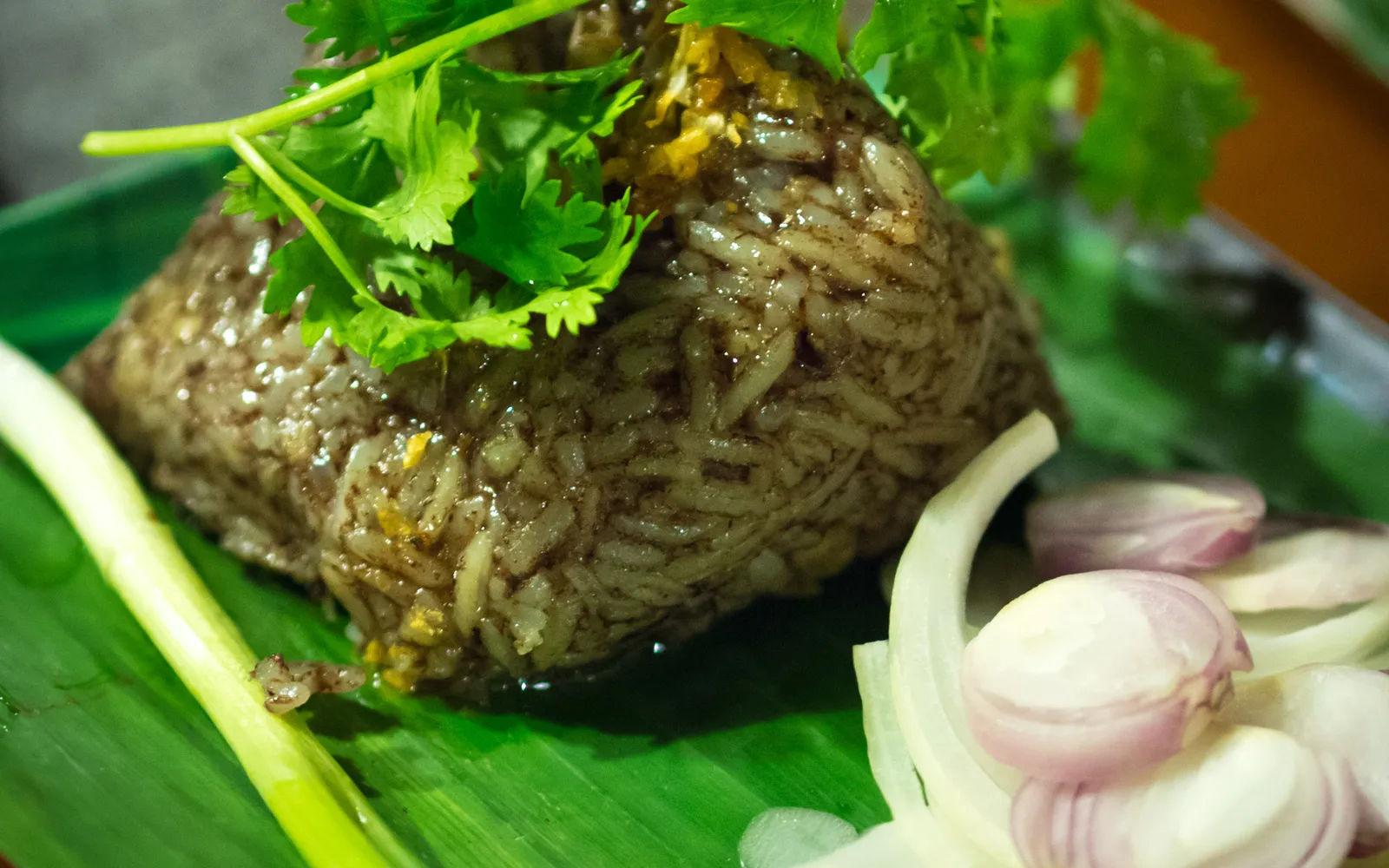
#4 Khao Kan Chin · Khao Kan Chin (Blood Sticky Rice Cake)
Khao kan chin is a hyper-local specialty of Chiang Rai that is genuinely difficult to find in other provinces. It originates with the Shan people: sticky rice mixed with fresh pork blood, minced pork, and herb seasonings, wrapped in banana leaf and steamed until firm. The result is a deep red-brown cake with a savory, herb-scented flavor. Served with fried garlic and fried chilies; some stalls also grill it briefly for extra aroma.
- Priced at just 10–15 baht per piece. Morning market only — it typically sells out before noon
- The taste is unlike what most visitors expect, but it's one of the Lanna flavor experiences you simply cannot get elsewhere
- If you're not sure about blood-based dishes, try one piece before committing
 #5
#5 Khanom Chin Nam Ngiao · Khanom Chin Nam Ngiao
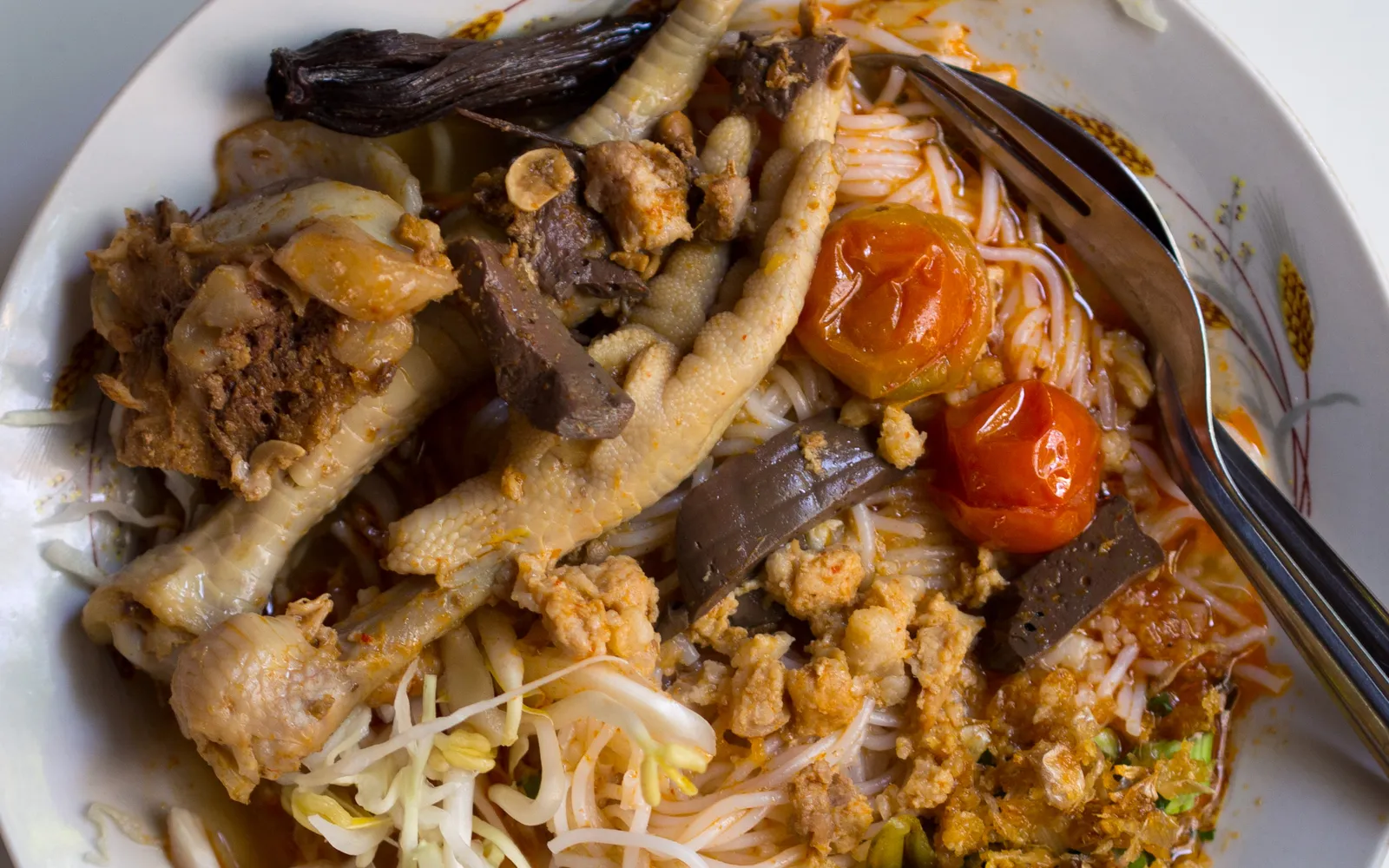
Khanom chin nam ngiao traces back to the Shan people (Ngiao), but it has become a local staple of both Chiang Rai and Chiang Mai. The broth gets its deep red-orange color from dried cotton-tree flowers (<em>dok ngio</em>), minced pork, <em>thua nao khaeng</em> (a hard fermented soybean similar to miso in texture), tomato, and chilies. The flavor is rich and carries a distinct floral note from the cotton-tree flowers — different from the southern Thai nam ngiao, which uses tamarind. Served over white rice vermicelli.
- The scent of cotton-tree flowers and fermented soybeans can be unfamiliar on first encounter, but the flavor is excellent
- Ask for extra broth — most shops top it up free, and the vermicelli absorbs it well
- Served with fresh garnishes including bean sprouts, kale, and sliced shallots
 #6
#6 Doi Chiang Rai Coffee and Tea · Doi Chiang Rai Coffee and Tea
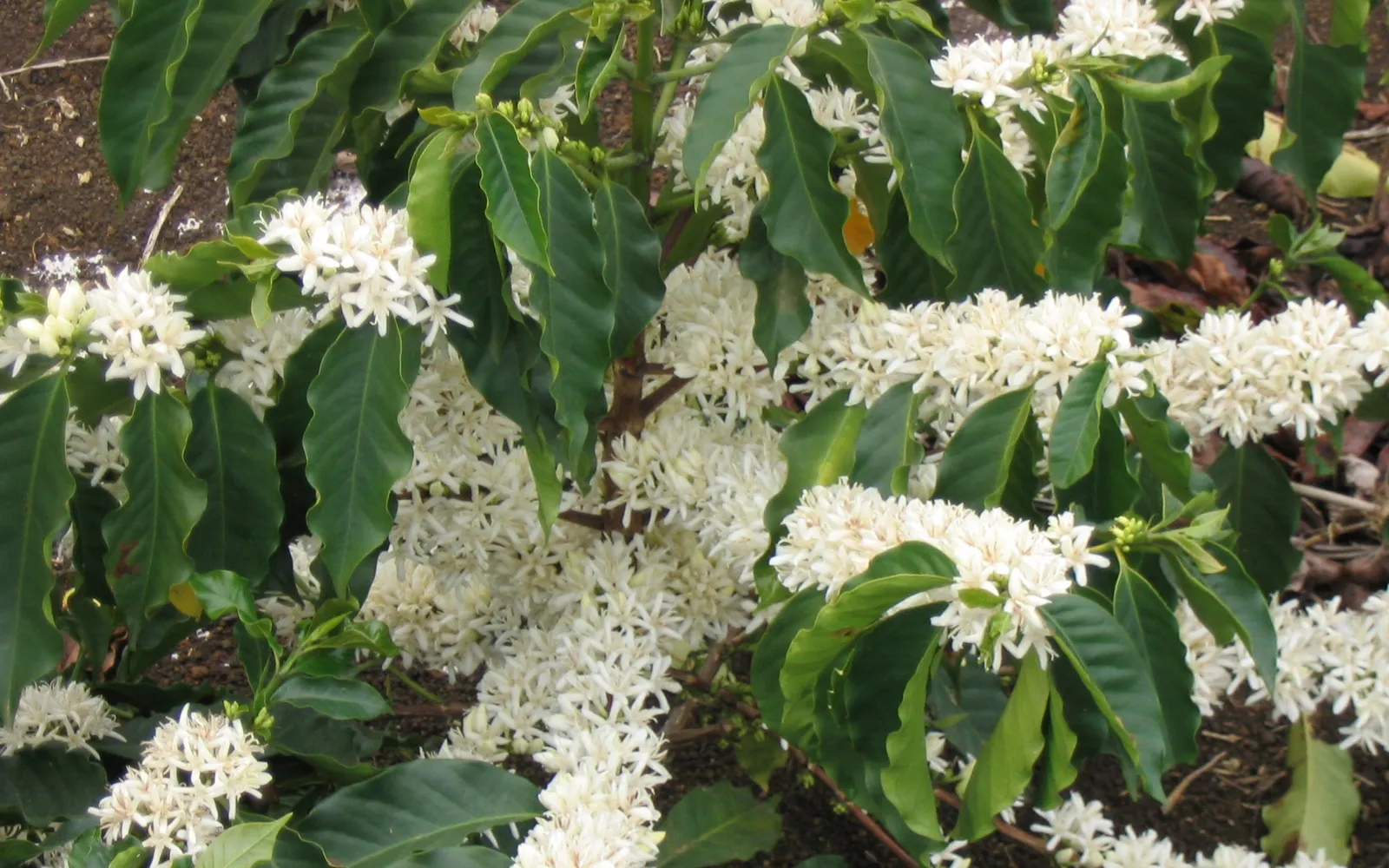
Chiang Rai is one of Thailand's top arabica and oolong tea-growing regions. High-altitude areas like Doi Tung and Doi Wawee produce specialty-grade coffee beans — the Royal Project's coffee has won international awards. Oolong from Choui Fong and Singha Park carries a soft floral note. The number of independent cafés in the city has grown sharply in recent years, and most of them use local beans.
- Try a pour-over made with Doi Tung or Doi Wawee beans at one of the city cafés — the flavor profile is very different from commodity coffee
- Buy fresh beans and loose-leaf tea directly from Choui Fong or Singha Park — prices are better than in-city shops
- Iced oolong is the right call on a hot afternoon: refreshing and naturally fragrant
Where to stay in Chiang Rai for this trip
A well-located hotel means less commuting and more sightseeing. Here are real, top-rated stays in Chiang Rai — compare Agoda · Booking · Trip.com in one click.
The Riverie by Katathani
Affiliate links — we may earn a commission at no extra cost to you. Details
Le Patta Hotel Chiang Rai
Affiliate links — we may earn a commission at no extra cost to you. Details
Le Meridien Chiang Rai Resort
Affiliate links — we may earn a commission at no extra cost to you. Details
Nak Nakara Hotel
Affiliate links — we may earn a commission at no extra cost to you. Details
Tours, tickets & activities in Chiang Rai
Day tours, attraction tickets and travel essentials for Chiang Rai — book ahead on Klook with mobile e-tickets.
Affiliate links — we may earn a commission at no extra cost to you.
Before You Pack
The food in Chiang Rai is worth planning around. The morning and night markets in the city are the easiest place to work through the local menu at a low price point. Set aside one morning market visit — arriving before 07:00 if you want khao kan chin — to get a real sense of how Chiang Rai eats.