
La Mamounia
by the TopOfHotel team
La Mamounia is the chance to sleep inside the legend that has defined Marrakech luxury for nearly a century — the draw is the ancient garden, the architecture and the service, not the nightly value.
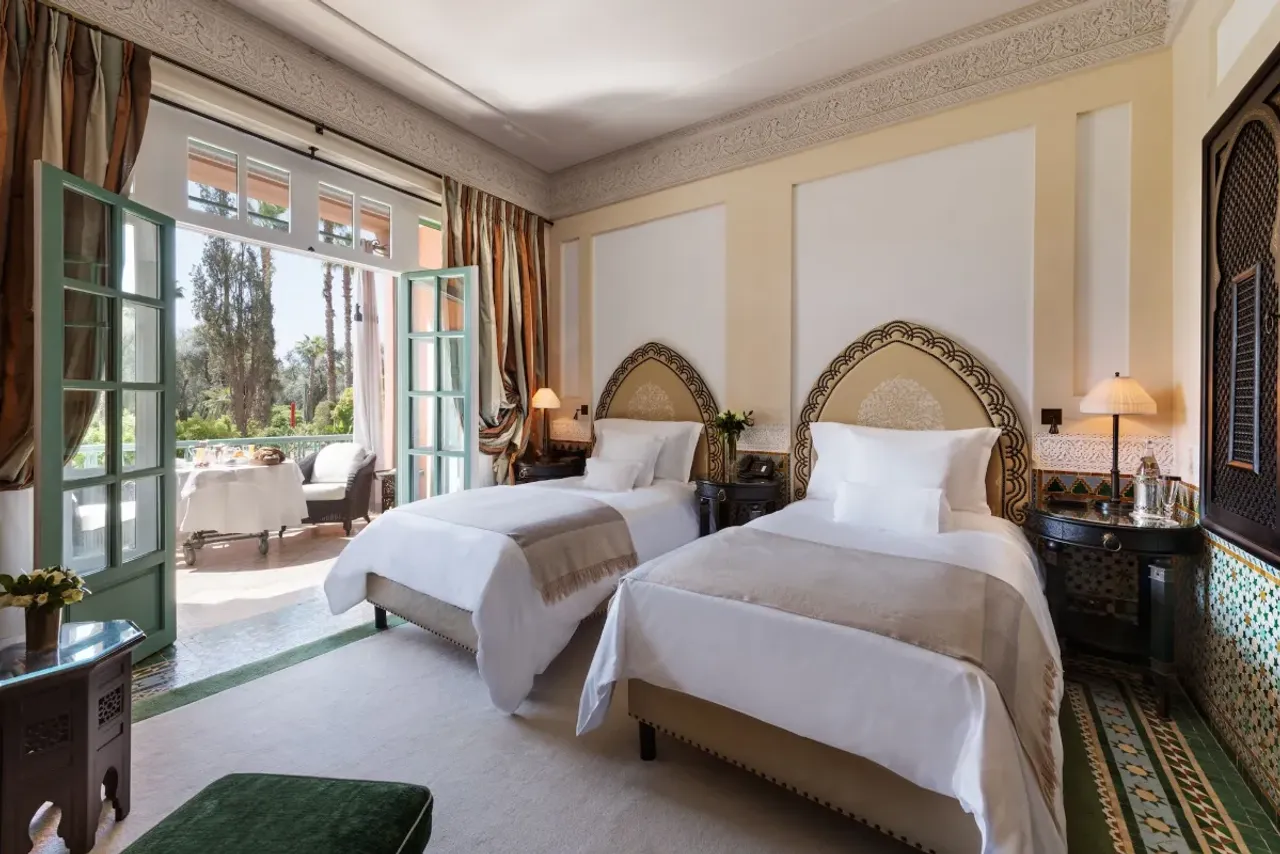
La Mamounia is the chance to sleep inside the legend that has defined Marrakech luxury for nearly a century — the draw is the ancient garden, the architecture and the service, not the nightly value.
In-Depth Review
Rooms and decor
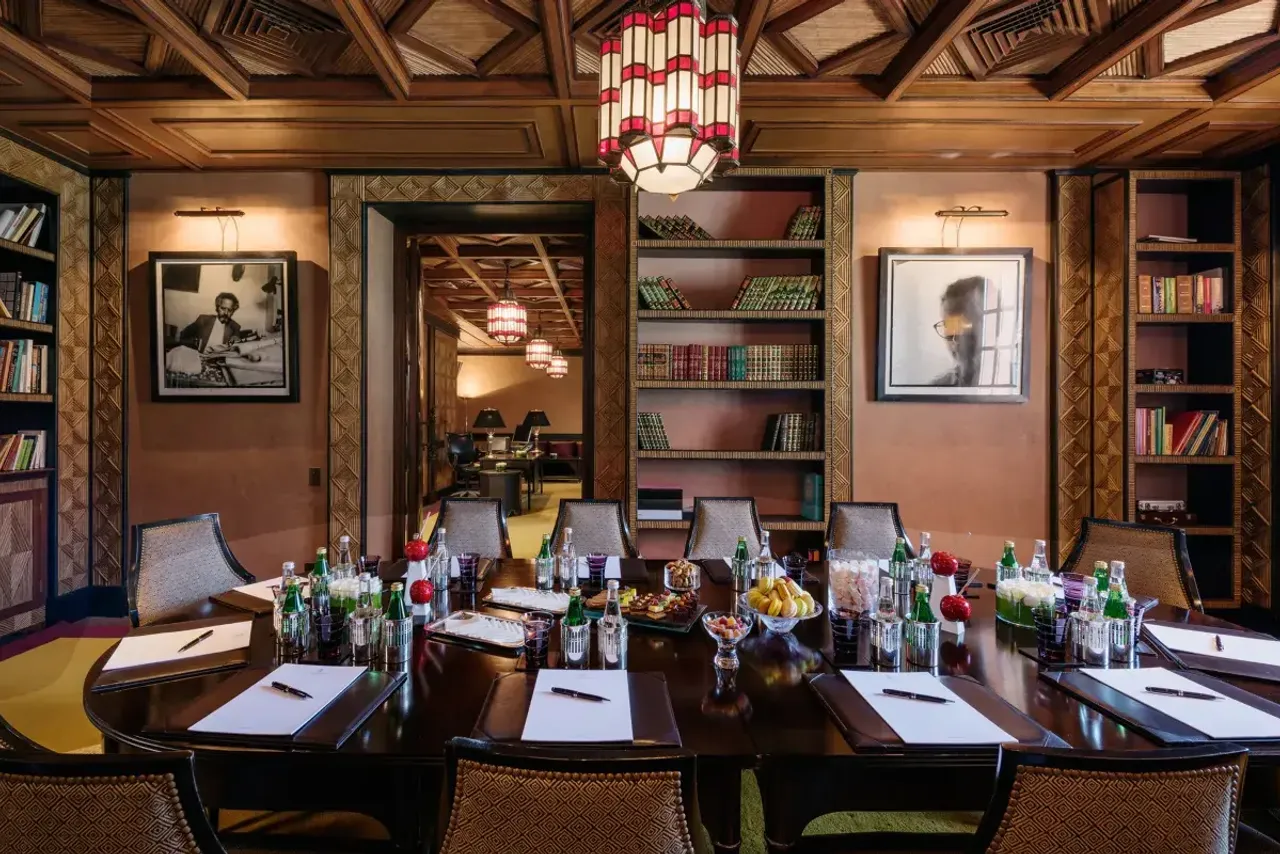
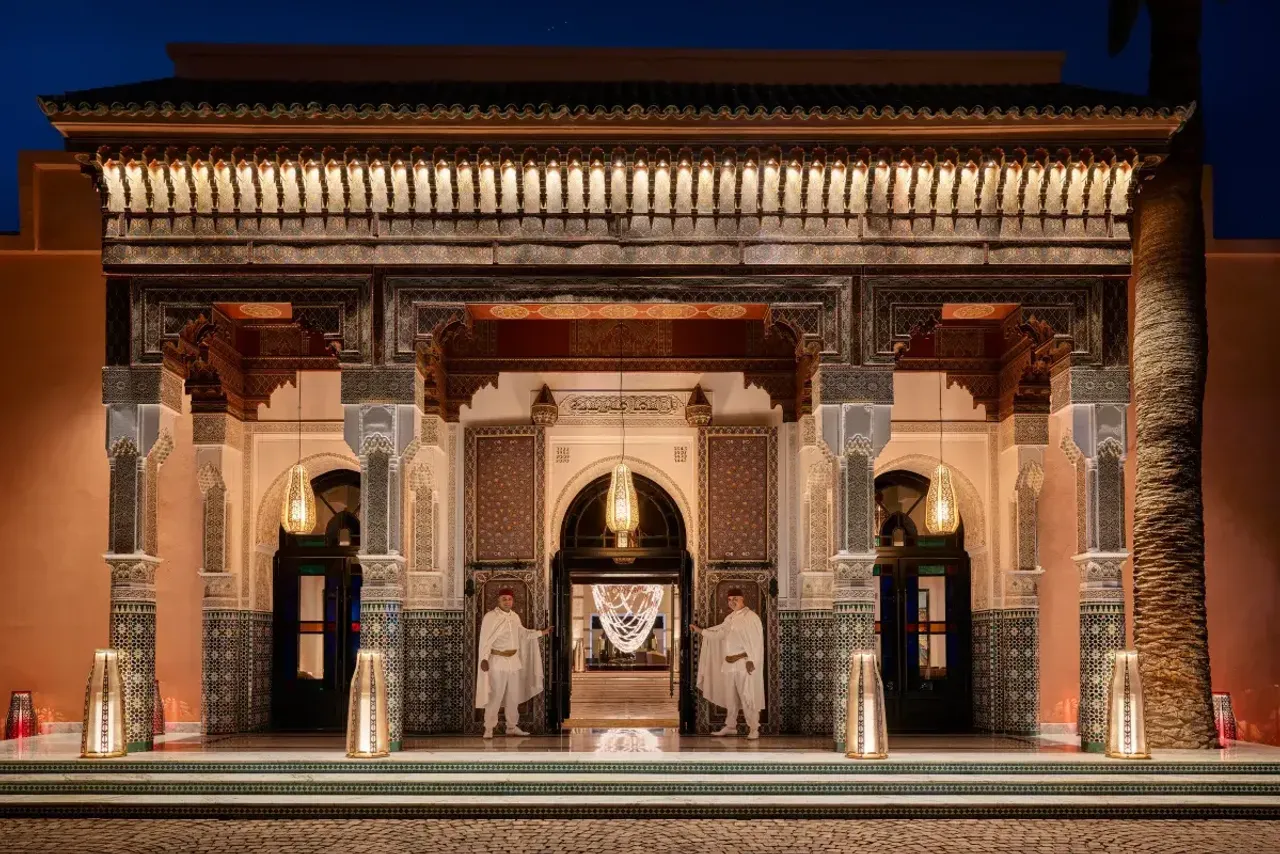
Imagine a hotel that has been open since 1923 on a garden once given as a wedding gift from a Moroccan sultan to his son - that's the origin of the name La Mamounia, taken from Prince Moulay Mamoun. The interiors were reworked by French designer Jacques Garcia, who braided Art Deco with Moroccan craft into something genuinely his own. Step into the lobby and you meet high ceilings finished in detailed plaster, geometric zellige tilework in saturated colours, pierced brass lanterns and hand-knotted rugs that run the length of the corridors. The roughly 209 rooms and suites are dressed in warm tones - wood, silk and a steady drumbeat of local craft detail. Many rooms have balconies looking out over the gardens or, in winter, the snow-dusted Atlas range on the horizon. Three private riads sit at the top of the menu, each with its own pool and garden for guests who want maximum privacy. Beds are deep and the linens are quality enough that several reviewers single out an unusually good night's sleep. Every corner is built to feel like staying inside a prince's palace.
Food and amenities
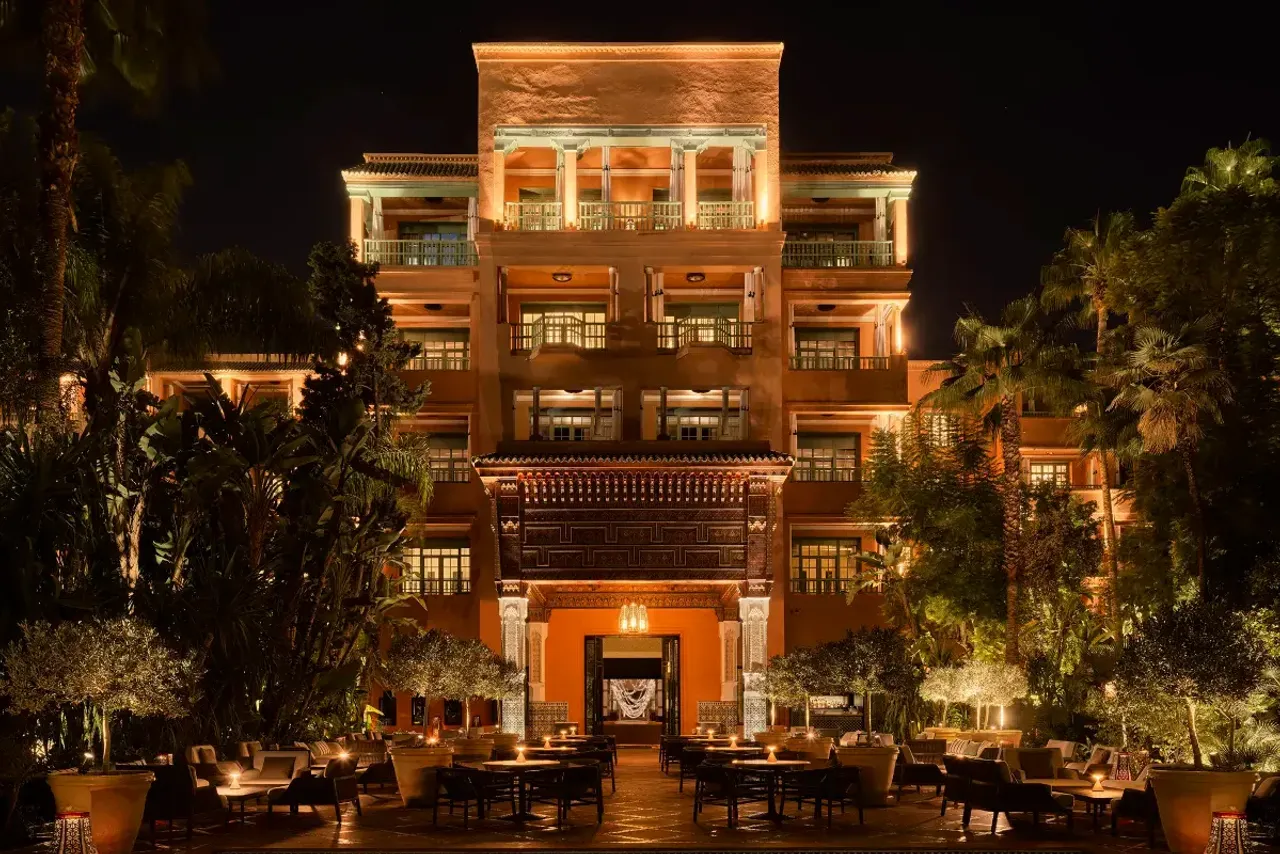
Two things make La Mamounia legendary - the garden and the spa. The ancient garden of more than 8 hectares wrapped around the hotel is the green oasis of the old city, planted with centuries-old olive trees, orange groves, towering palms, rose beds in mixed colours and fountains that send a constant low murmur through the grounds. Winston Churchill set up his easel here repeatedly and painted these gardens over and over - it's now part of the hotel's own folklore. The 2,500 sq m spa is the second pillar: a traditional hammam for the Moroccan exfoliation ritual, an indoor swimming pool tiled like a palace chamber, sauna, steam rooms and a treatment menu that reviewers regularly rank among the world's best. Food is just as serious. There are 6 restaurants in total - traditional Moroccan under brass lanterns, fine-dining Italian and French rooms, a pastry café from Pierre Hermé, and the Churchill Bar for cocktails in a low-lit room named after the famous repeat guest. An outdoor pool sits in the garden ringed by palms and loungers. You could spend the entire trip on the grounds and never feel short on options.
Location and getting there
La Mamounia is inside the medina on Avenue Bab Jdid, pressed against the iconic terracotta city wall. The location works because you're inside the historic core but the hotel's own walls and gardens hold the chaos at arm's length. Walk out the gate and roughly 10 minutes later you're at the Koutoubia Mosque, the tall minaret that anchors the Marrakech skyline. Push on another 12-15 minutes and you arrive at Jemaa el-Fnaa, the great square that flips from daytime market to nighttime carnival of food stalls, performers and music. From there the souk labyrinth of spice, carpet, brass lantern and leather stalls runs deeper into the medina. Marrakech has no metro, so transport is taxis or the hotel car. Marrakech Menara Airport (RAK) is only about 15 minutes by road. The summary: you can soak up old-city atmosphere on foot, then retreat into a quiet oasis behind ancient walls - a balance that's hard to find at this scale.
Things to know before booking
Honest call so you can decide. First is the price - La Mamounia is a once-in-a-lifetime tier, with entry rooms starting well above $650/night and suites pushing past $2,100. Some guests feel a meaningful share of the bill goes to the legend rather than the room itself; entry categories aren't always as spacious as the price tag suggests. Second is the add-on cost. Food, drinks, spa treatments and the tipping culture all run high - several reviewers mention feeling the expectation to tip more often than at comparable luxury hotels. Budget extra on top of the room rate. Third is privacy - this is a large, world-famous hotel, so peak season runs busy. The pool and garden get lively, and several reviewers note it feels less hushed than a smaller boutique. For true quiet, the private riads (at a much higher price) or low-season dates are the workaround. A few guests also note that the sheer size means service can occasionally feel less personal than at a smaller property, even though it stays solidly luxury overall.
Our take
After working through several hundred real guest reviews, our read is that La Mamounia sells the mythology of Marrakech luxury as completely as anywhere on Earth - the 8-hectare ancient garden, the Art Deco-meets-Moroccan interiors, the top-tier spa, the 6 restaurants, and a nearly hundred-year story that runs from sultans to Churchill. If your trip vision is a slow garden walk at dawn, the hammam in the afternoon and cocktails at the Churchill Bar at night, this is a once-in-a-lifetime stay you will remember for a long time. If your priority is nightly value or the muffled quiet of a small boutique, the price level and the busyness of a big-name hotel may give you pause. Overall 9.1/10, best for couples, honeymooners and luxury travelers who want the full Marrakech legend with no compromises.
Score Breakdown
Assessed by our editorial team from data and real guest reviews
The Honest Verdict — pros & what to know
- A near-century-old legend open since 1923, voted Best Hotel in the World multiple times by Conde Nast. Royalty and celebrities choose it as the symbol of Marrakech luxury - you're sleeping inside the address Churchill kept returning to.
- An ancient garden of over 8 hectares packed with centuries-old olive trees, orange groves, rose beds and fountains - a green oasis inside the old city that nothing else in Marrakech matches.
- A massive 2,500 sq m spa regularly ranked among the best on the planet, with a traditional hammam, indoor pool and a full menu of Moroccan rituals.
- 6 restaurants on site - traditional Moroccan under brass lanterns, an Italian, a French fine-dining room, a Pierre Hermé pastry café and the Churchill Bar for cocktails. You can stay the whole trip without leaving.
- Interiors by Jacques Garcia that braid Art Deco with Moroccan craft - zellige tilework, hand-cut plaster, brass lanterns. The lobby alone feels like stepping into a working palace.
- Pricing sits at once-in-a-lifetime levels - entry rooms regularly clear $650/night and suites push past $2,100. Some guests feel a chunk of the bill is paying for the name rather than the room, and entry categories aren't as spacious as the price suggests.
- Heavy add-on costs. Food, drinks and spa treatments are priced at top-tier resort levels, and the tipping culture is more visible than at most luxury hotels - several reviewers mention feeling expected to tip frequently.
- With around 209 rooms plus the day-trade crowd at the spa and gardens, peak season feels busier than a hotel at this price suggests. The pool and gardens get lively, and the privacy is less absolute than you might expect - if you want true quiet, you need to upgrade to a private riad or visit off-season.
Who It’s For
Match Score by travel style
Amenities
Location & Nearby Spots
Things to do near Marrakech
Day tours, attraction tickets and experiences around Marrakech — book ahead on Klook with mobile e-tickets.
See activities in MarrakechAffiliate link — we may earn a commission at no extra cost to you.
Insider Tips
- Walk the garden at first light or just before sunset - the golden hour on the centuries-old olive trees and terracotta walls is the photo most guests rank as the trip highlight.
- Book the hammam and spa treatments before you fly. The spa is famous and slots disappear fast, especially in high season - waiting until check-in often means missing the best windows.
- Stop at the Churchill Bar in the evening for a cocktail in the moody Art Deco room named after the resident painter-prime-minister, then pick up a few macarons at the in-house Pierre Hermé café for the walk back to the room.