
Hua Hin holds its own against any beach town in Thailand on the food front. The seafood here has a reputation for freshness because fishing boats still head out into the Gulf of Thailand every night — horseshoe crabs, cockles, snapper and squid hit the shore at dawn and land on night-market grills the same evening. Beyond the seafood, Hua Hin is one of the few places in Thailand where traditional Thai sweets that have largely disappeared from big cities are still made fresh daily. Eating with a sea breeze and the sound of waves makes every meal taste better than it has any right to.
 #1
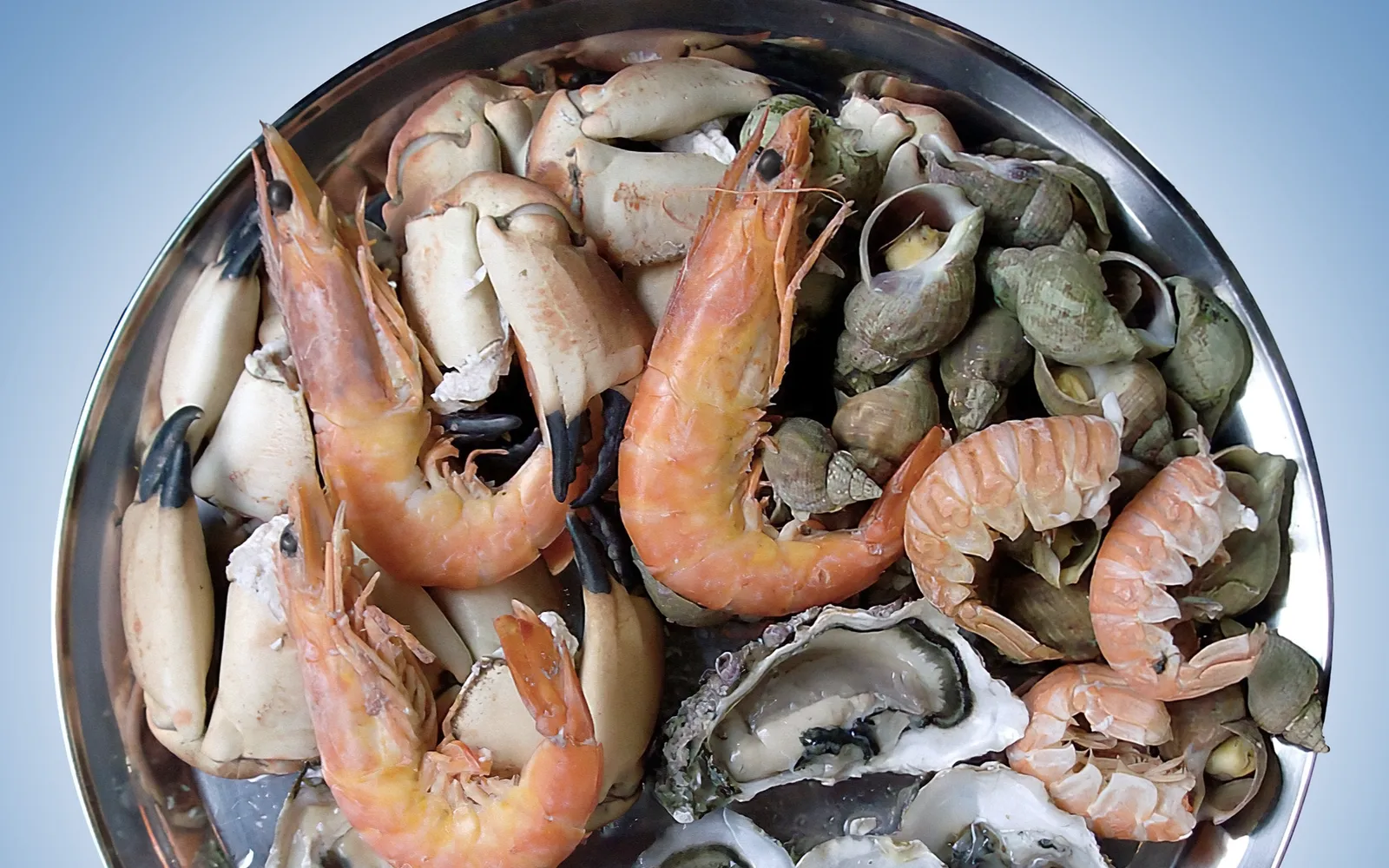
#1 Grilled Fresh Seafood · Grilled Fresh Seafood
Hua Hin has been a working fishing village for generations — boats go out every night and come back at dawn with the catch. That short chain from sea to grill is why the seafood quality here is exceptional. The go-to dishes include horseshoe prawns grilled over charcoal and served with seafood dipping sauce, steamed snapper with lime or fried with fish sauce, squid grilled on high heat until the edges are just charred, and cockles blanched and eaten with lime-fish sauce. Pricing varies by type and weight, so it pays to look at the display before you agree on a price — different stalls charge differently. Freshness is the main selling point, and with seafood this fresh it's impossible to fake.
- Inspect the raw ingredients before ordering — good seafood has clear eyes, prawns that still move, and shells that are firmly closed
- You can negotiate a little, especially if you're ordering several things, but pushing too hard may mean the stall swaps in lower-quality stock
- Thai seafood dipping sauce is considerably spicier than Western versions — tell the stall if you'd like it less fiery
 #2
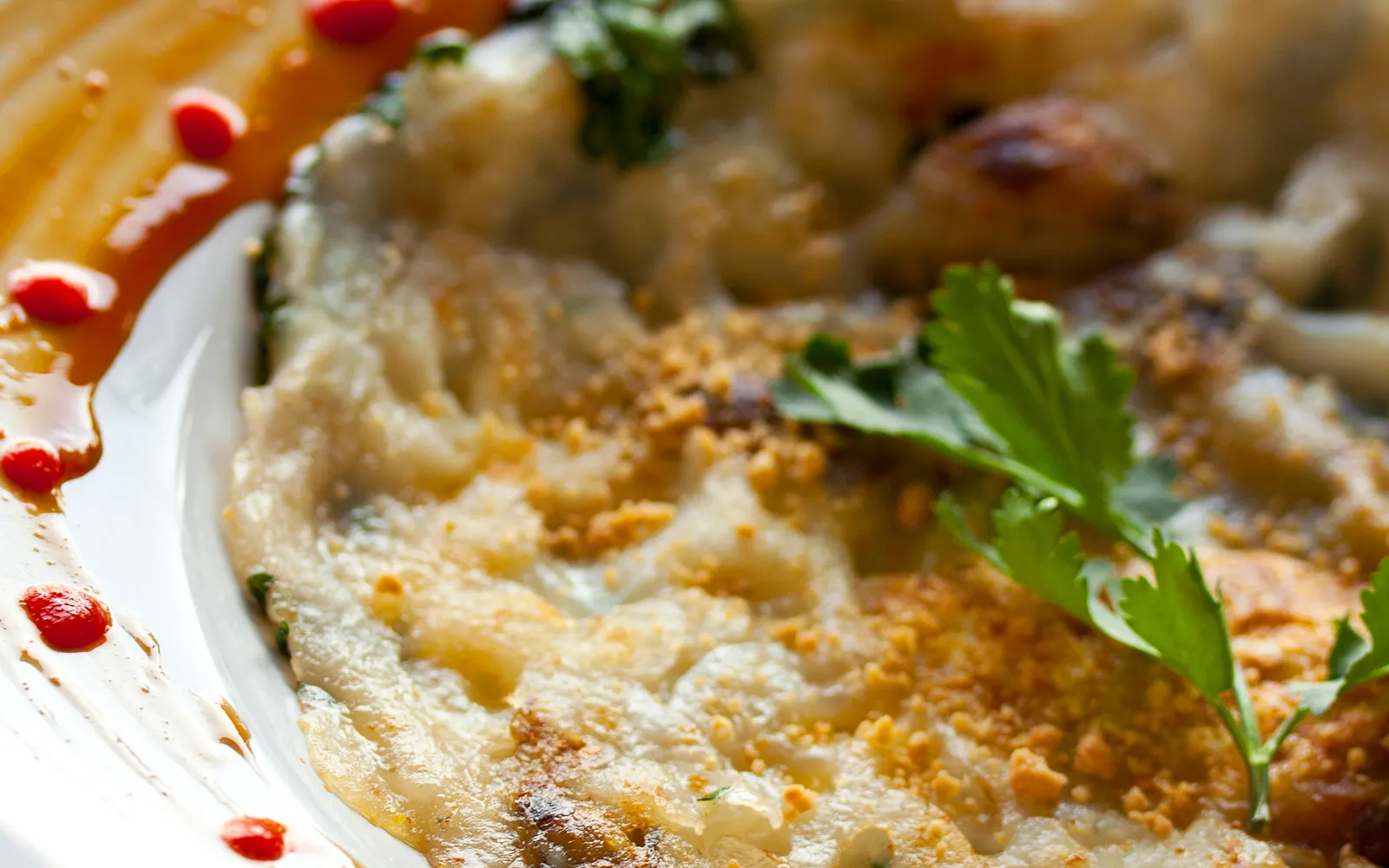
#2 Hoi Tod — Thai Oyster Omelette · Hoi Tod — Thai Oyster Omelette
This is a dish that Hua Hin does better than most places because the oysters come fresh from the Gulf of Thailand rather than a refrigerated box. The technique: cornstarch batter mixed with egg goes into a large iron wok on a fierce flame, oysters are pressed in and left to bond to the base until the edges go crispy. There are two styles — <em>baep grob</em> (more batter, extra crispy) or <em>baep on</em> (more egg, softer and custardy) — and any good stall will ask which you prefer. It's served with fresh morning glory greens and a sweet-sour-spicy dipping sauce. A plate runs around 100–150 baht and it's one of the most satisfying meals in town for the price.
- Tell the stall whether you want it crispy or soft — a good cook always asks, but it helps to know your answer
- Eat it immediately off the wok; once it cools the batter turns chewy and loses everything that makes it good
- Look for stalls where locals are eating — that's usually a sign the oysters are fresh and turnover is high
 #3
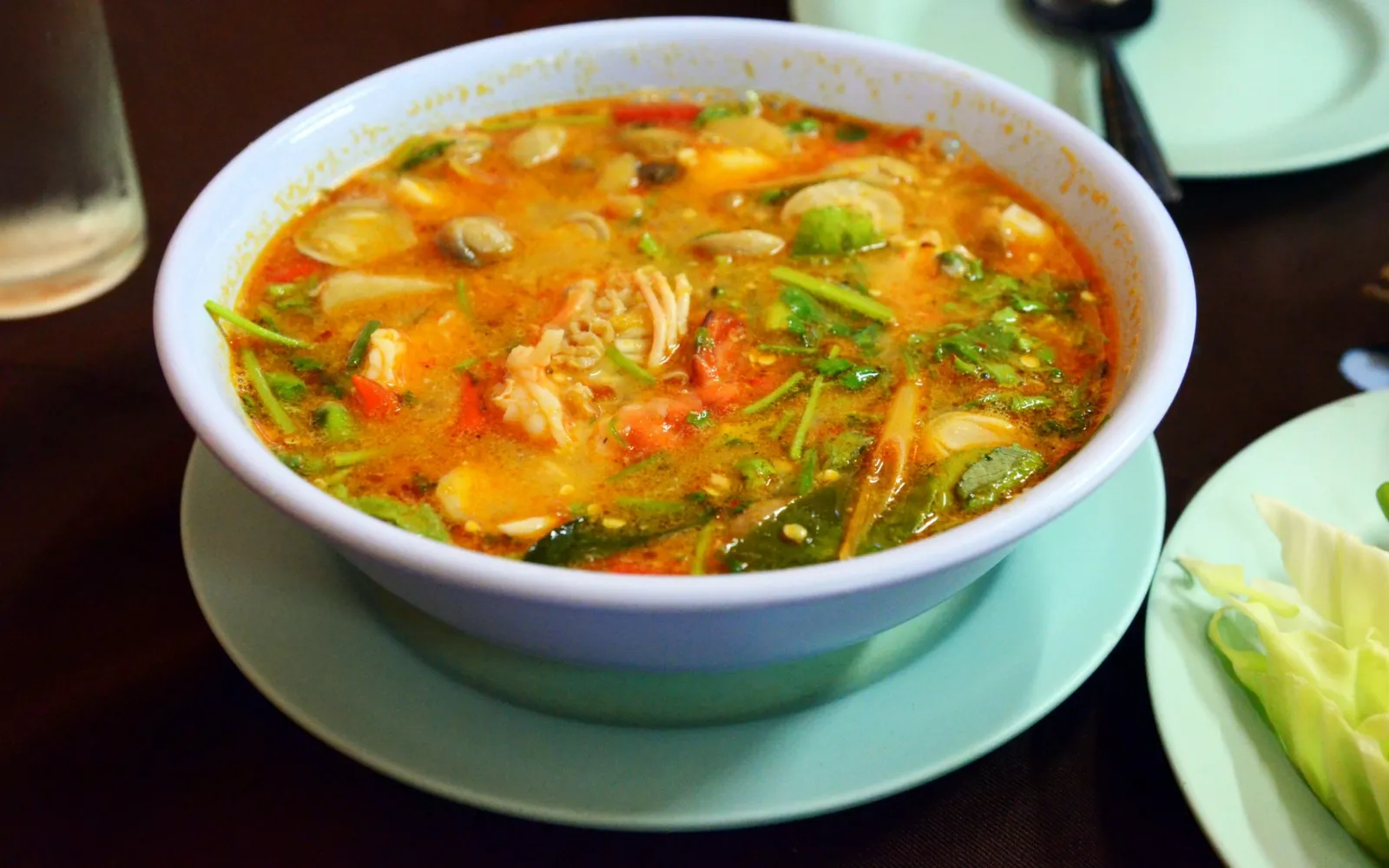
#3 Tom Yum Kung — Spicy Prawn Soup · Tom Yum Kung — Spicy Prawn Soup
What makes Hua Hin's tom yum different from the version served elsewhere is the prawn: a large, just-caught Gulf specimen whose flesh is naturally sweet, requiring no flavour shortcuts. The broth is built from lemongrass, kaffir lime leaf, galangal, fresh lime juice, fish sauce and fresh chillies for a clean sour-spicy-aromatic balance. The creamy version (<em>nam khon</em>) adds coconut milk and condensed milk for richness; the clear version (<em>nam sai</em>) is sharper and more bracing. Both are popular. One small pot serves two alongside steamed rice. Prices run around 180–280 baht depending on prawn size.
- Tell the kitchen your spice level — authentic tom yum is hotter than most visitors expect, so starting with <em>phed noi</em> (less spicy) is sensible if you're unsure
- Adding straw mushrooms or oyster mushrooms is a good call — they soak up the broth and add texture
- Fresh-prawn tom yum has firm, springy flesh; if the prawn is soft or waterlogged, it was frozen
 #4
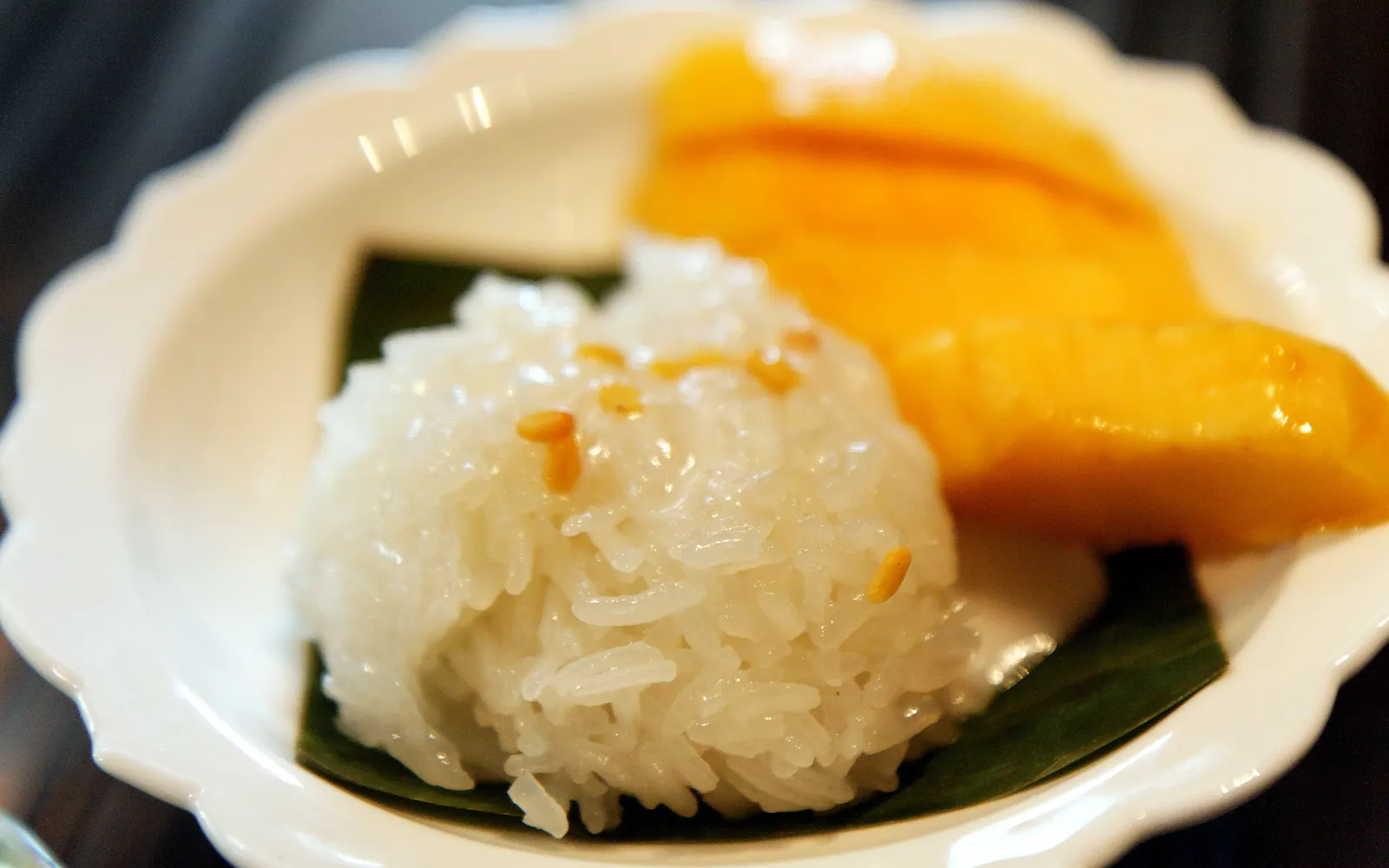
#4 Mango Sticky Rice · Mango Sticky Rice
Thailand's most famous dessert is available year-round in Hua Hin, and the quality is consistently high because fresh fruit arrives from nearby orchards in Phetchaburi and Prachuap Khiri Khan provinces. Glutinous rice is steamed and soaked in fresh coconut milk and palm sugar until fragrant, then served alongside sliced <em>nam dok mai</em> mango and finished with salted coconut cream — the combination of sweet, rich and faintly salty is why this dish has endured for centuries. During mango season (April–June) the fruit is at its sweetest. A serving costs around 60–100 baht depending on the shop and portion size.
- The right mango is pale yellow — not vivid green or deep golden — which signals perfectly ripe and at its sweetest
- Plearn Wan has reliable quality and a pleasant setting for sitting down with a plate
- Outside mango season, good shops serve it with <em>nam dok mai</em> preserved in syrup or substitute in-season fruit
 #5
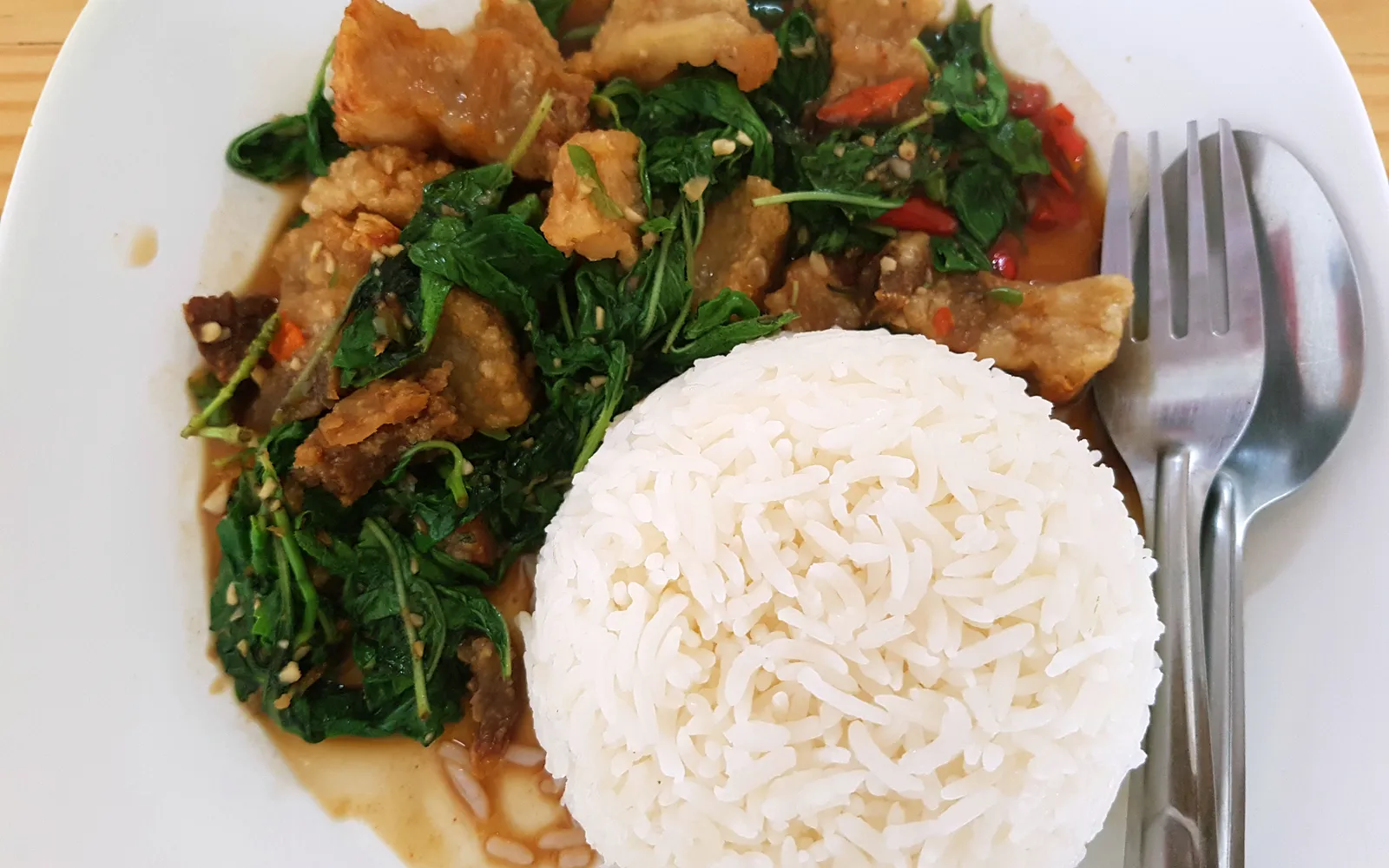
#5 Stir-fried Seafood with Thai Basil on Rice · Stir-fried Seafood with Thai Basil on Rice
This is the dish Hua Hin residents reach for when they want something fast and satisfying. What sets the local version apart is that it's made with genuinely fresh seafood — your choice of prawn, squid, cockles or a mixed assortment — stir-fried on a fierce flame with fragrant holy basil, fish sauce, dark soy and bird's eye chillies, then served over hot steamed rice with a fried egg on top. Skipping the egg is considered an offence in Thailand. Prices start at 80–150 baht depending on the seafood. The dish is on every menu in town but the quality varies enormously based on the cook's wrist speed and the freshness of the basil.
- Order <em>phat kaphrao phiset</em> (special) to get more basil — it keeps the dish from tasting bitter and intensifies the flavour
- Made-to-order shops open from morning to late night; for lunch, the stalls near the fresh market where locals eat tend to be the best
- If your chilli tolerance is low, say <em>phed noi</em> — authentic versions use a lot of bird's eye chillies
 #6
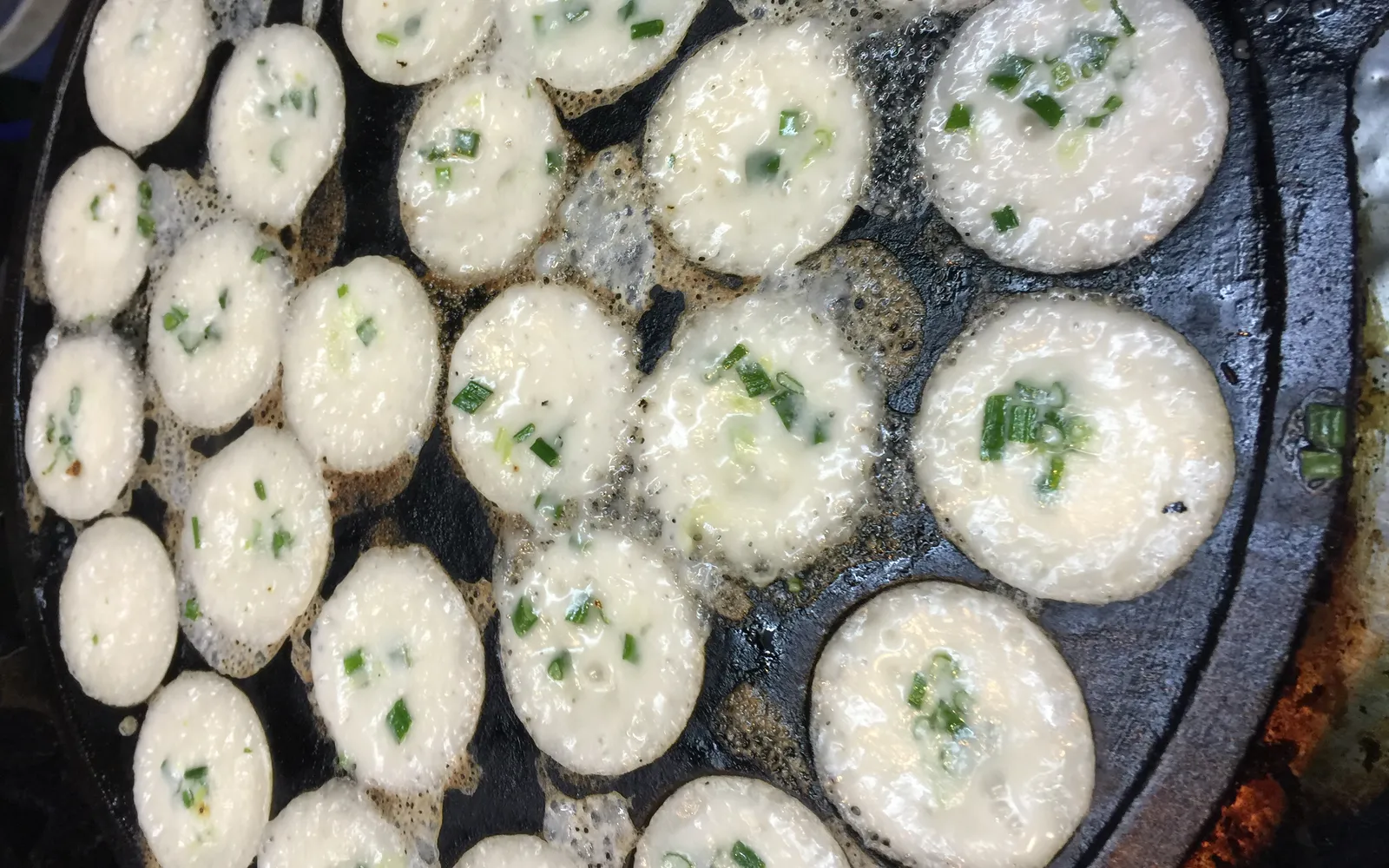
#6 Traditional Thai Sweets — Thong Yip, Khanom Krok · Traditional Thai Sweets — Thong Yip, Khanom Krok
Hua Hin is one of the very few towns in Thailand where old-style traditional sweets are still sold widely at the market, not just in tourist shops. Plearn Wan in particular gathers a strong collection of heritage dessert makers under one roof. You'll find things that have largely vanished from Bangkok — <em>thong yip</em> (egg-yolk flowers), <em>foi thong</em> (golden egg threads), <em>thong yod</em> (egg drops), <em>khanom chan</em> (layered jelly), <em>khanom krok</em> (coconut milk rice cakes in a clay mould), and <em>thong muan sod</em> (old-style rolled wafers filled with sweet coconut). Everything is made fresh daily by makers who have inherited the craft from older generations. The difference from the frozen versions sold in supermarkets is striking — fresh coconut milk changes everything.
- Khanom krok must be eaten straight from the mould — crispy outside, soft inside; once cool, the texture turns disappointingly chewy
- Thong yip and foi thong travel well in a box and make a genuinely appreciated gift for anyone who knows their Thai sweets
- Plearn Wan is open daily; dessert stalls typically run from 9 am to around 4 pm and some items sell out before noon on weekends
Where to stay in Hua Hin for this trip
A well-located hotel means less commuting and more sightseeing. Here are real, top-rated stays in Hua Hin — compare Agoda · Booking · Trip.com in one click.
Anantasila Villa by the Sea Hua Hin
Affiliate links — we may earn a commission at no extra cost to you. Details
Siam Beach Resort Hua Hin
Affiliate links — we may earn a commission at no extra cost to you. Details
V Villas Hua Hin, MGallery
Affiliate links — we may earn a commission at no extra cost to you. Details
Putahracsa Hua Hin Resort
Affiliate links — we may earn a commission at no extra cost to you. Details
Tours, tickets & activities in Hua Hin
Day tours, attraction tickets and travel essentials for Hua Hin — book ahead on Klook with mobile e-tickets.
Affiliate links — we may earn a commission at no extra cost to you.
Before You Pack
The best food in Hua Hin is the food you eat with a sea breeze on your face — whether that's a crispy hoi tod from a charcoal stall or a plate of mango sticky rice on a beach chair. The prices are reasonable, the produce is genuinely fresh, and that combination is why people keep coming back.