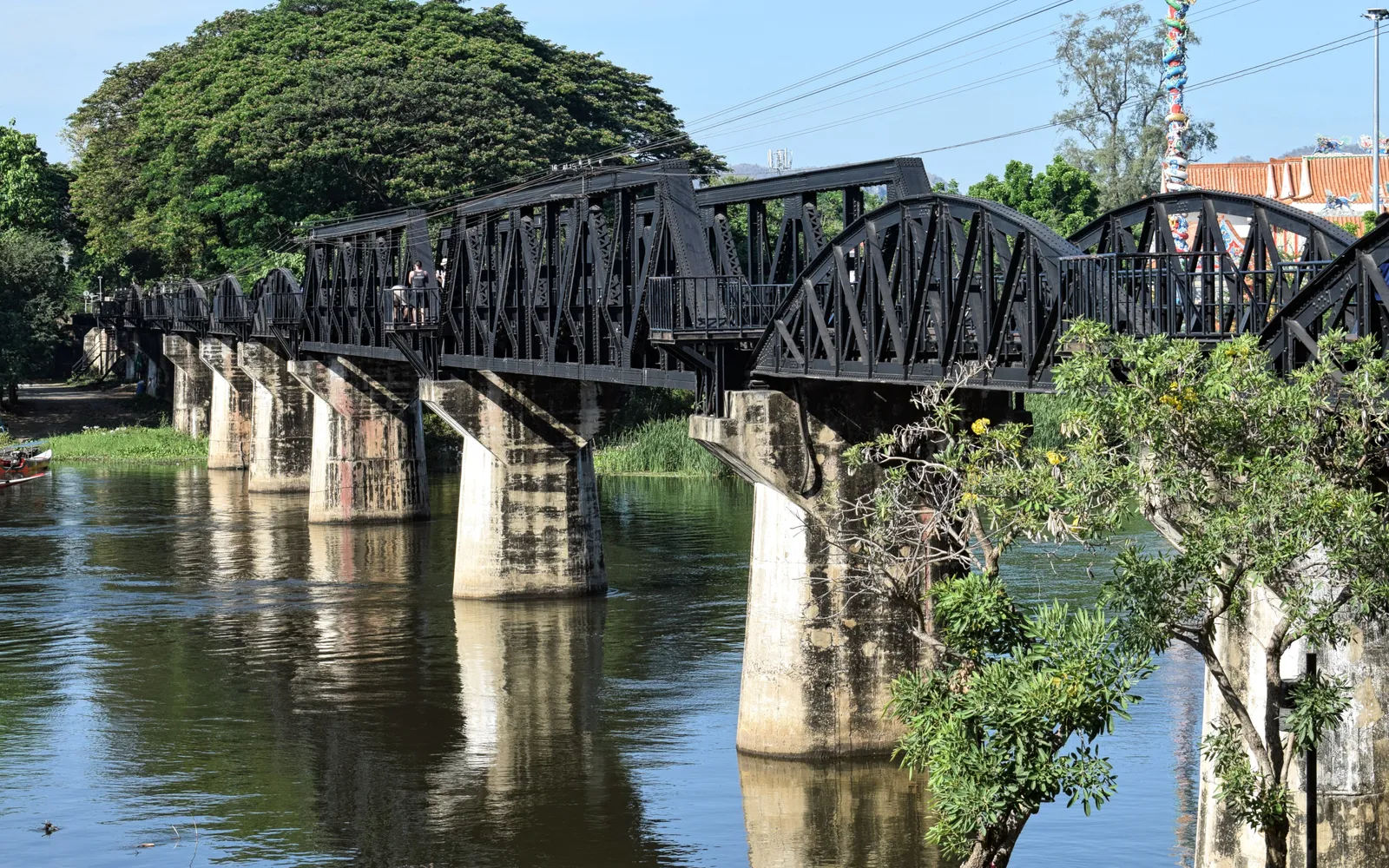
Kanchanaburi's food draws from several ethnic traditions — Central Thai, Mon, and Karen — all shaped by riverside communities that have relied on Kwai River freshwater fish as a staple for hundreds of years. The flavor profile runs sour from chamuang leaves, hot from wild chilies, and fragrant from fresh herbs foraged in nearby forests. Eating at a riverside restaurant while watching the Kwai catch the last light of the afternoon is an experience worth building your itinerary around.
 #1
#1 Moo Chamuang · Moo Chamuang
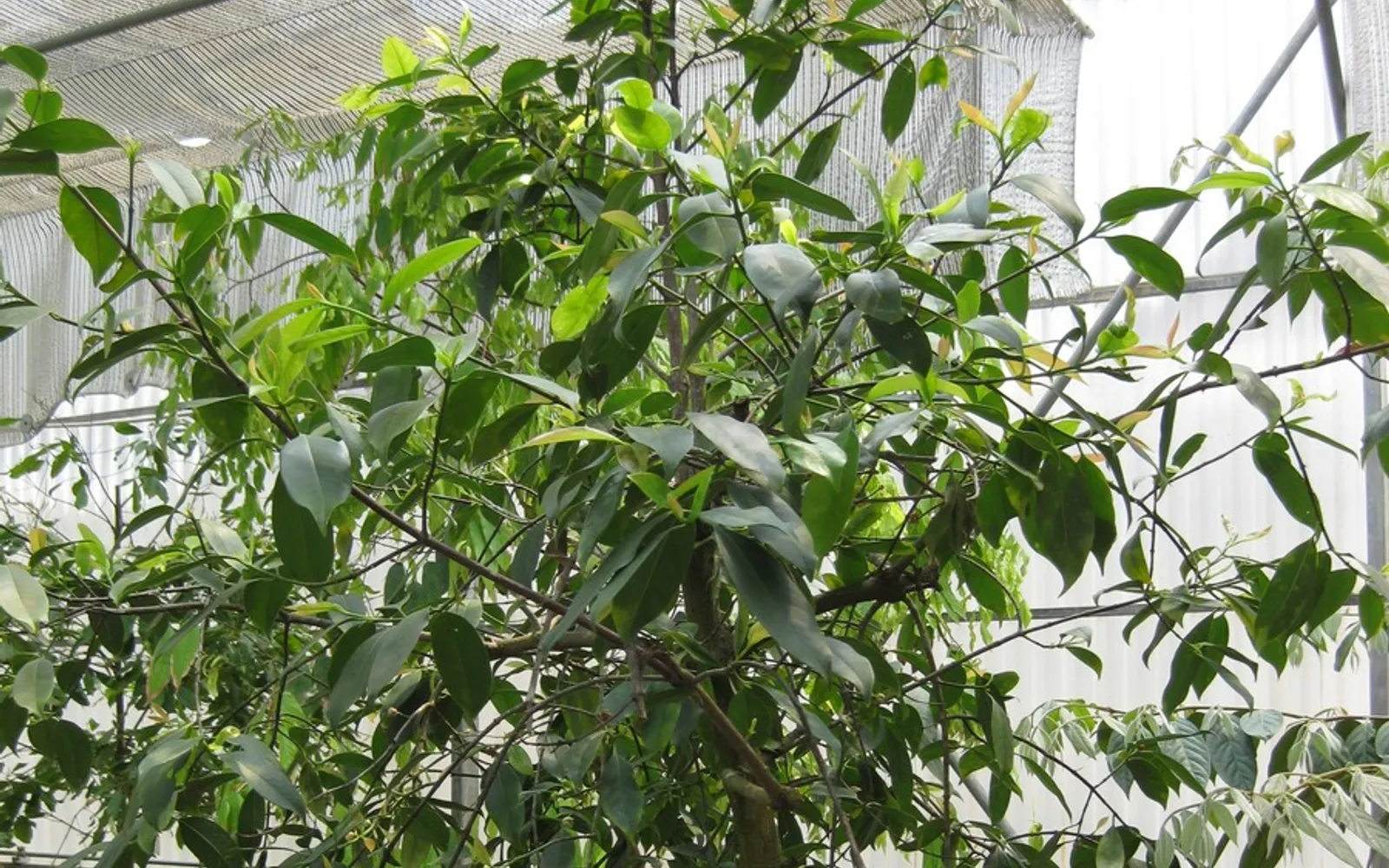
Moo Chamuang is pork belly braised with fresh chamuang leaves, a local herb with a natural tartness that needs no coconut milk to balance it. The result is richer and more complex than a standard Thai curry — sour up front, a thread of sweetness, then salt — with pork that falls apart against a bowl of hot jasmine rice. This is the dish Kanchanaburi locals point to first when asked what their province does that nowhere else does.
- Order it as a main dish over rice, not as a soup — it comes in both saucy and near-dry versions, so specify your preference
- Morning-market stalls along the river tend to make it fresher than the tourist-facing restaurants
- Fresh chamuang leaves are near-impossible to find outside the province — eat your fill while you're here
 #2
#2 Tom Yum Pla Kang · Tom Yum Pla Kang
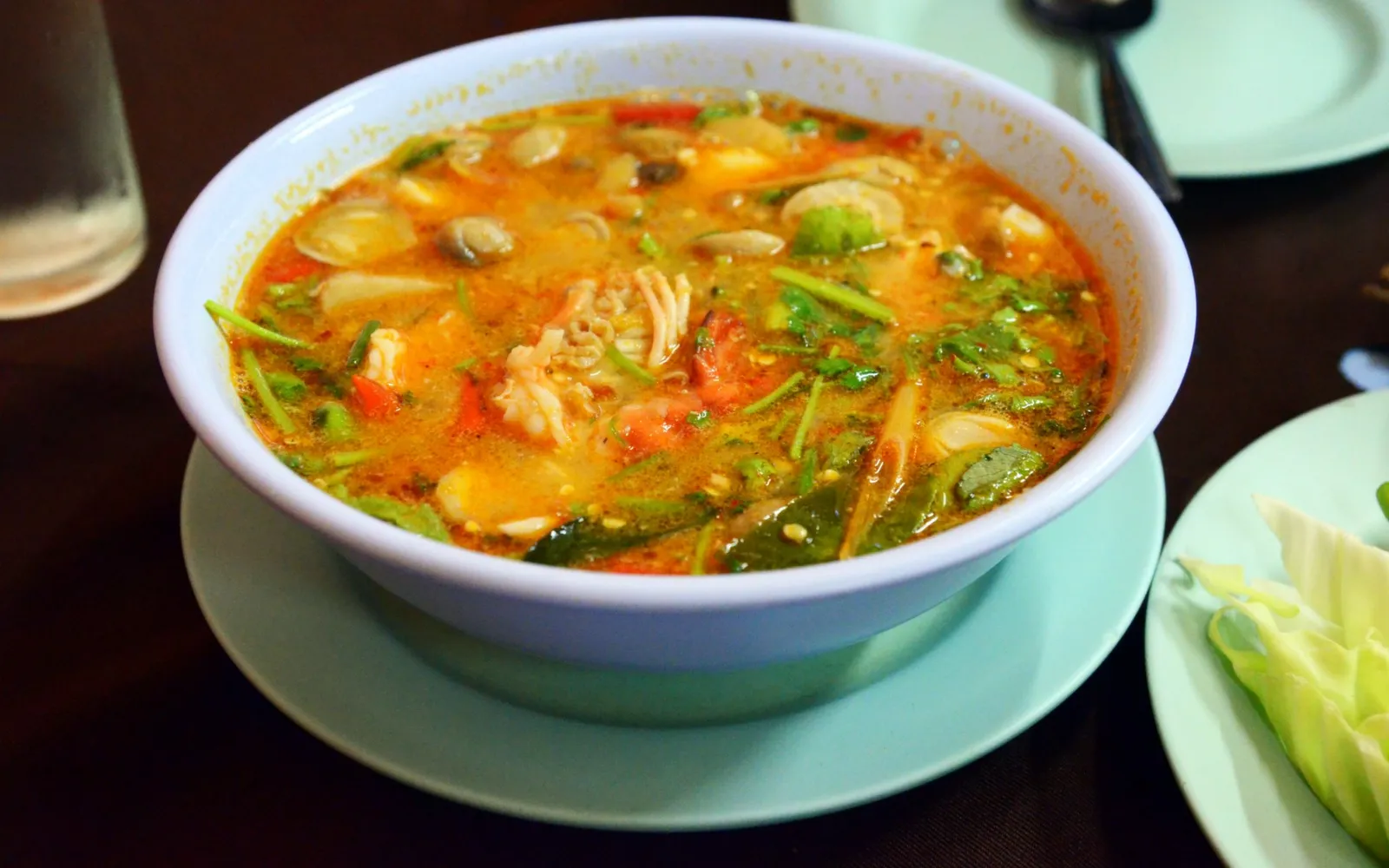
Pla kang — a variety of giant snakehead caught directly from the Kwai — has firm, fatty flesh with almost no muddy taste, which makes it ideal for a rich, spice-forward tom yum. The broth is built on lemongrass, galangal, kaffir lime leaves, and fresh chilies, with lime juice driving the acidity to a sharp edge. This dish is a product of the river itself: it only works with fish pulled from the water the same day.
- Order the cloudy version (tom kha style) for a richer finish, or clear broth if you prefer lighter heat
- Ask the server where the fish came from that morning before ordering — freshness is everything here
- Pairs well with jasmine rice or sticky rice, whichever you prefer
 #3
#3 Kaeng Pa (Jungle Curry) · Kaeng Pa (Jungle Curry)
Kaeng Pa contains no coconut milk — it's built on a concentrated curry paste with fresh herbs: lemongrass, galangal, kaffir lime leaves, and small forest chilies. The heat level runs considerably higher than most Thai curries. Pork, chicken, or river fish are the typical proteins, and wild vegetables sourced from Kanchanaburi's forests give this version a character that sets it apart from the same dish made elsewhere in Thailand.
- Very spicy — tell your server if you need the chili dialed back before they start cooking
- Try the snakehead fish version specifically: freshwater fish and jungle curry paste are a particularly good match
- Usually sold as a rice-plate dish at around 50–80 baht a portion
 #4
#4 Pla Pao (Thai Salt-Crusted Grilled Fish) · Pla Pao (Thai Salt-Crusted Grilled Fish)
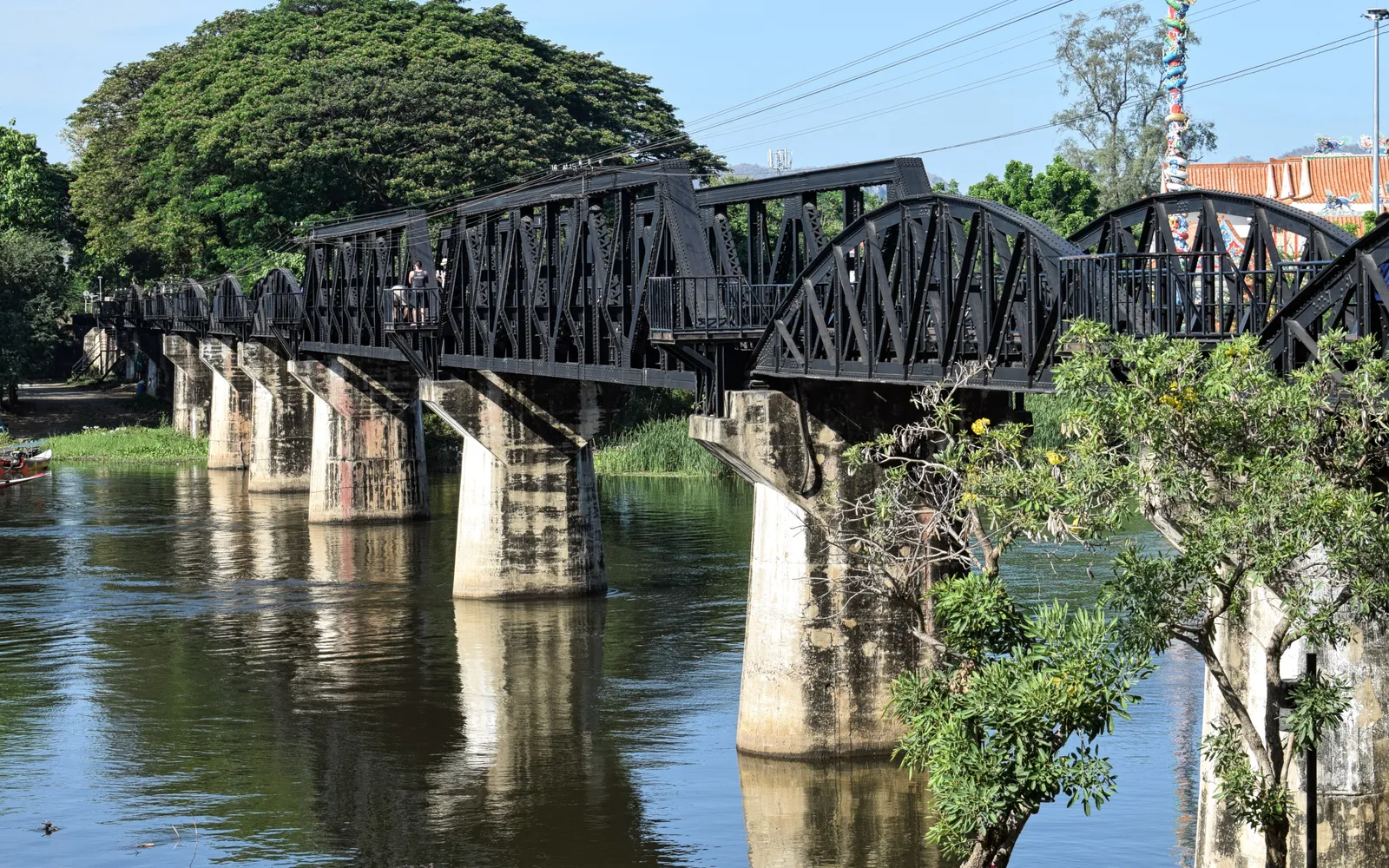
The technique here is slow charcoal-grilling with the belly stuffed with lemongrass and kaffir lime leaves, then the entire fish coated in a thick layer of coarse salt that seals in moisture and gradually draws seasoning into the flesh. In Kanchanaburi, the fish is freshwater Kwai stock — typically snakehead or tilapia. The result is smoky, salty, and fragrant, eaten with a sharp seafood dipping sauce made from lime, garlic, and chilies.
- Order a whole fish grilled to order in front of you — don't buy one that has been sitting
- The fresh-made seafood dipping sauce from local vendors beats any bottled version
- Choose snakehead or tilapia if you want firmer, more aromatic flesh
 #5
#5 Boat Noodles (Kuay Teow Rua) · Boat Noodles (Kuay Teow Rua)
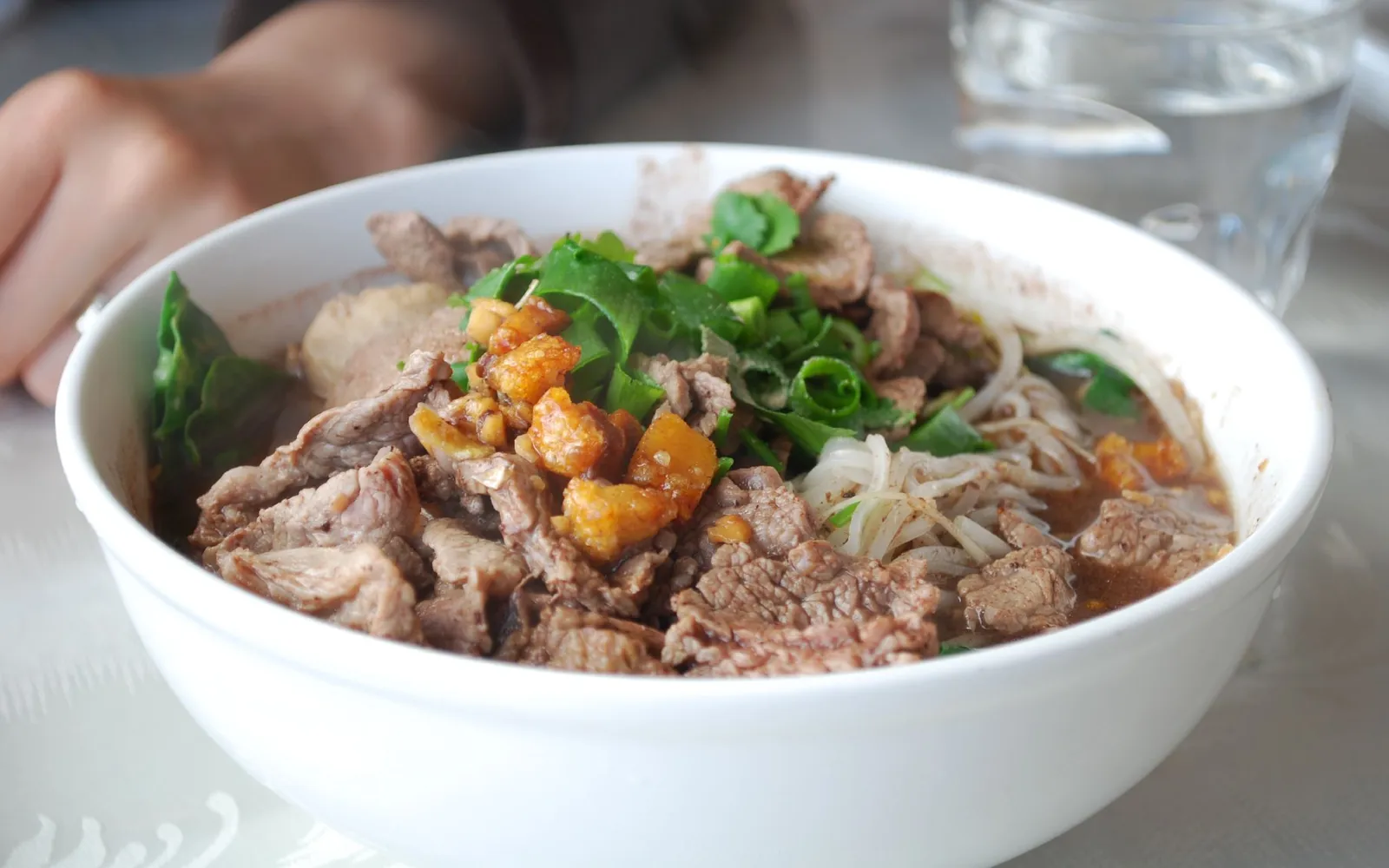
The defining feature of boat noodles is the broth: slow-reduced with a small amount of pork or beef blood, which turns the liquid a deep brown-black and gives it a layered richness. Braised pork and pickled vegetables finish each bowl. Portions are intentionally tiny — this is a legacy of the original canal-boat vendors who served small bowls to passing longboats. Eating three to five bowls in one sitting is completely normal.
- Order 3–4 bowls at once; the single-bowl approach doesn't work at these portion sizes
- Choose flat wide noodles or thin egg noodles based on your preference
- Season to taste with the vinegar-soaked chilies, dried chili flakes, sugar, and fish sauce on the table
 #6
#6 Mon-Style Curry Rice · Mon-Style Curry Rice
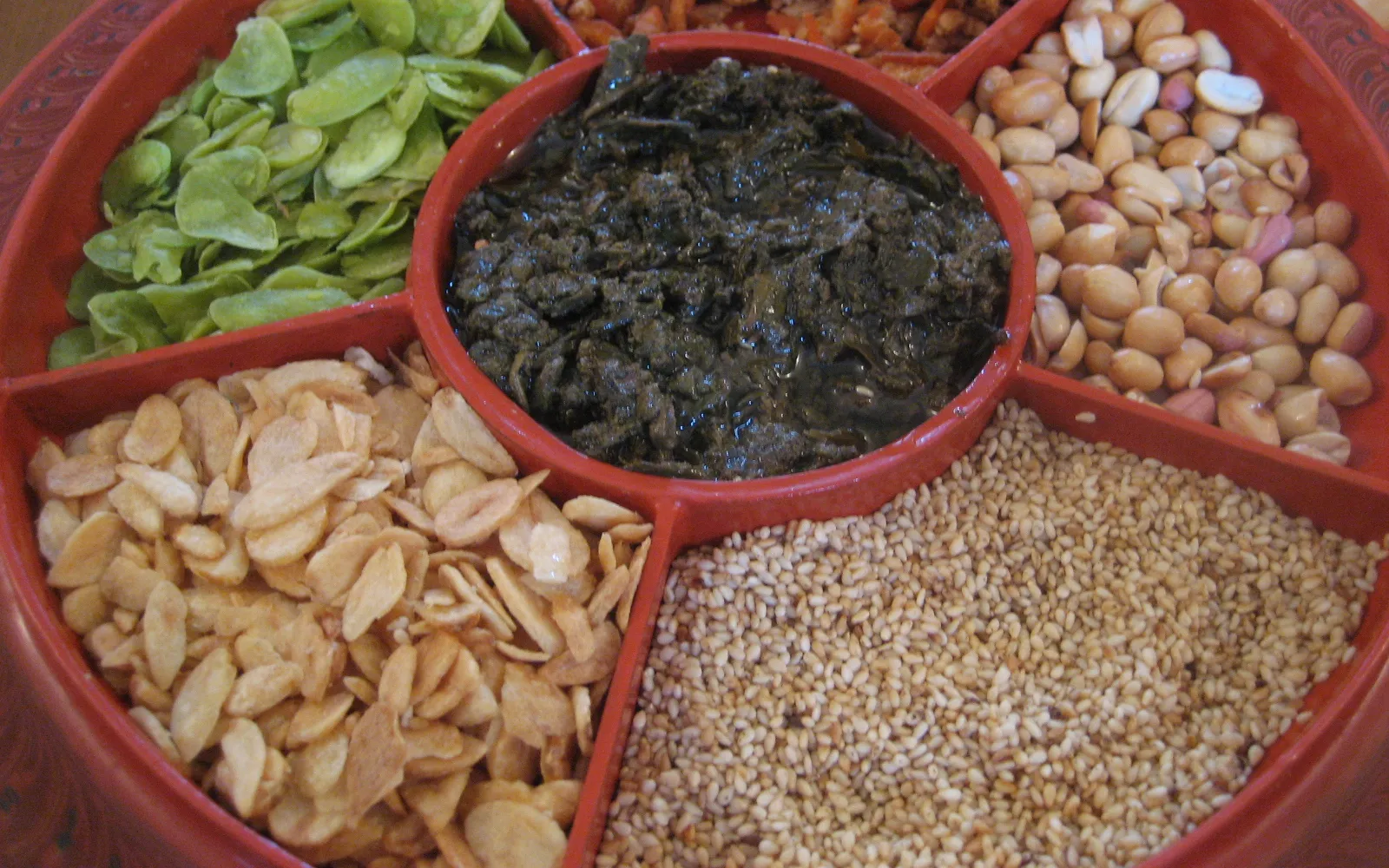
The Mon food of Sangkhlaburi blends Burmese spices with Thai aromatics. Mon curry uses turmeric, lemongrass, and dried chilies to produce a vivid orange-yellow color and a flavor that reads noticeably milder than standard Thai curry — the heat is restrained, letting the spices carry the dish. Pork or chicken is soft and well-rendered. It's served on a banana leaf or a tin tray, in a border-town setting where the traditional way of life hasn't changed much in decades.
- Only available at Sangkhlaburi Morning Market — not replicated in Kanchanaburi town
- Try the Mon sweets sold alongside, including coconut-filled rice dumplings
- Most stalls sell out before noon — arrive before 10am to be safe
Where to stay in Kanchanaburi for this trip
A well-located hotel means less commuting and more sightseeing. Here are real, top-rated stays in Kanchanaburi — compare Agoda · Booking · Trip.com in one click.
The FloatHouse River Kwai
Affiliate links — we may earn a commission at no extra cost to you. Details
Hintok River Camp @ Hellfire Pass
Affiliate links — we may earn a commission at no extra cost to you. Details
Home Phutoey River Kwai Hotspring & Nature Resort
Affiliate links — we may earn a commission at no extra cost to you. Details
The Bridge Residence Hotel
Affiliate links — we may earn a commission at no extra cost to you. Details
Tours, tickets & activities in Kanchanaburi
Day tours, attraction tickets and travel essentials for Kanchanaburi — book ahead on Klook with mobile e-tickets.
Affiliate links — we may earn a commission at no extra cost to you.
Before You Pack
Kanchanaburi's food is a snapshot of Central Thailand meeting a patchwork of Mon, Karen, and riverine cultures. One bowl of Tom Yum Pla Kang or a plate of Moo Chamuang is enough to understand why locals take their local ingredients so seriously.