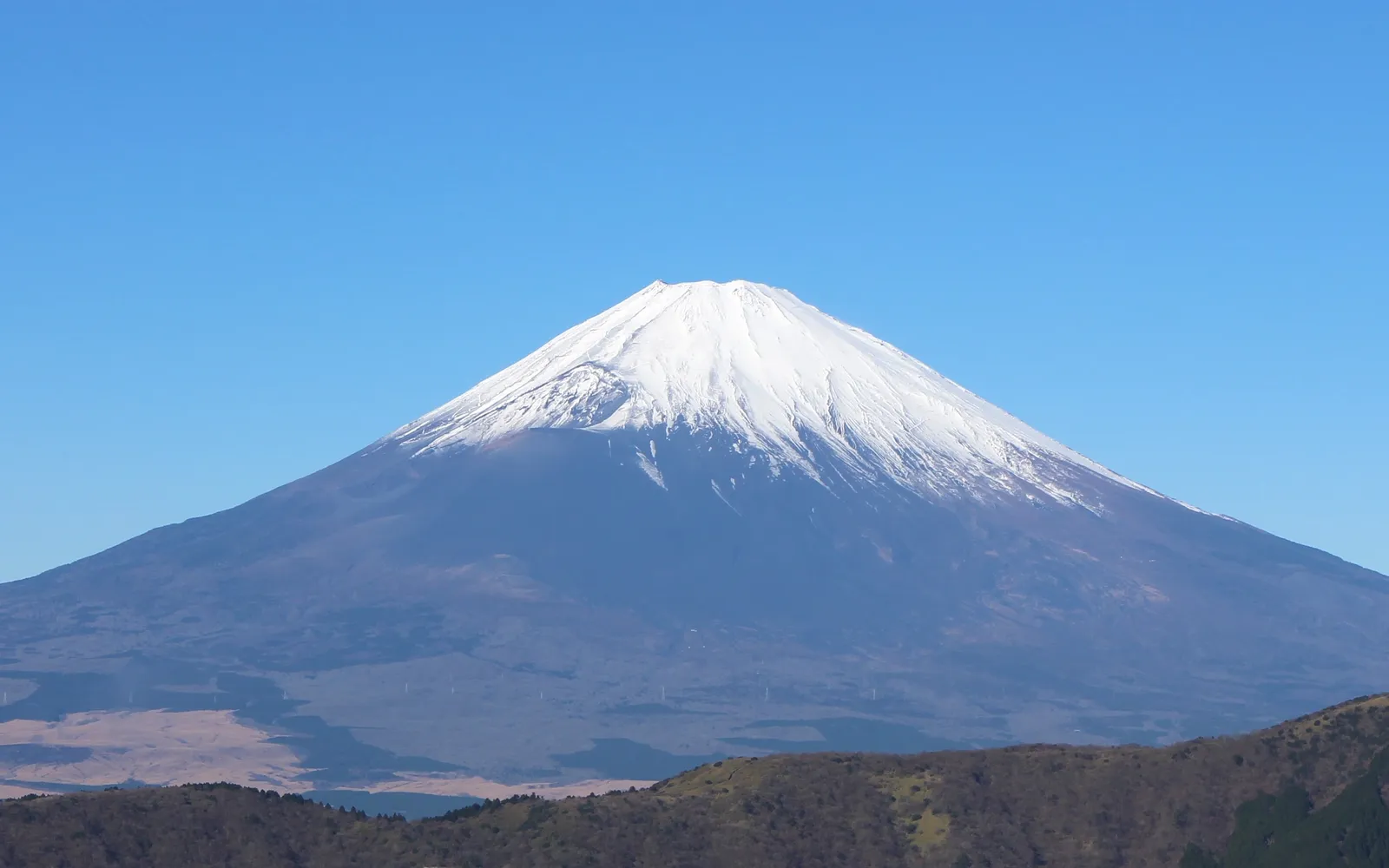
Yamanashi is a mountain prefecture where volcanic soil made rice farming impractical. Wheat flour became the heart of local cooking — and from that constraint came three dishes that have outlasted centuries: hoto simmered in thick miso broth, Yoshida udon with its famously firm chew, and Shingen Mochi, a sweet that warriors once carried into battle. None of them can be replicated in Tokyo.
 #1
#1 Hoto — Flat Wheat Noodles in Thick Miso Broth, the Dish of the Takeda Warriors · Hoto Noodles
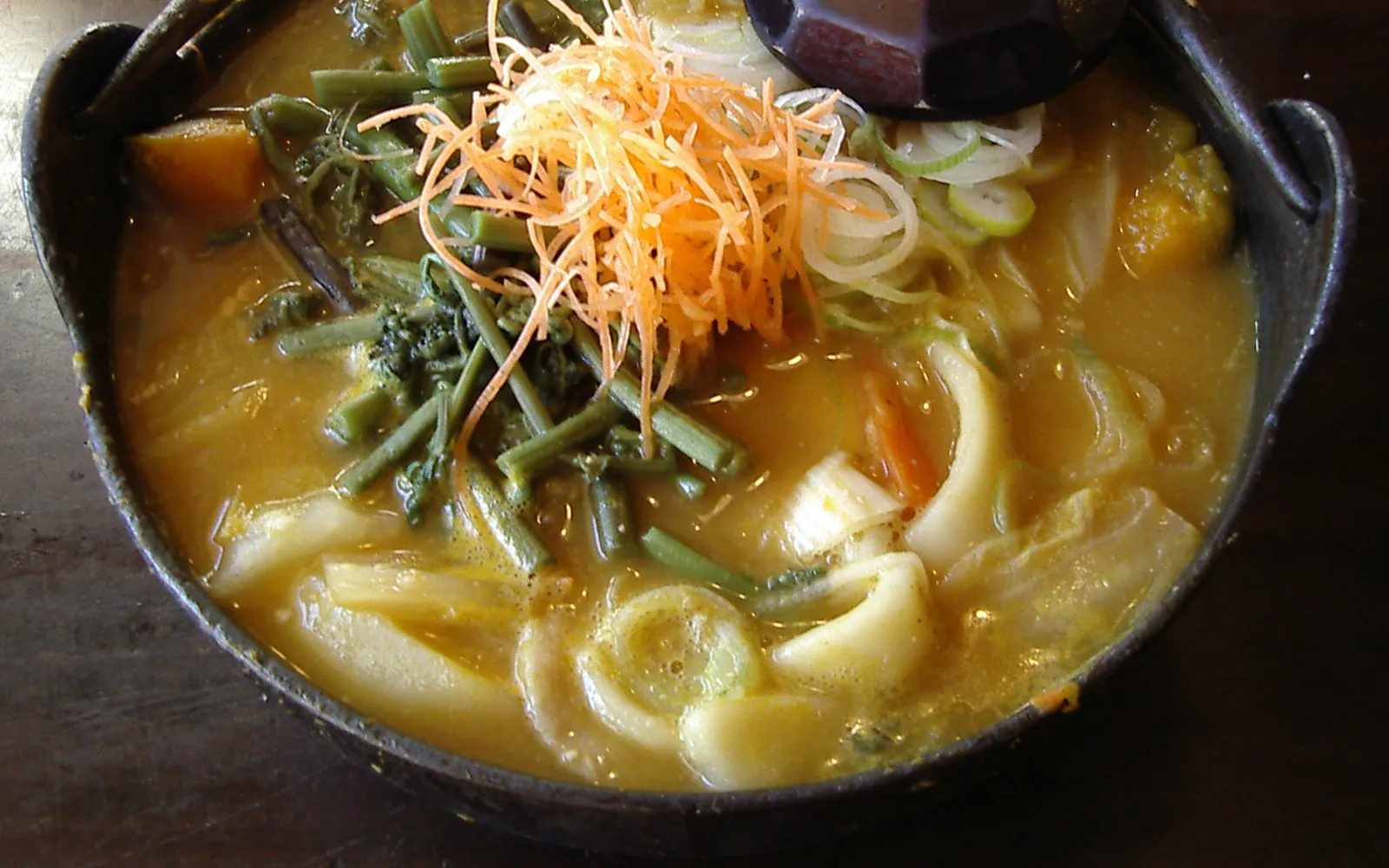
Hoto is broad flat wheat noodles simmered in a thick miso broth with pumpkin, potato, mushrooms and seasonal root vegetables. It is believed to have been the field ration of Takeda Shingen's warrior army — practical to cook on campaign — and written records trace it back over 400 years. Japan's Ministry of Agriculture named it one of the country's Top 100 Rural Dishes in 2007. It arrives at your table in a sizzling clay pot; give it a moment to cool before eating.
- Hoto Fudo's branch in front of Kawaguchiko Station is the most popular with visitors — queues get long around midday
- Kosaku Hoto Kosaku near the lake has an old wooden farmhouse atmosphere and a bit more character
- Average price: ¥1,200–1,500 per pot; one pot is a full meal for one person
 #2
#2 Yoshida Udon — Extremely Firm Noodles Found Only in Fujiyoshida · Yoshida Udon
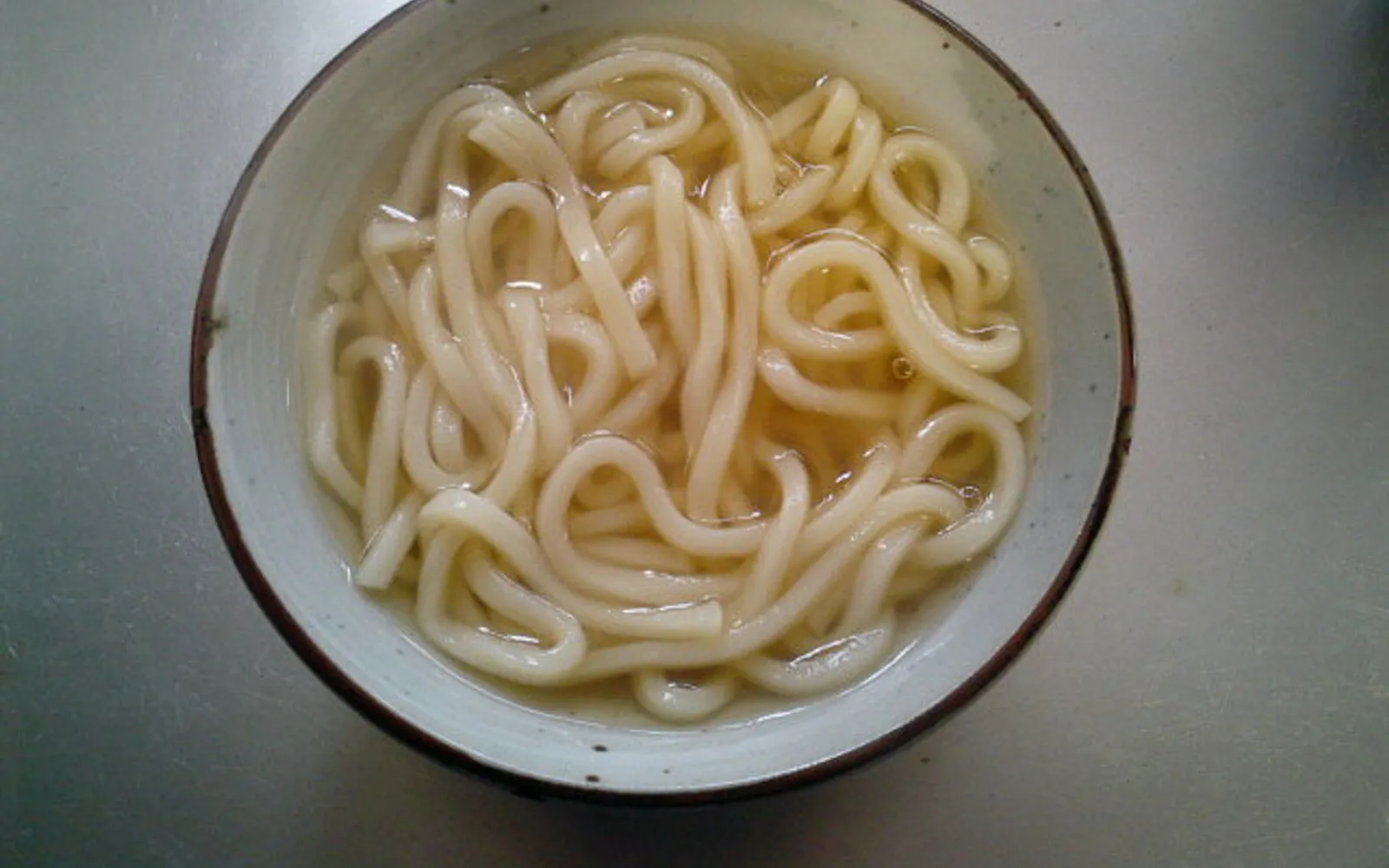
Yoshida udon is noticeably firmer and chewier than ordinary udon — a character that developed from the mountain cold ideal for growing wheat. The broth blends miso and soy sauce into a punchy base; the traditional toppings are blanched cabbage, white sesame and, in some shops, horse or beef. It is the soul food of Fujiyoshida, and remarkably cheap at an average of ¥500–700 a bowl. It also holds a place on Japan's Top 100 Rural Dishes list.
- Most shops open only for lunch and close early — aim to arrive before 11:30 a.m.
- More than 60 shops operate in Fujiyoshida; some are tiny with no English signage, so use Google Maps
- The noodles are much firmer than what most visitors are used to — go in expecting a real chew
 #3
#3 Shingen Mochi — The Legendary Warrior Sweet of Yamanashi · Shingen Mochi
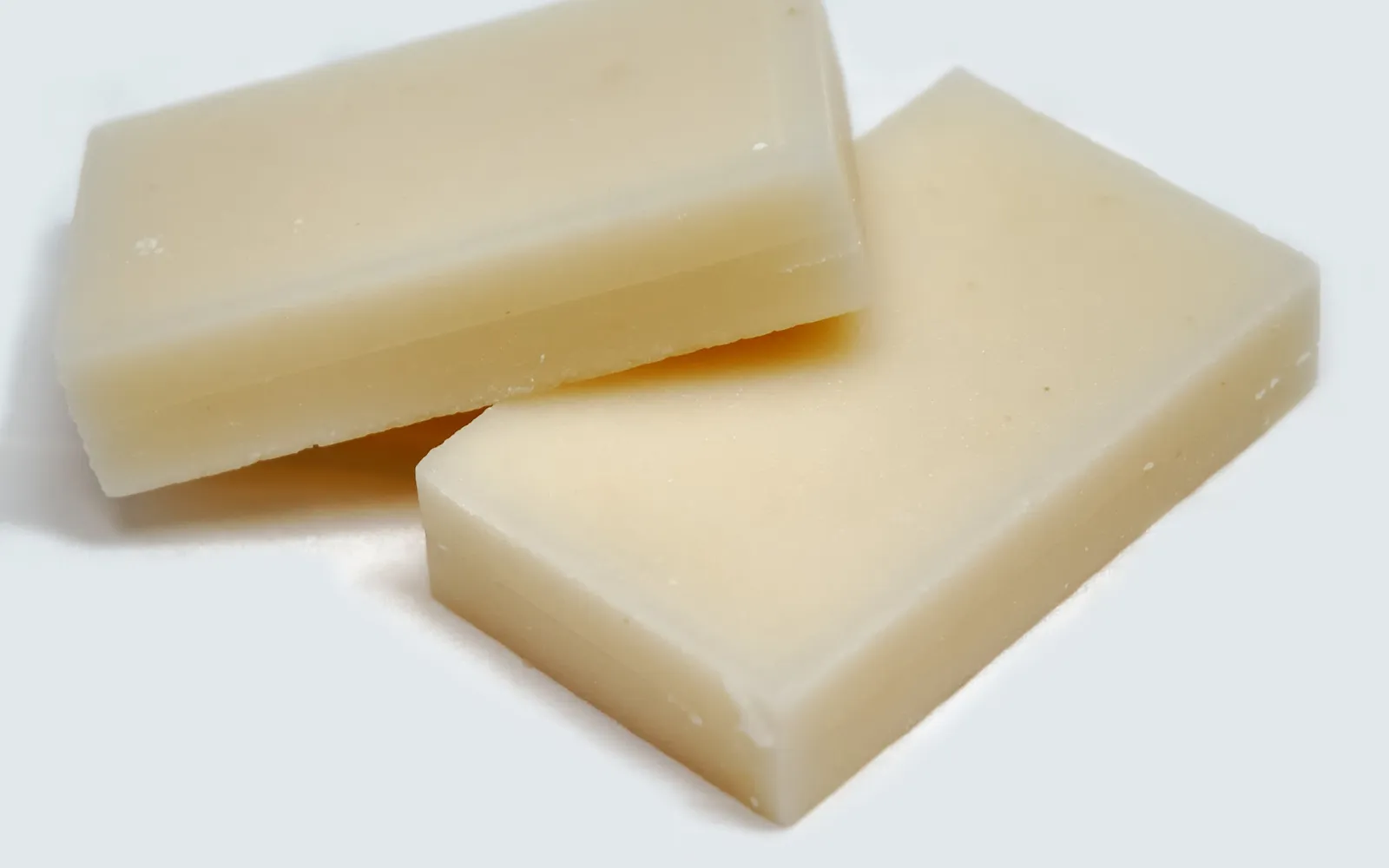
Shingen Mochi is a soft, springy mochi rice cake served with Kinako roasted soybean powder and Kuromitsu black sugar syrup. The name honours Takeda Shingen, the daimyo who ruled Yamanashi during the Sengoku period; legend says his consort created the sweet so warriors could carry it on the march. The confection is made and sold primarily by Kikyouya. Each small box holds 3–4 pieces of mochi, a sachet of kinako and a bottle of kuromitsu — you assemble it yourself at the table.
- Buy from a Kikyouya branch in Kawaguchiko or from local convenience stores in the area
- To eat: dust the mochi with kinako then drizzle kuromitsu over it — the mixing is done in the box
- Yamanashi's most popular souvenir; it keeps for several days after purchase
 #4
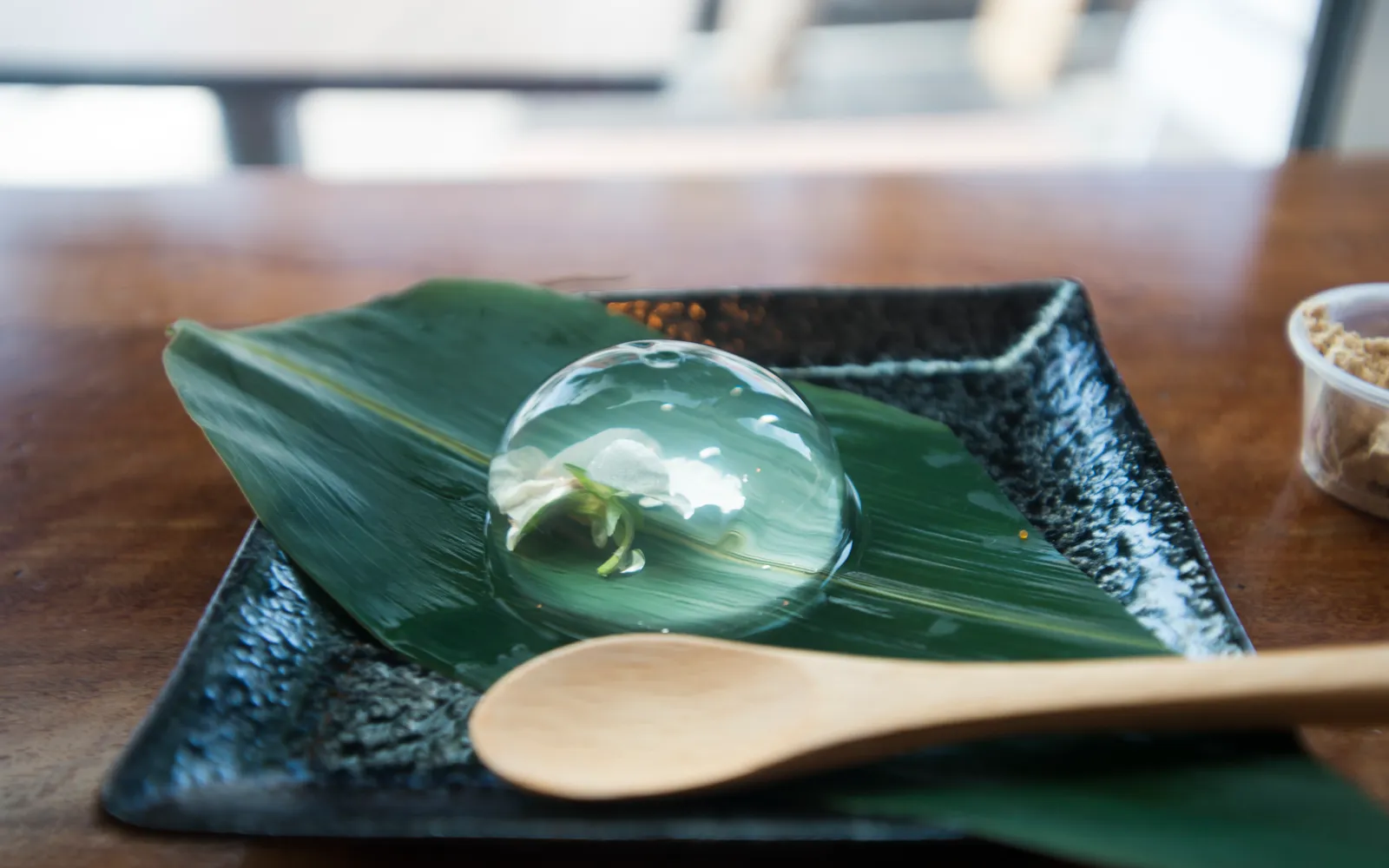
#4 Mizu Shingen Mochi — A Drop of Fuji Snowmelt, Sold Only in Summer · Mizu Shingen Mochi (Raindrop Cake)
Mizu Shingen Mochi is a confection made from pure mineral water sourced from Mount Fuji and natural agar, shaped into a fist-sized transparent droplet that wobbles like a water balloon. It is eaten with kinako and black sugar syrup. Kinseiken at Daigahara in Hakushu first produced it in 2014, and it went viral globally under the name Raindrop Cake. It is sold exclusively in summer — June through September only.
- Available June–September only, and often sells out before the afternoon; go early
- Eat within 30 minutes of purchase — the gel structure starts dissolving quickly
- In Kawaguchiko, select confectionery shops in town stock it; not every shop carries it
 #5
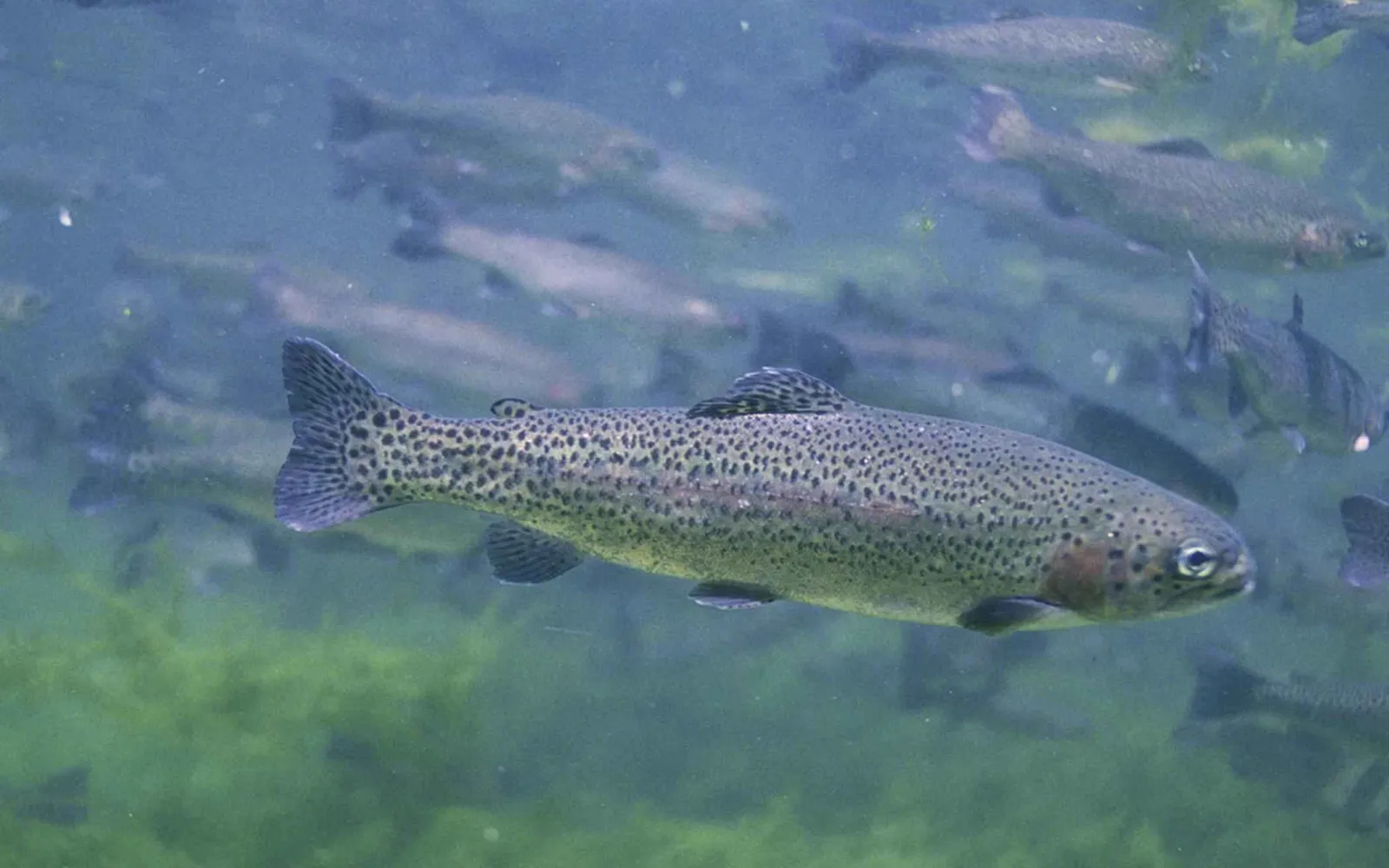
#5 Freshwater Fish Grilled — Fuji-Lake Fish Salt-Grilled to Order · Freshwater Fish Grilled
Lake Kawaguchiko is rich in freshwater fish — rainbow trout, smelt and carp among them. Lakeside restaurants typically grill whole fish on skewers with just salt, or serve them as sashimi in colder months when the water is at its cleanest. Fish from the cold volcanic-rock water is sweeter and cleaner-tasting than freshwater fish from other sources, with tender flesh and no muddy aftertaste. It pairs well with steamed Japanese rice and miso soup.
- Many lakeside restaurants have views of both the lake and Fuji — ask for a window seat if you can
- Wakasagi smelt sashimi or deep-fried smelt is a winter menu item not widely available elsewhere
- A grilled fish set with rice averages ¥1,200–2,000
 #6
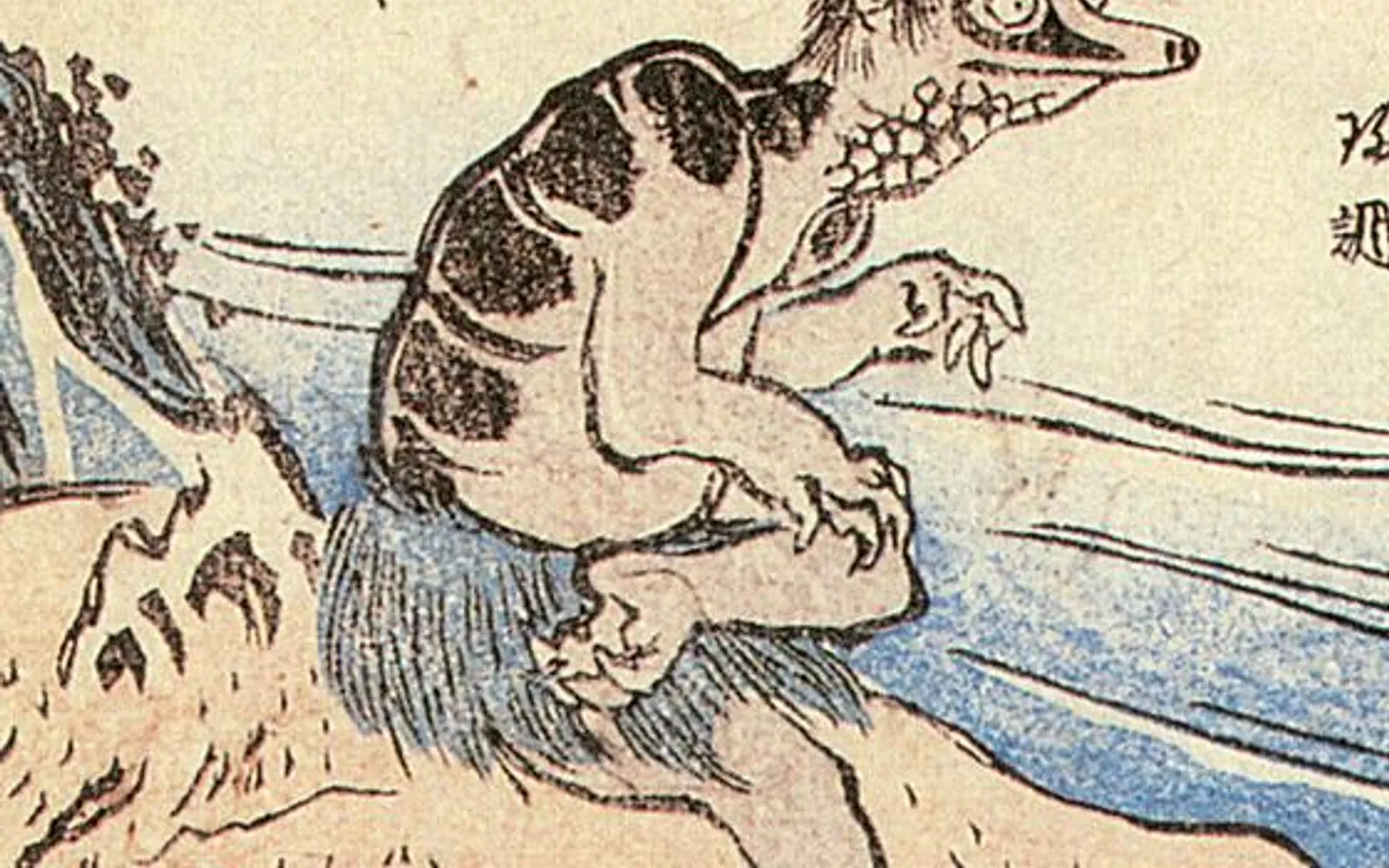
#6 Kappa Meshi — Rice Topped with Taro and the Legend of the Lake · Kappa Meshi
Kappa Meshi is a rice dish created by the Fujikawaguchiko souvenir development committee as a tribute to the Kappa — the water sprite of Japanese folklore said to haunt the shores of Lake Kawaguchiko. The bowl is topped with grated Japanese taro and pickled cucumber, both foods the Kappa supposedly favours in the old tales, then finished with white sesame and dried seaweed. It is a light, healthy dish available only in the local area.
- Find it at Michi no Eki Katsuyama and select local restaurants around Kawaguchiko
- Light enough for a midday meal before walking around the lake
- If you cannot find it, ask lakeside restaurants — some list it as a local special not shown on the main menu
Where to stay in Lake Kawaguchiko for this trip
A well-located hotel means less commuting and more sightseeing. Here are real, top-rated stays in Lake Kawaguchiko — compare Agoda · Booking · Trip.com in one click.
Mizno Hotel
Affiliate links — we may earn a commission at no extra cost to you. Details
Mizno Hotel
Affiliate links — we may earn a commission at no extra cost to you. Details
Rakuyu
Affiliate links — we may earn a commission at no extra cost to you. Details
Hotel Asafuji
Affiliate links — we may earn a commission at no extra cost to you. Details
Tours, tickets & activities in Lake Kawaguchiko
Day tours, attraction tickets and travel essentials for Lake Kawaguchiko — book ahead on Klook with mobile e-tickets.
Affiliate links — we may earn a commission at no extra cost to you.
Before You Pack
Every dish in Kawaguchiko carries the story of the region in it. Sit down to a hot pot of hoto while Fuji fills the window — that is an experience you will not find anywhere else in the world.