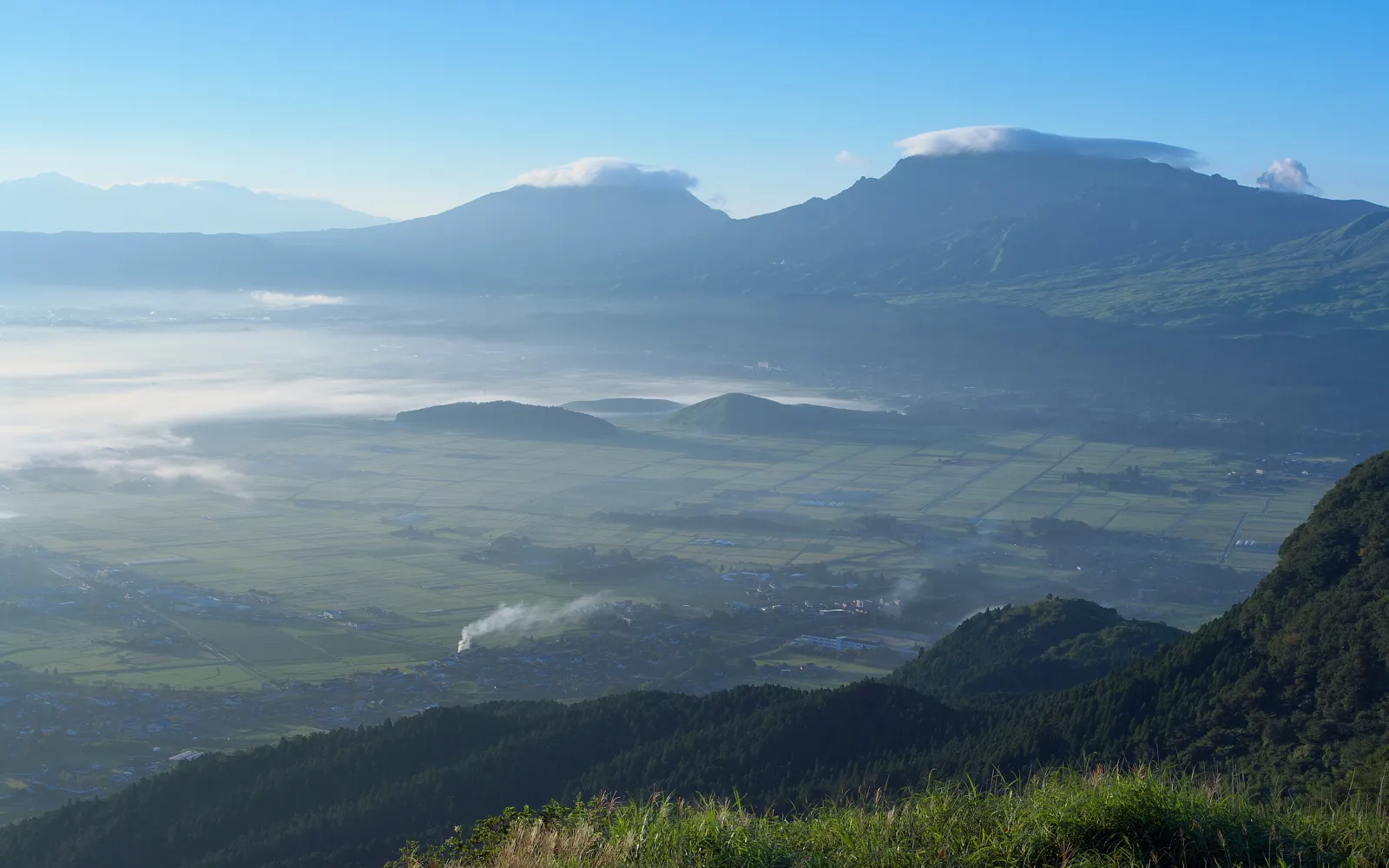
Kumamoto is a historic city in the heart of Kyushu, known for its 400-year-old black castle and the still-active Mount Aso volcano. Beyond those headliners, the city delivers beautifully kept Japanese gardens, quiet valley hot springs, and a cave where a legendary swordsman wrote his masterwork. Each site here carries a story worth digging into.
 #1
#1 Kumamoto Castle · Kumamoto Castle
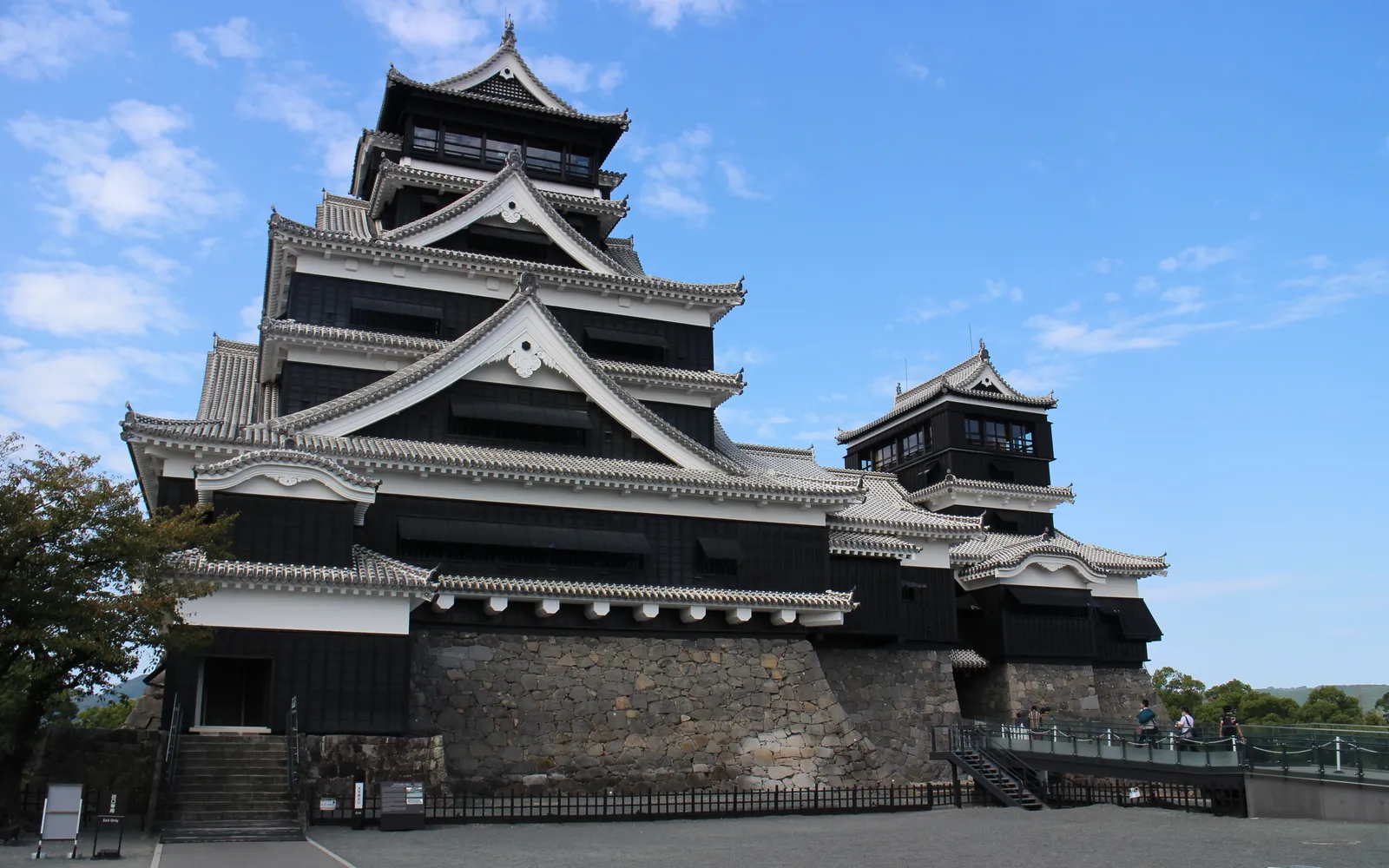
Built by General Kato Kiyomasa between 1601 and 1607, Kumamoto Castle carries the nickname <em>Ginkuro-jo</em> — Crow Castle — for its pitch-black walls and rooflines. It ranks among the grandest fortresses in Japan. The 2016 earthquake caused serious damage, but the main keep was fully restored by 2019 and reopened with historical exhibitions inside.
- Buy the combined ticket to visit both the main keep and Honmaru Goten Palace
- Arrive before 9 a.m. — crowds are thin and the light is far better for photos
- Cherry-blossom season (March to April) turns the castle grounds into one of Kyushu's best hanami spots
 #2
#2 Mount Aso — Nakadake Crater · Mount Aso Nakadake Crater
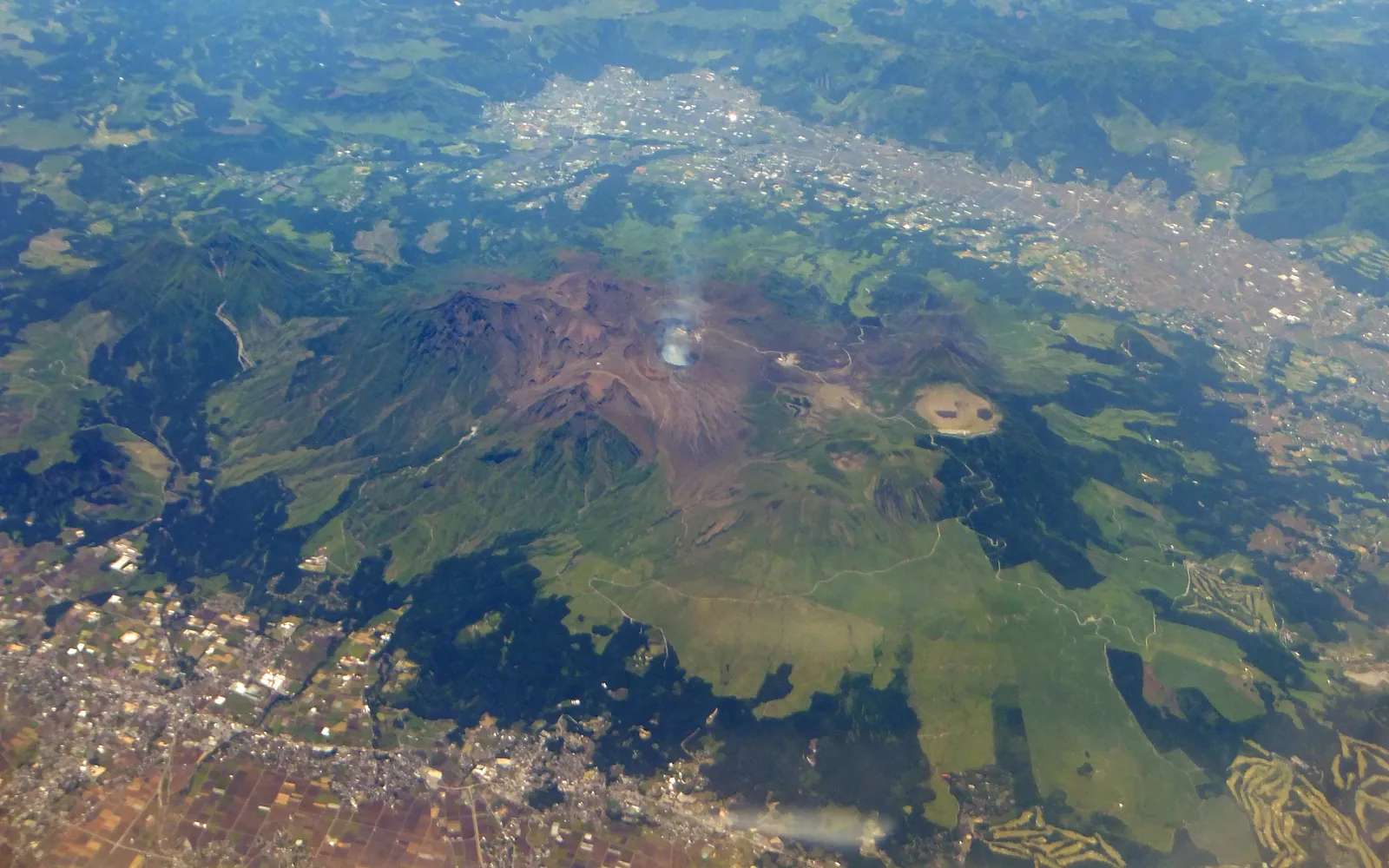
Mount Aso is one of the largest volcanoes in the world by caldera size. The Nakadake crater measures 600 metres across and 130 metres deep, and it remains actively volcanic. When activity levels are low, visitors can walk right up to the rim — rare access for an active volcano anywhere on earth. The acid lake inside shifts between vivid blue and green, a color almost impossible to photograph without seeing in person.
- Check current volcanic status on the Aso Volcano Museum website before you go — closures can happen without warning
- Carry a mask; sulfur dioxide levels sometimes spike
- The Aso Ropeway (when operating) gets you to the rim in about 10 minutes
 #3
#3 Suizen-ji Jojuen Garden · Suizen-ji Jojuen Garden
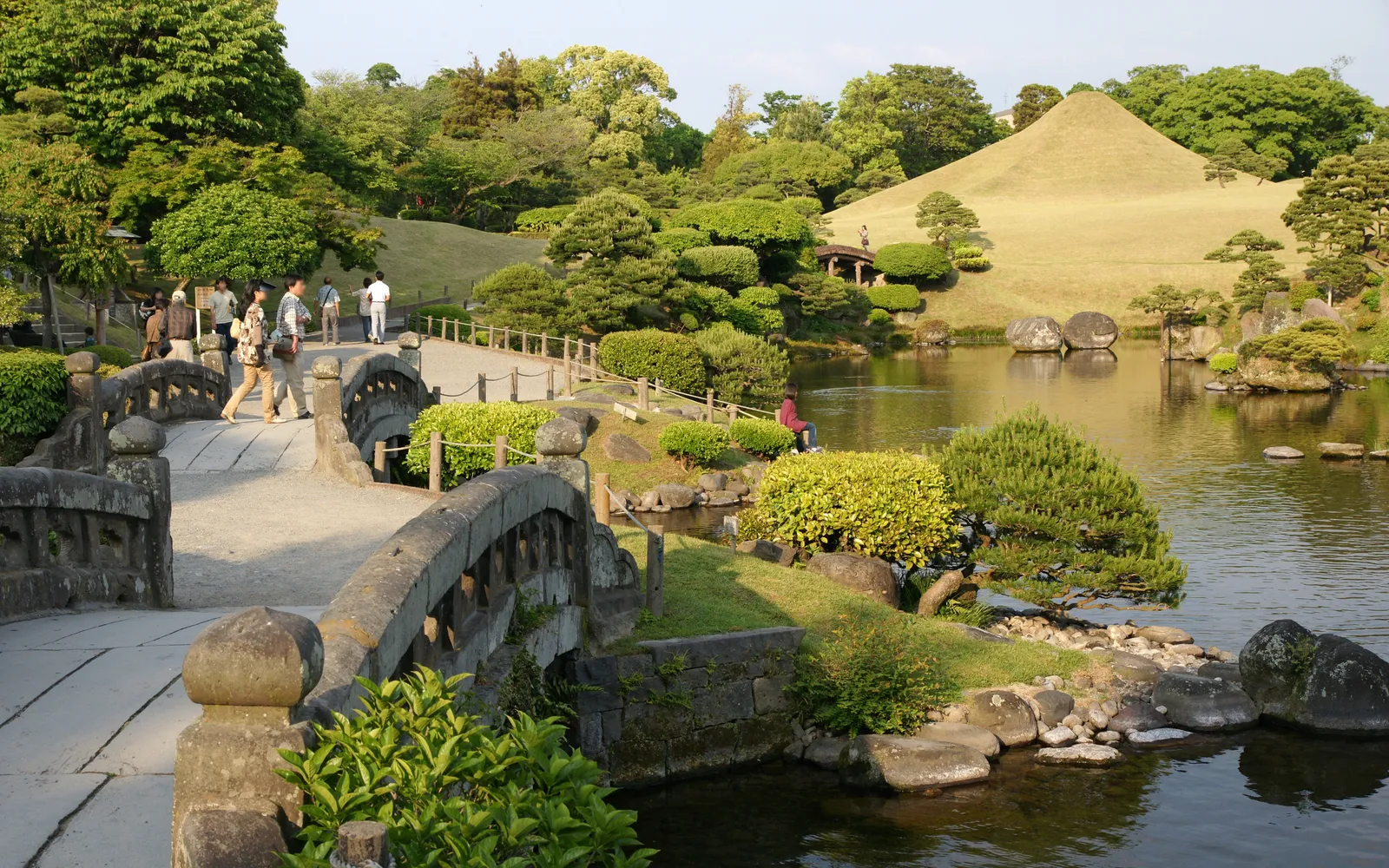
Laid out in the 17th century by the Hosokawa clan — lords of the Higo domain — this <em>kaiyushiki</em> strolling garden is built around a miniature landscape replicating Mount Fuji and the 53 post-towns of the Tokaido road. The central pond is fed directly by spring water from beneath Mount Aso. On the grounds you'll find a 400-year-old teahouse, Kokindenjunoma, and the quiet Izumi Shrine. It is one of the most historically rich gardens in Kyushu.
- Early morning before other visitors arrive — morning mist over the pond is worth the early alarm
- Try tea at Kokindenjunoma; it runs about 600–800 yen
- November leaf-color reflects in the pond and is particularly striking
 #4
#4 Kurokawa Onsen · Kurokawa Onsen
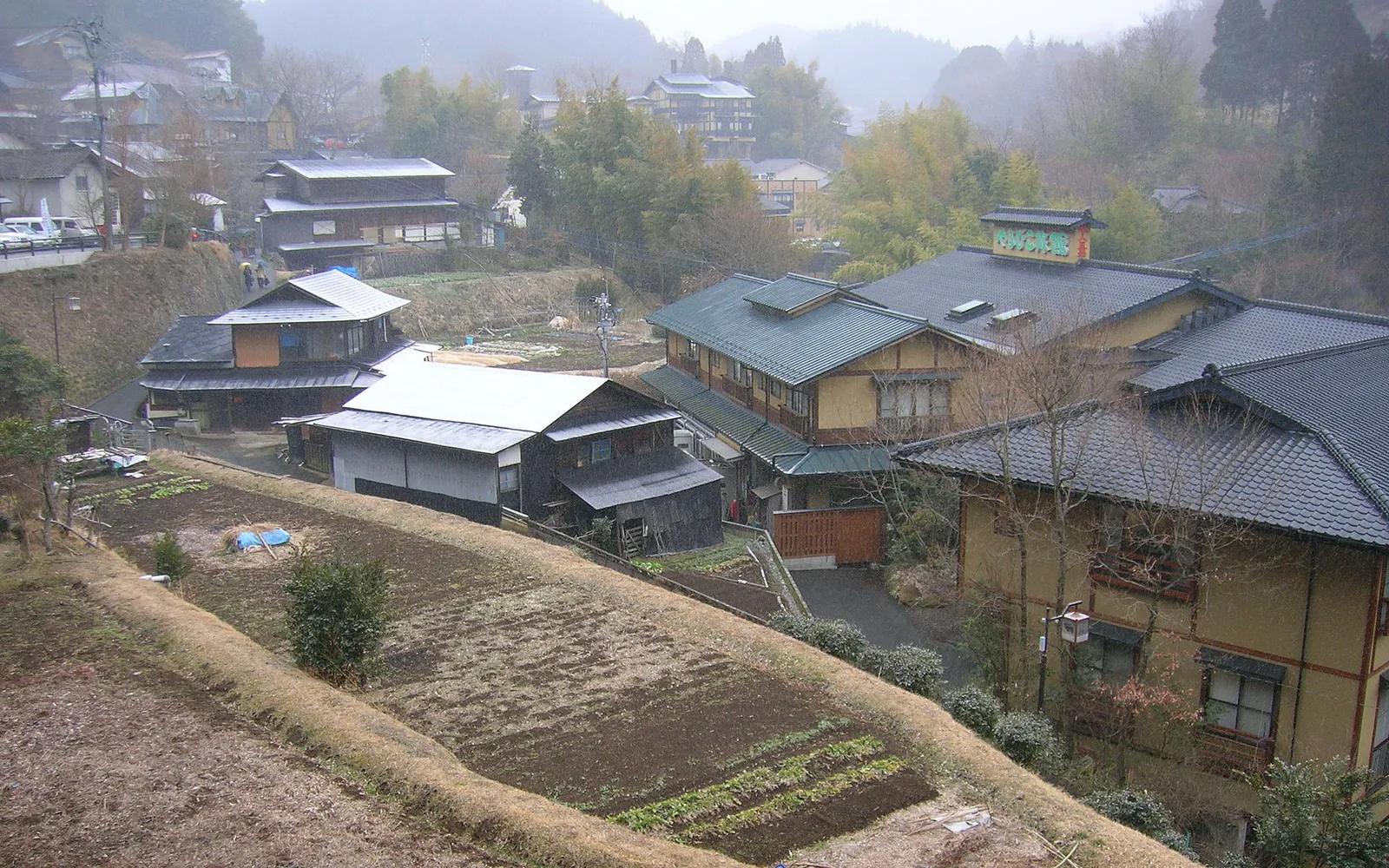
Kurokawa Onsen sits in a deep valley north of Mount Aso and is widely considered one of Japan's most beautiful hot-spring towns. More than 30 traditional <em>ryokan</em> line a clear stream, and the village has deliberately kept itself free of neon signage and modern concrete. The standout pass is the <em>Nyuto Tegata</em> — 1,300 yen for entry to any 3 baths of your choice across the village, valid for 6 months.
- Pick up the Nyuto Tegata at the tourism information office — it covers any 3 baths you choose
- Winter (December to February) brings mist rising from the hot springs against snow — one of Kyushu's best cold-season scenes
- Book a ryokan at least 2–3 weeks ahead, especially for weekends
 #5
#5 Daikanbo Viewpoint · Daikanbo Viewpoint
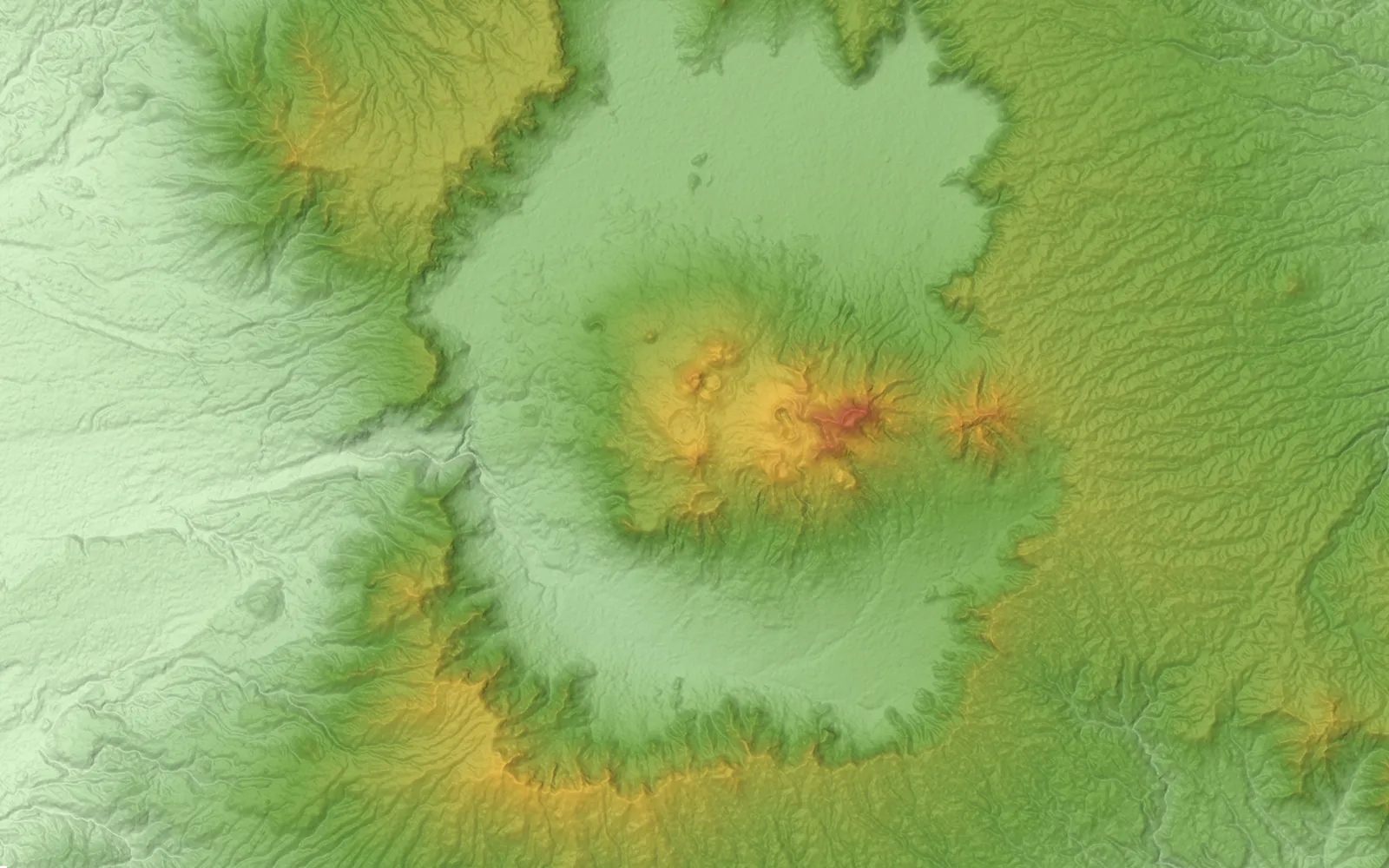
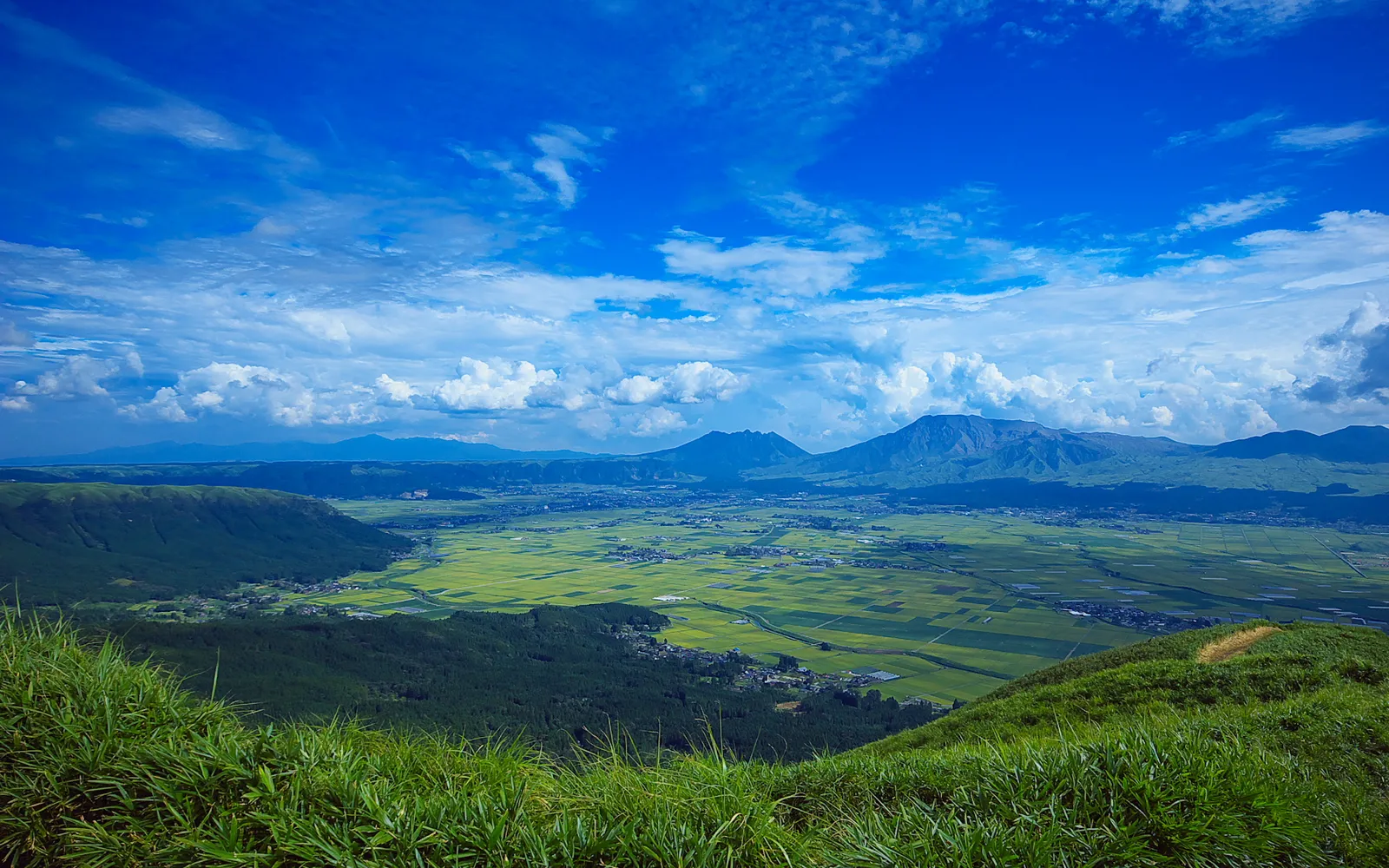
At 936 metres on the northern caldera rim, Daikanbo gives the widest panorama in all of Aso — a 360-degree sweep that takes in all five Aso peaks. From this angle, the peaks align to resemble a reclining Buddha. Below stretches vast grassland maintained for over a thousand years by <em>noyaki</em> controlled burning. In winter mornings you may catch an <em>unkai</em> sea of cloud, with the summits piercing a white ocean.
- Arrive at sunrise or stay for dusk — the golden light is the whole point
- Winter mornings, especially November to February, offer the best chance of seeing the sea of cloud
- A small restaurant and souvenir shop are in the car park
 #6
#6 Reigando Cave (Miyamoto Musashi's Cave) · Reigando Cave
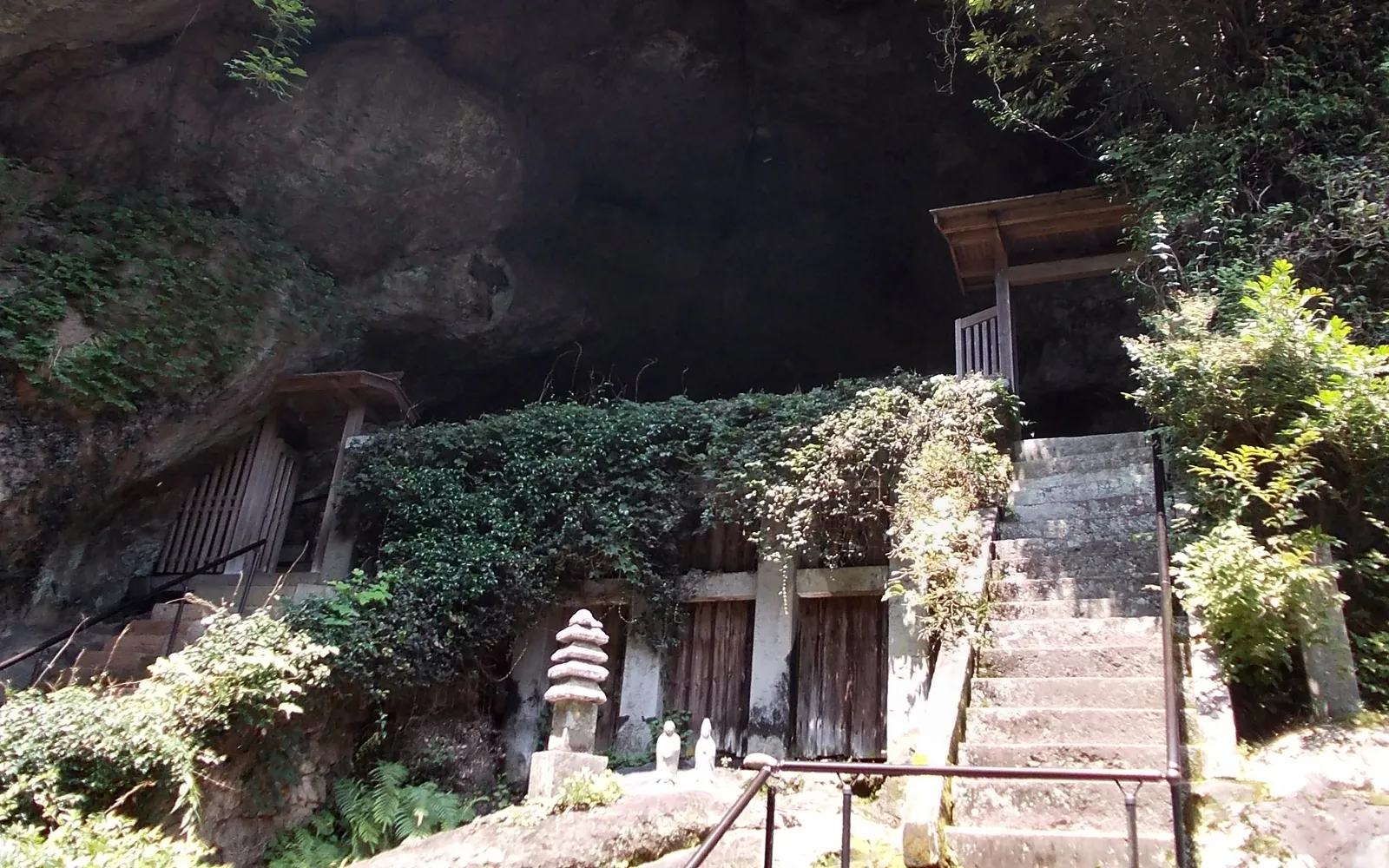
Set within the grounds of Unganzenji Zen temple, this ancient cave is where legendary swordsman Miyamoto Musashi spent the final two years of his life (1643–1645), writing <em>The Book of Five Rings</em> here. A statue of Musashi in meditation sits inside the cave. The surrounding forest and the ancient temple buildings below make this a pilgrimage site for historians and martial arts practitioners alike.
- The climb involves around 100 stone steps — wear comfortable shoes
- Unganzenji Temple at the base is worth a proper look before you head up
- Early morning brings thin mist through the valley and a quieter atmosphere
 #7
#7 Honmaru Goten Palace · Honmaru Goten Palace
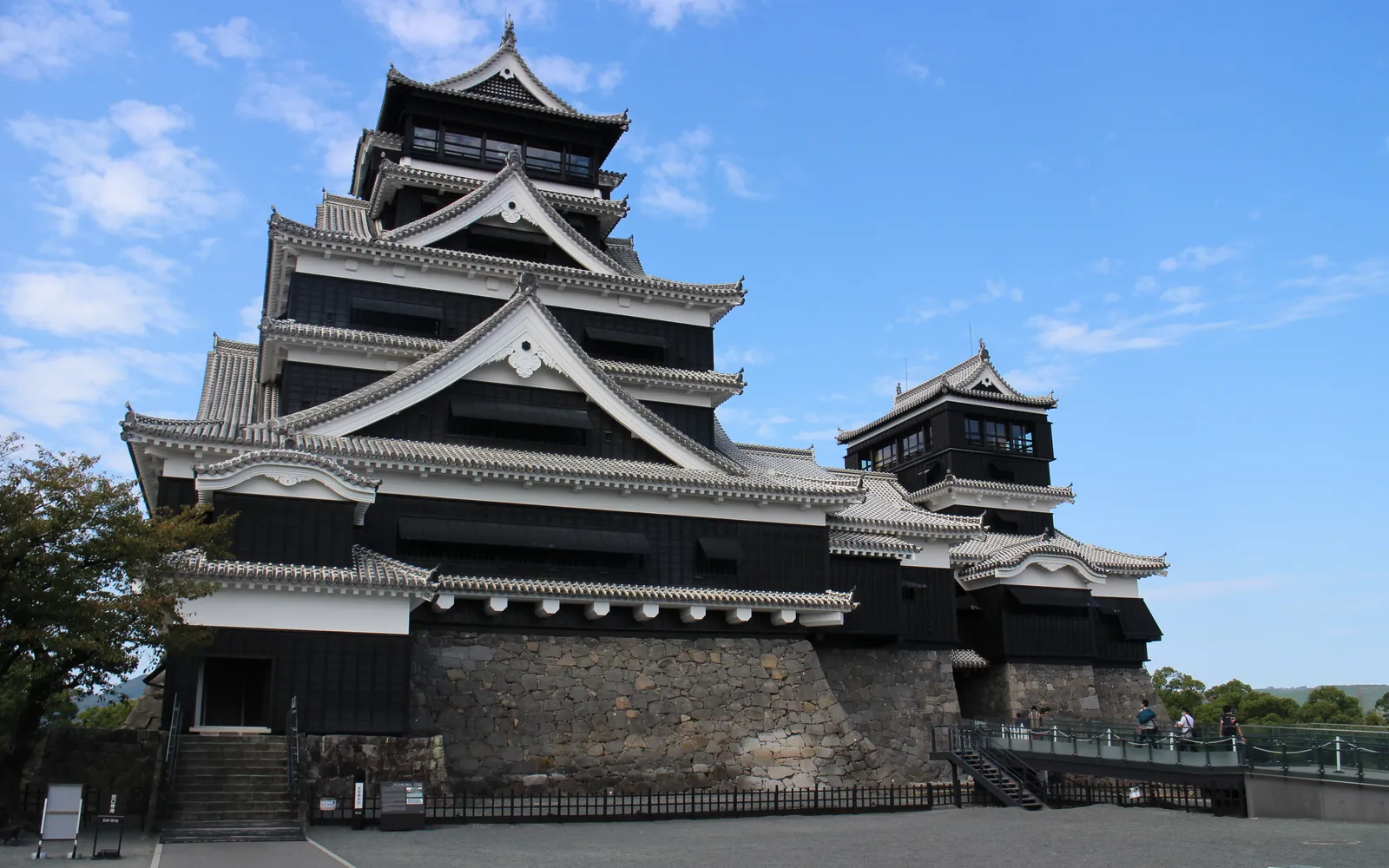
Reconstructed in 2008 to mark the castle's 400th anniversary using traditional Edo-period materials and techniques, Honmaru Goten contains 25 of the original 53 rooms. The interior — intricate bird-and-flower paintings covering sliding doors and walls in gold — is a striking contrast to the castle's severe black exterior. It is a rare surviving example of a feudal lord's residential and administrative quarters from the period.
- Buy the combined ticket with the main keep — it is better value
- The reception hall, Omotenashi, is the highlight — the gold mural paintings are exceptional
- Volunteer English-speaking guides are available at no charge; ask at the entrance
 #8
#8 Aso Farm Land · Aso Farm Land
Spread across more than 1 million square metres inside Aso-Kuju National Park, this wellness resort was designed around recovery and physical restoration. The site features over 70 pieces of outdoor exercise equipment in a natural forest, hands-on contact with 35 animal species on the farm, multiple mineral bath types including a cave bath and a floating bath, and dome-shaped cottages that make the accommodation as unusual as the setting. It is an especially strong choice for families wanting a full-day immersive nature experience.
- Book the dome cottages several weeks ahead — they sell out fast
- The overnight package with meals included is considerably better value than paying separately
- Good for families with children; there is enough to fill an entire day
Where to stay in Kumamoto for this trip
A well-located hotel means less commuting and more sightseeing. Here are real, top-rated stays in Kumamoto — compare Agoda · Booking · Trip.com in one click.
Hotel Nikko Kumamoto
Affiliate links — we may earn a commission at no extra cost to you. Details
Hotel Wing International Select Kumamoto
Affiliate links — we may earn a commission at no extra cost to you. Details
Richmond Hotel Kumamoto Shinshigai
Affiliate links — we may earn a commission at no extra cost to you. Details
Dormy Inn Kumamoto Natural Hot Spring
Affiliate links — we may earn a commission at no extra cost to you. Details
Tours, tickets & activities in Kumamoto
Day tours, attraction tickets and travel essentials for Kumamoto — book ahead on Klook with mobile e-tickets.
Affiliate links — we may earn a commission at no extra cost to you.
Before You Pack
Kumamoto puts dramatic natural scenery and deep historical narrative in the same itinerary — a castle whose restoration took three years, a volcano you can stand inside, a garden fed by underground springs from the mountain, and a cave where one of Japan's most famous swordsmen chose to spend his final days. Whether you're here for the landscapes or the history, the city earns more time than most travelers give it.