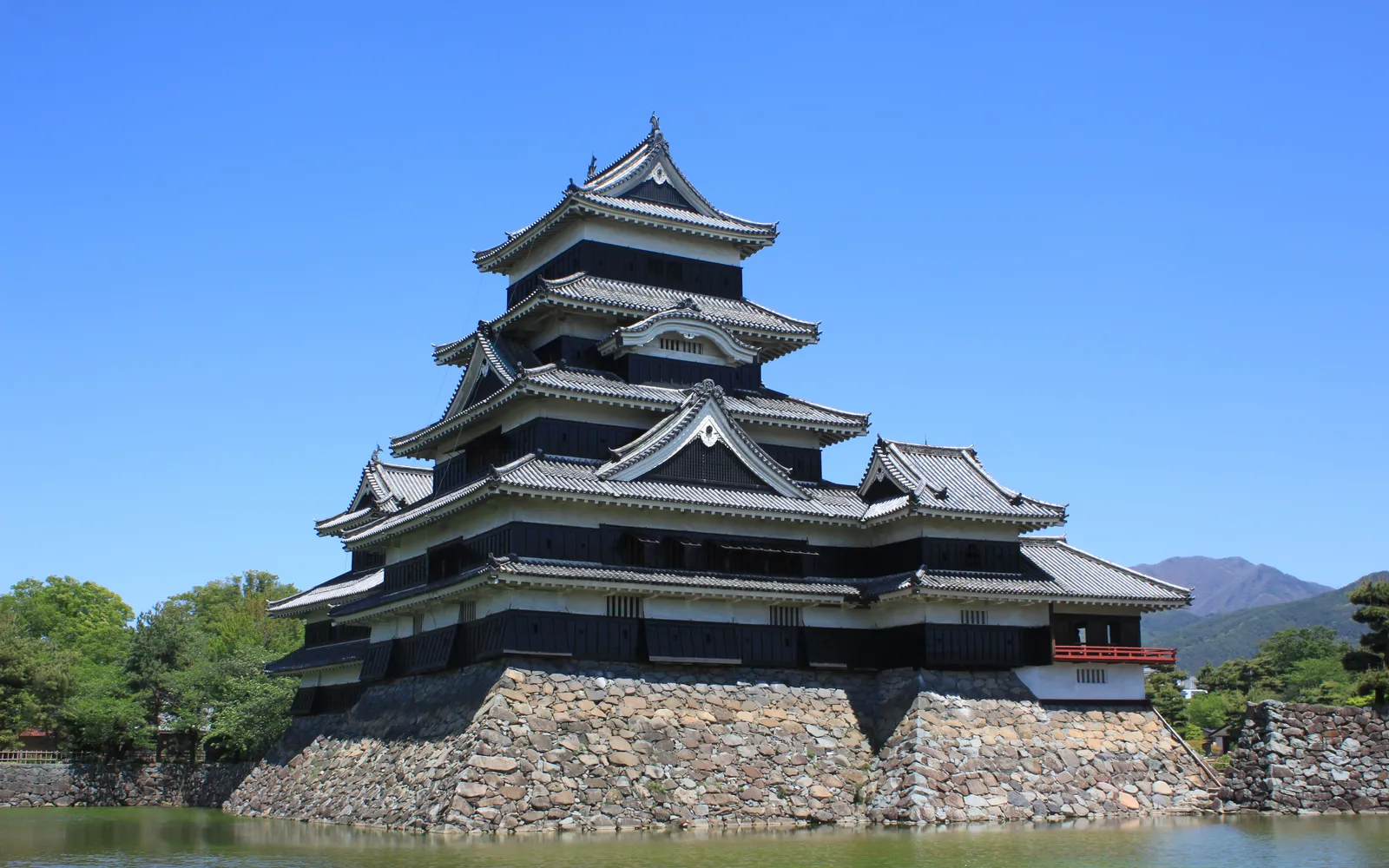
Matsumoto (松本) is the main city of Nagano Prefecture, sitting in a flat basin ringed by the Japanese Alps — peaks that push past 3,000 metres on every side. At its centre stands a 400-year-old black castle that has never been reconstructed; beyond that, the Kamikochi valley claims the title of Japan's most beautiful mountain landscape. Add a well-preserved historic district, a major art museum, and the country's largest wasabi farm, and Matsumoto delivers something memorable in every season.
 #1
#1 Matsumoto Castle · Matsumoto Castle
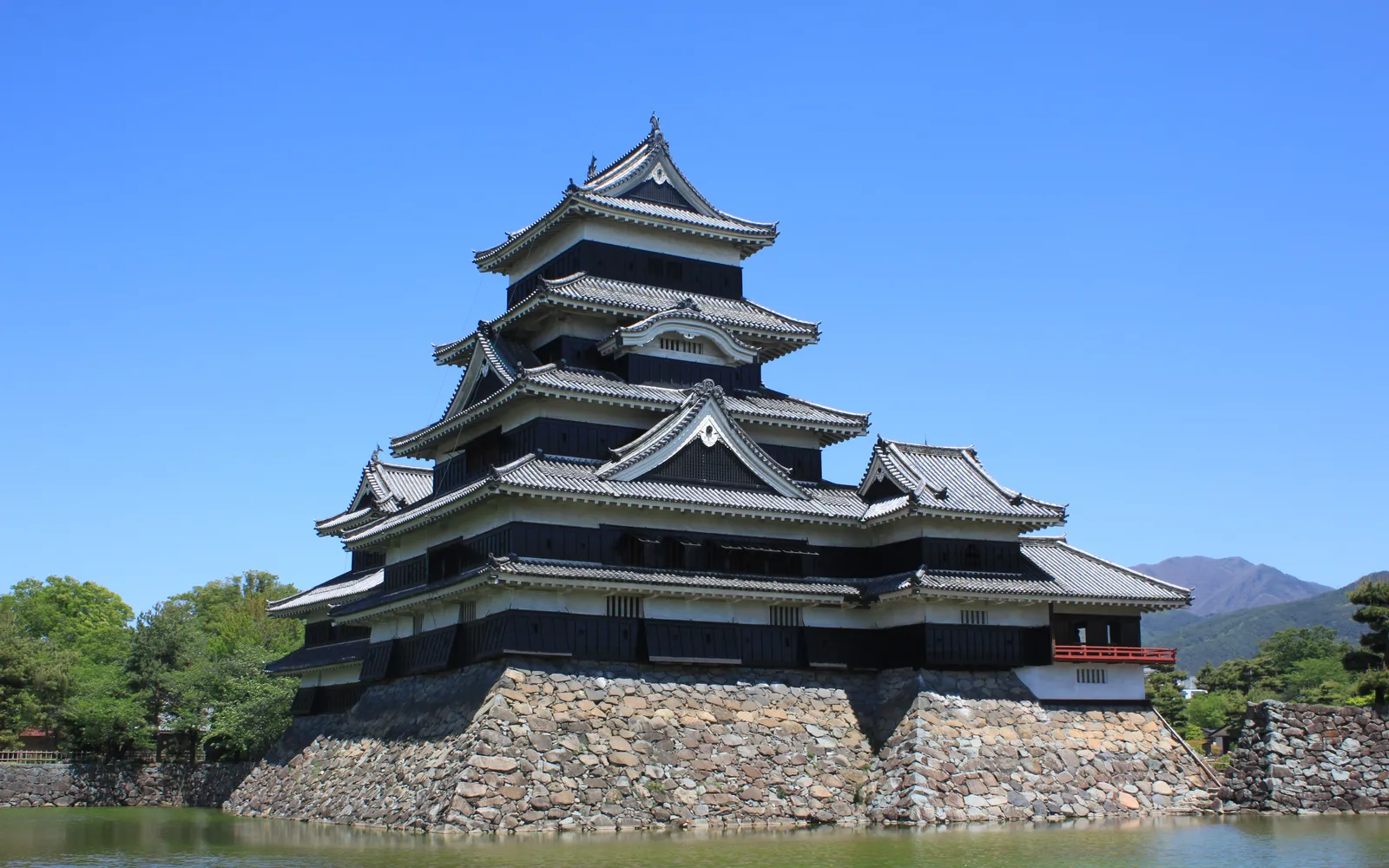
Matsumoto Castle — nicknamed the "Crow Castle" for its black exterior — was completed in 1593 and is the only flatland castle in Japan with an original 5-storey, 6-level wooden keep still standing. The dark walls mirror perfectly in the moat below, and on a clear day the Alps form the backdrop behind the upper floors. Inside, you can study armour, firearms, and the city panorama from the top level. It was designated a National Treasure of Japan in 1952.
- Arrive before 9:00 a.m. to skip the longest queues and catch the best light on the moat.
- During cherry-blossom season (early April), an illuminated night reflection in the moat is one of the best shots in the Japanese Alps region.
- Wear socks — shoes must come off before climbing the steep original wooden stairs.
 #2
#2 Kamikochi · Kamikochi
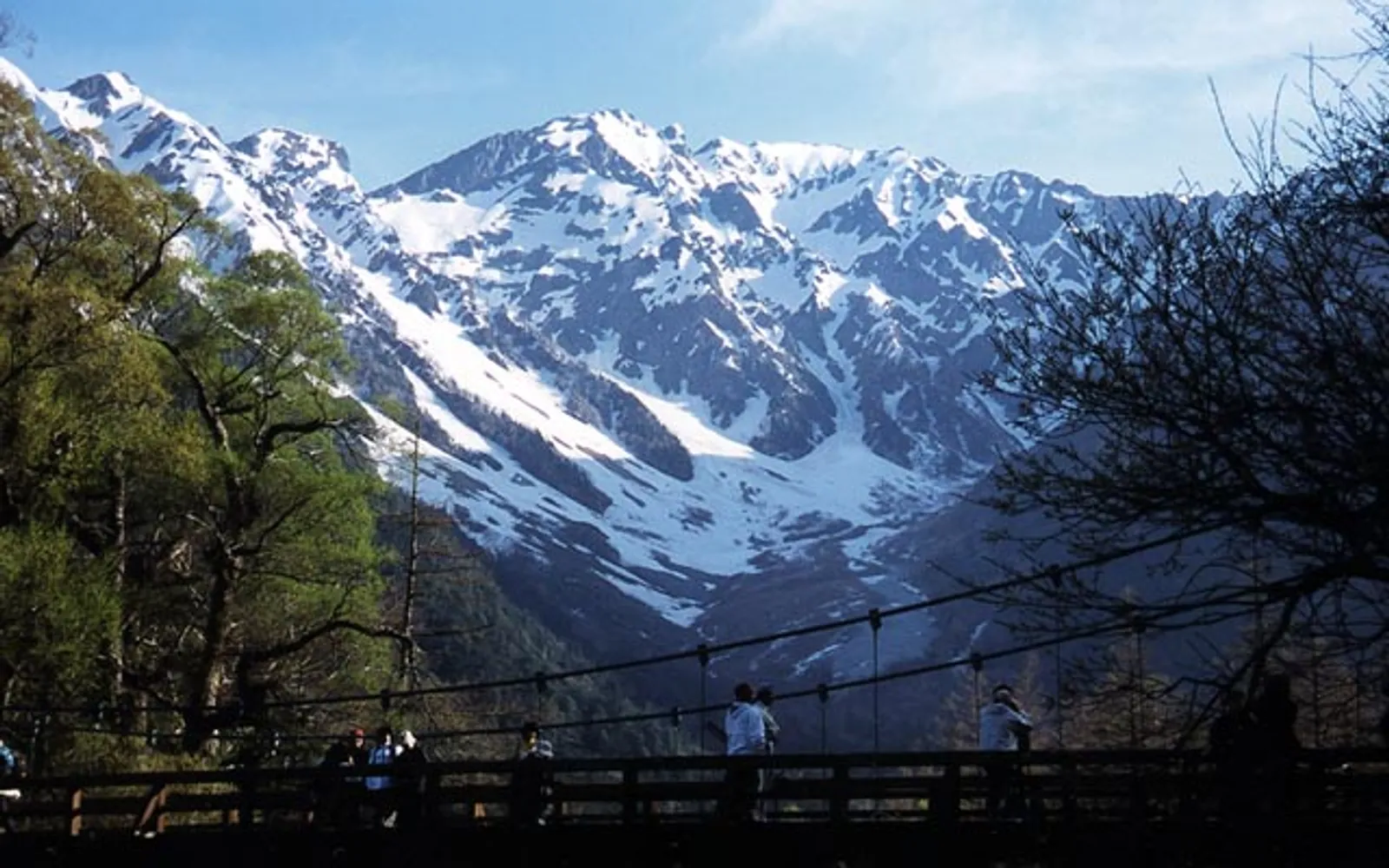
Kamikochi is an alpine valley at 1,500 metres elevation, regularly cited as one of Japan's most beautiful natural landscapes. The crystal-clear Azusa River runs through the valley floor, with the iconic Kappa-bashi bridge as the central viewpoint — directly across from <strong>Hotaka-dake</strong>, which peaks at 3,190 metres above the morning mist. Private vehicles are banned inside the park entirely, which keeps the atmosphere genuinely calm. Open April through November only.
- Book bus tickets in advance during Golden Week — queues for the Matsumoto-bound return bus can exceed 2 hours.
- The walk from Tashiro Pond to Kappa-bashi takes about 2 hours at an easy pace and suits first-time visitors.
- Bring a layer even in summer: temperatures in the valley run 5–10 °C cooler than in Matsumoto city.
 #3
#3 Nakamachi Street · Nakamachi Street
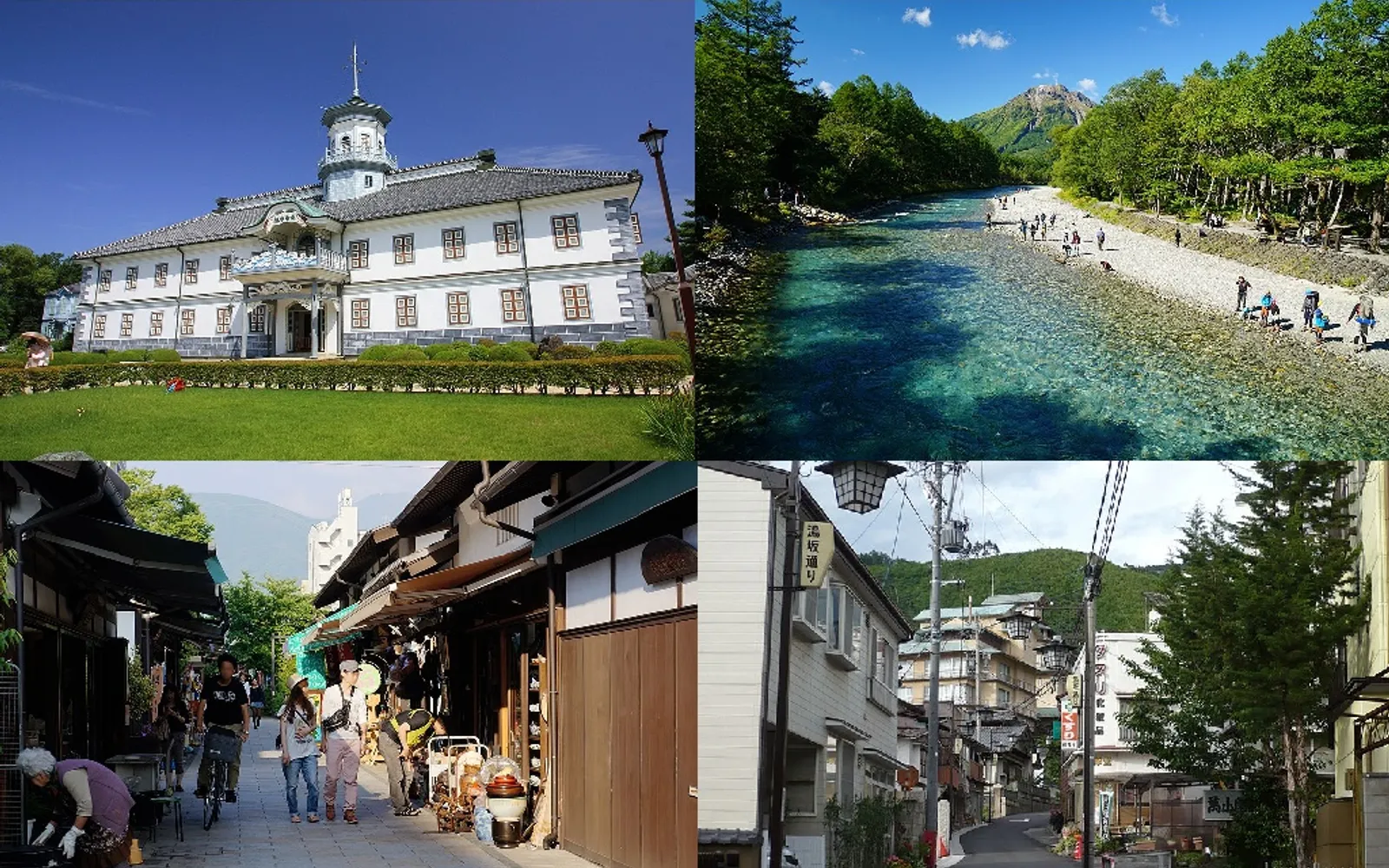
Nakamachi is a merchant street with over 400 years of history, originally built along a pilgrimage route to Zenkoji Temple. After a major fire in 1888, residents replaced the burned buildings with <em>kura</em> storehouses — white-plastered walls, black trim, and the raised <em>namako-kabe</em> tile pattern. Today those same buildings house craft shops, galleries, cafés, and bakeries. The streetscape is unusually well preserved and takes a comfortable hour to explore end to end.
- The vintage glassware and local craft shops carry one-of-a-kind pieces that don't appear elsewhere in Japan.
- Weekday mornings are quiet enough to photograph the street without crowds.
- Nakamachi and Nawate-dori are 5 minutes apart on foot — walk both in the same loop.
 #4
#4 Daio Wasabi Farm · Daio Wasabi Farm
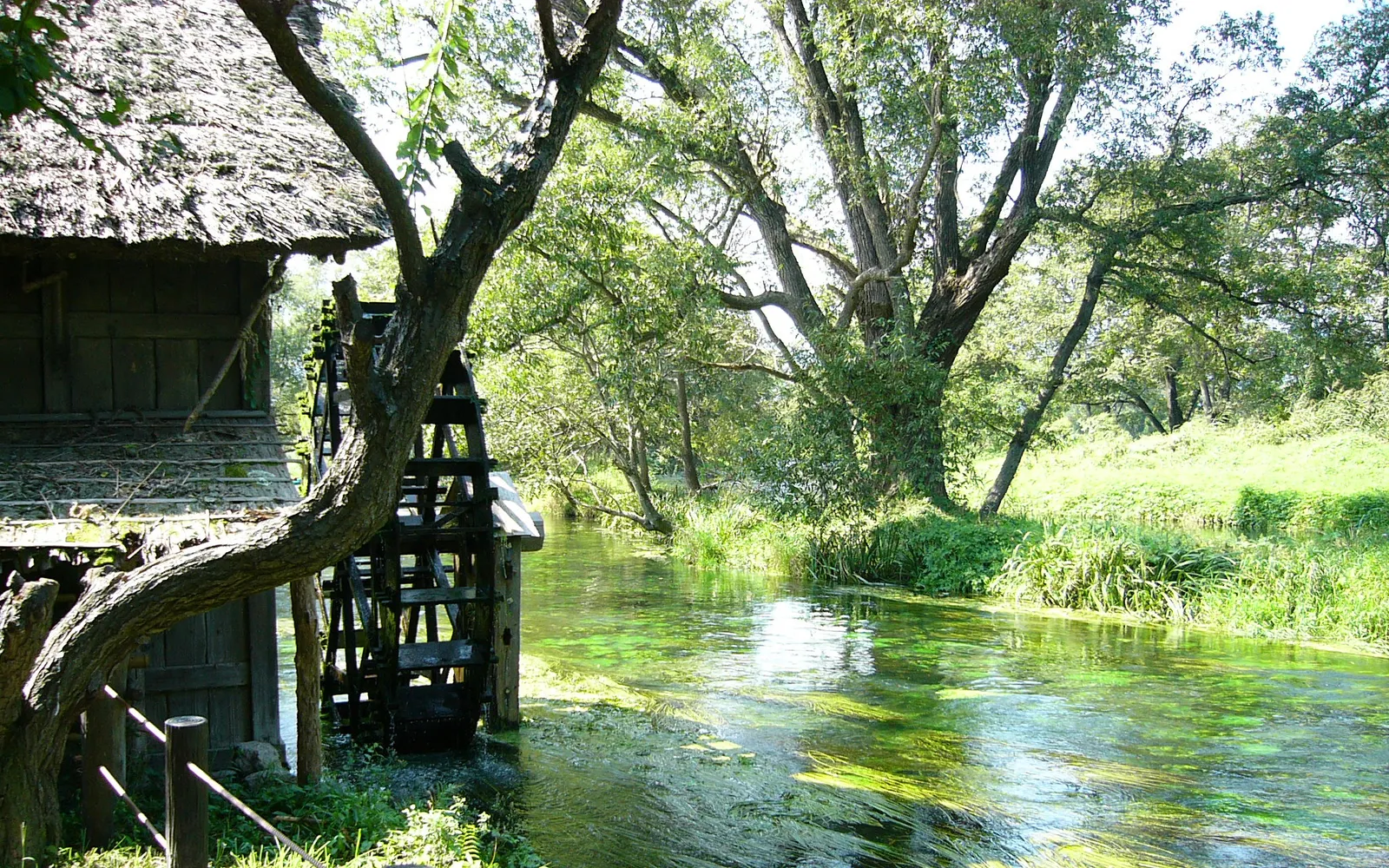
Founded in 1915, Daio Wasabi Farm covers 15 hectares and is the largest wasabi farm in Japan. The beds are irrigated by pure snowmelt from the Alps, kept at a constant temperature the plants demand. A century-old wooden waterwheel on the property appeared in Akira Kurosawa's 1990 film <em>Dreams</em> and remains one of the most-photographed scenes in the Azumino valley. Admission is free; rowing boats, a gift shop, and a restaurant selling wasabi ice cream and wasabi dishes of every variety are all on site.
- The wasabi soft-serve has a mild, fresh heat — worth getting even if you're not a wasabi fan.
- Farm entry is free; the rowboat hire is ticketed separately.
- Wasabi plants flower white from March through April — among the prettiest photo opportunities on the farm.
 #5
#5 Matsumoto City Museum of Art · Matsumoto City Museum of Art
The museum's most distinctive feature is its permanent Yayoi Kusama collection — Kusama was born in Matsumoto, and her <em>Phantom Flowers</em> tulip sculptures in vivid polka-dot colours outside the entrance have become one of the city's most-photographed spots. Inside, the infinity-mirror rooms and early-career works trace Kusama's arc from Matsumoto to New York and back. The collection also includes the ink paintings of Taniguchi Yoshio and the water landscapes of Uragami Gyokudo.
- Book the Kusama gallery section online in advance — it regularly sells out on weekends and public holidays.
- The museum shop carries Kusama-pattern goods at surprisingly reasonable prices compared to Tokyo flagship stores.
- Adult admission is approximately ¥410 — a strong return for the quality of what's on permanent display.
 #6
#6 Nawate Street (Kaeru Street) · Nawate Street (Kaeru Street)
Nawate is a short riverside street, 10 minutes on foot from the castle, that goes by the nickname "Kaeru Street" — <em>kaeru</em> in Japanese means both "frog" and "to return home," a double meaning the locals have leaned into for generations. The <em>kajika</em> frogs that once lived in the Metoba River inspired the name, and frog figures of every size line the storefronts. The street itself holds souvenir shops, snack vendors, and the 140-year-old <strong>Yohashira Shrine</strong>. The atmosphere tilts noticeably toward the Edo period.
- The <em>taiyaki</em> (fish-shaped waffles with sweet filling) sold here photograph well and taste better than the chain-shop versions.
- A Sunday morning market runs through the summer months — local produce and crafts, low tourist pressure.
- The street is car-free, making it easy with children or older travellers.
 #7
#7 Utsukushigahara Highlands & Open-Air Museum · Utsukushigahara Highlands & Open-Air Museum
Utsukushigahara sits at 2,000 metres and is claimed to be the largest highland plateau in Japan. The open-air museum spread across it holds over 350 contemporary sculptures by artists from around the world, including César Baldaccini's <em>Thumb</em> and the 14-metre <em>Iliad Japan</em>. Easy walking trails at the summit offer 360-degree views across the Alps. Open April through November.
- The Venus Line drive from Matsumoto takes about 1 hour and has outstanding mountain scenery all the way up.
- Temperatures on the plateau run 10–15 °C cooler than in the city — bring a proper jacket even in July.
- Autumn foliage in October is vivid up here, and crowds are smaller than in the city below.
 #8
#8 Matsumoto City Timepiece Museum · Matsumoto City Timepiece Museum
Unlike any other clock museum in Japan, this collection brings together more than 1,000 rare timepieces — pocket watches, wall clocks, mantel clocks — from Japan and abroad. It began as the personal collection of Honda Shinzo, an engineer who dedicated his life to horology. The exterior is anchored by what is claimed to be the largest pendulum clock in Japan. Every single clock inside is kept running, and the building fills with chimes on every hour.
- Position yourself inside at the top of any hour — every clock strikes simultaneously, and it is genuinely memorable.
- Admission is just ¥500, making it an ideal gap-filler between the castle and the historic streets.
- Closed every Tuesday and during the year-end period.
Where to stay in Matsumoto for this trip
A well-located hotel means less commuting and more sightseeing. Here are real, top-rated stays in Matsumoto — compare Agoda · Booking · Trip.com in one click.
Hoshino Resorts KAI Matsumoto
Affiliate links — we may earn a commission at no extra cost to you. Details
Matsumoto Jujo
Affiliate links — we may earn a commission at no extra cost to you. Details
Hotel Buena Vista
Affiliate links — we may earn a commission at no extra cost to you. Details
Matsumoto Hotel Kagetsu
Affiliate links — we may earn a commission at no extra cost to you. Details
Tours, tickets & activities in Matsumoto
Day tours, attraction tickets and travel essentials for Matsumoto — book ahead on Klook with mobile e-tickets.
Affiliate links — we may earn a commission at no extra cost to you.
Before You Pack
Matsumoto is a compact city that packs an outsized range of experiences into a small footprint. A castle, alpine wilderness, art at an international level, and a living historic district all sit within a few kilometres of each other. Two or three days covers the highlights well enough — but if you want proper time in Kamikochi or up on Utsukushigahara, a full week still won't feel wasted.