
Okinawan food is a different world from mainland Japanese cooking — a direct result of the Ryukyu Kingdom's layered history of influence from China, Southeast Asia, and the United States folded into its own indigenous culture. The result is a diet built heavily around pork, high in fat and protein, yet balanced with local vegetables and herbs long associated with longevity. Okinawa holds one of the highest concentrations of centenarians on Earth, and the food is a real piece of that puzzle.
 #1
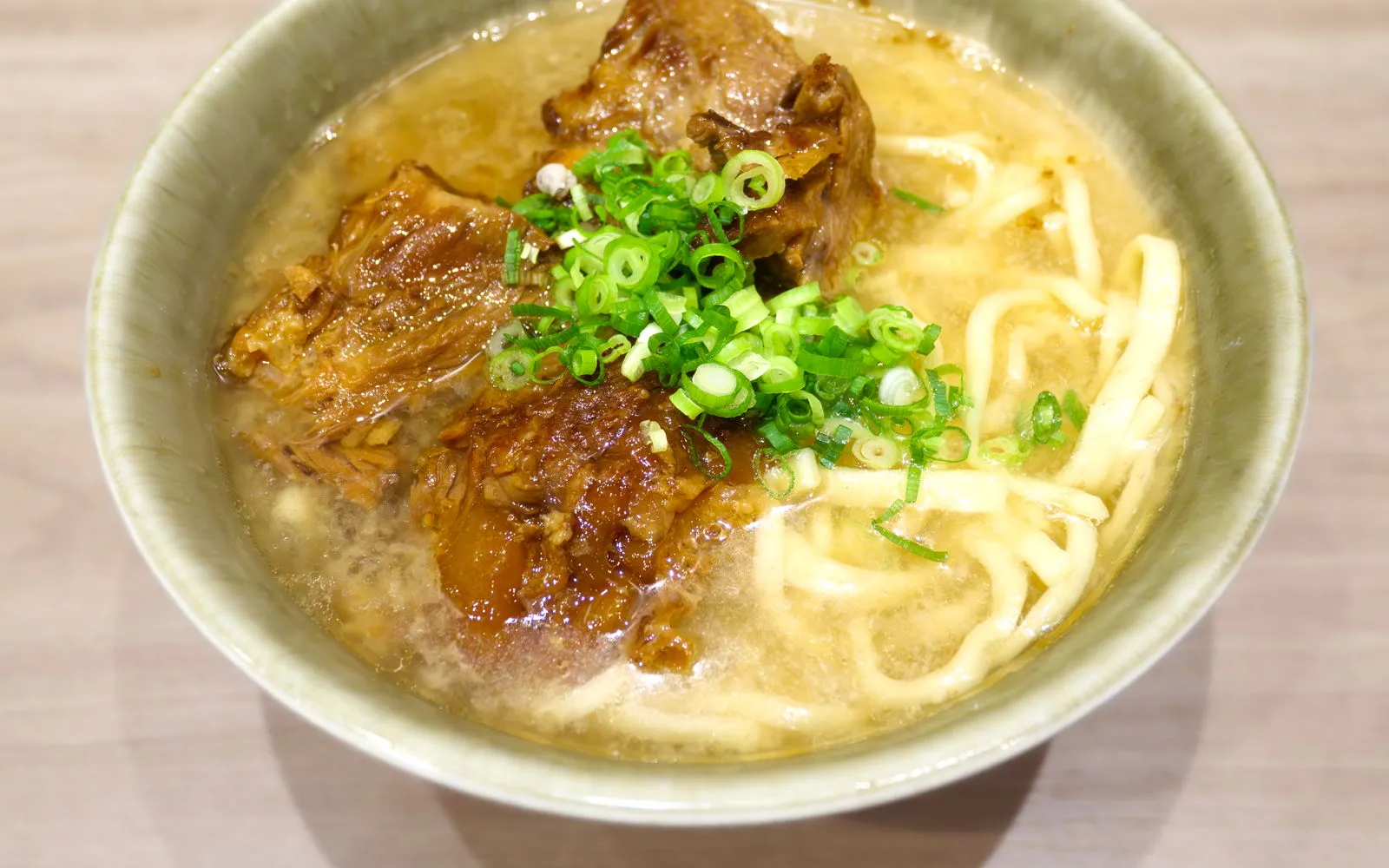
#1 Okinawa Soba · Okinawa Soba
The de facto national dish of Okinawa — and despite the name, there is not a grain of buckwheat in it. The noodles are 100% wheat flour, thick and chewy, closer to udon in texture but with a distinct springiness. The broth is made from pork bones and katsuobushi — clear, light, and not greasy. Standard toppings are sanmai-niku (braised three-layer pork), kamaboko fish cake, spring onion, and pickled ginger. The dish traces back to Ryukyu Kingdom banquets for Chinese envoys in the 15th century.
- Top spots in Naha include Shuri Soba near Shuri Castle and Makishi Soba inside Makishi Public Market.
- Order yubu-soba (tofu-skin soba) if you want a vegetarian version — it's a legitimate menu item, not a workaround.
- A medium bowl runs about 700–900 yen and is more filling than it looks.
 #2
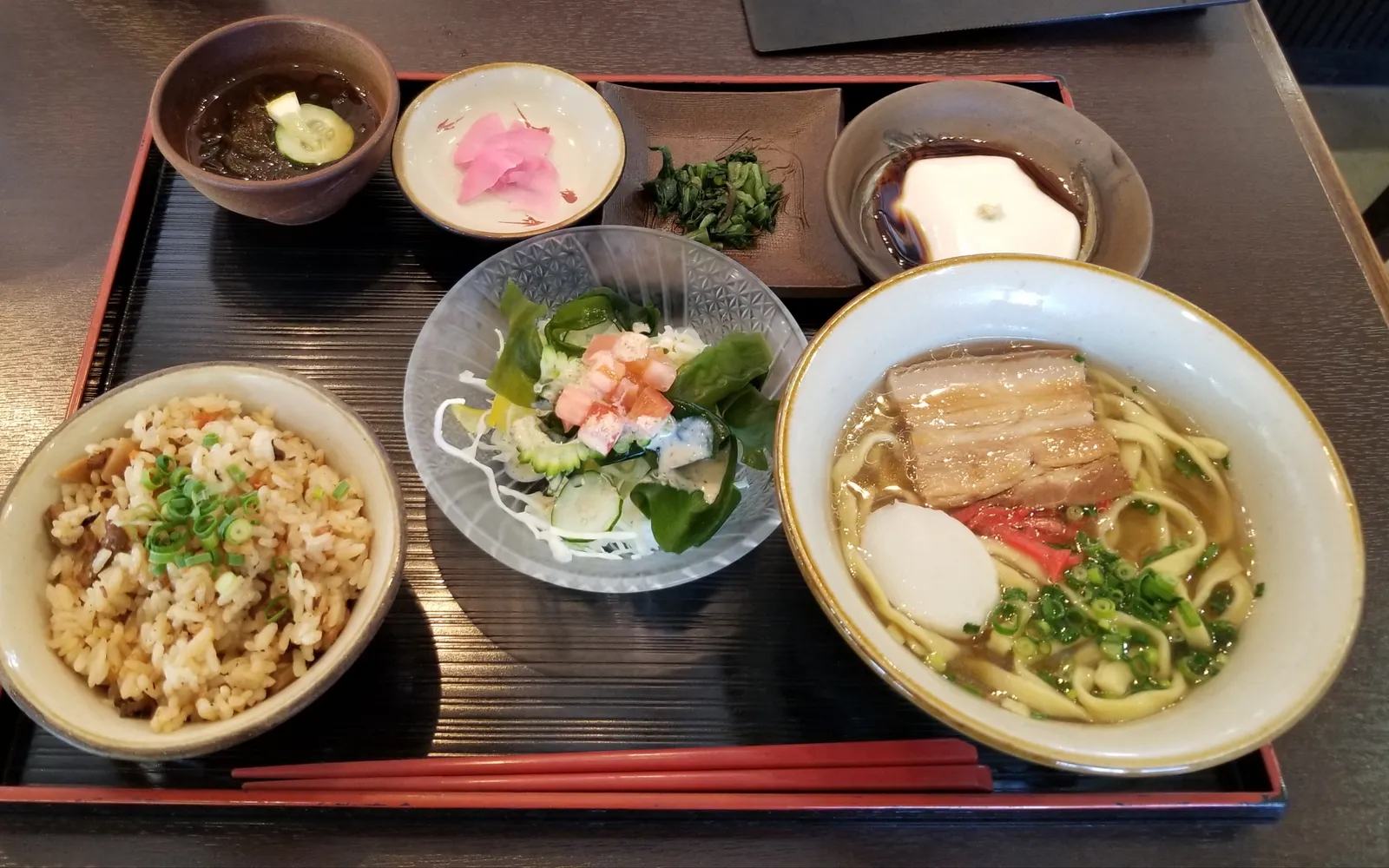
#2 Rafute — Awamori-Braised Pork Belly · Rafute
A dish from the Ryukyu royal court that dates to the kingdom era (1429–1879). Skin-on pork belly is slow-braised in a blend of <strong>awamori</strong> (Ryukyuan distilled spirit), Okinawan black sugar (<em>kokuto</em>), and soy sauce until the meat is tender enough to eat with chopsticks without effort. The deep brown glaze comes from the caramelized black sugar. The flavor is sweet-salty and rich, separated from ordinary Chinese braised pork by the unmistakable aromatic note of awamori.
- Traditional restaurants in Naha serve rafute as a main dish or as a topping on soba — worth trying both ways.
- Expect to pay around 800–1,200 yen for a small portion, or order it as part of a set meal.
- Vacuum-sealed rafute is available at supermarkets and Makishi Market as a take-home souvenir — it travels well.
 #3
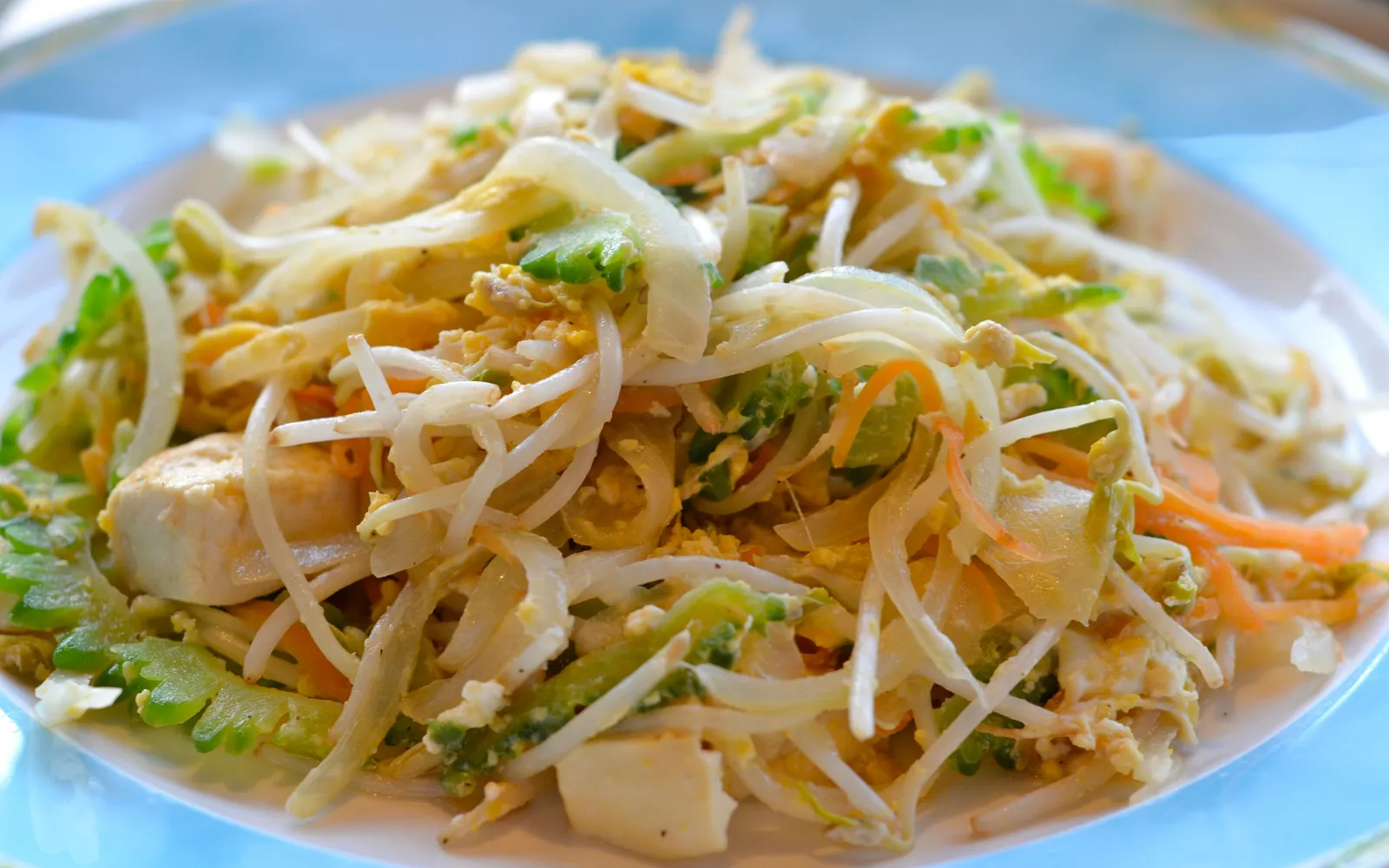
#3 Goya Chanpuru — Bitter Melon Stir-Fry · Goya Chanpuru
The dish that represents Okinawan cooking to the rest of Japan. <em>Chanpurū</em> means "mixed together" in the Okinawan language. Bitter melon (goya) has been grown on the island for over 300 years, introduced from China, and here it is stir-fried with shima-dofu (firm local tofu), egg, and pork or Spam — Spam remains genuinely popular in Okinawa as a legacy of the U.S. military presence. The bitterness of the melon cuts through the richness of the other ingredients and gives the dish its refreshing quality. Bitter melon is also credited with cooling properties in local food culture.
- If you find it too bitter, ask for the seeds and inner membrane to be removed — it makes a significant difference.
- Spam in place of pork is the authentic Okinawan version, not a shortcut — order it that way at least once.
- Around 600–800 yen; it's everyday home cooking, found in every category of restaurant on the island.
 #4
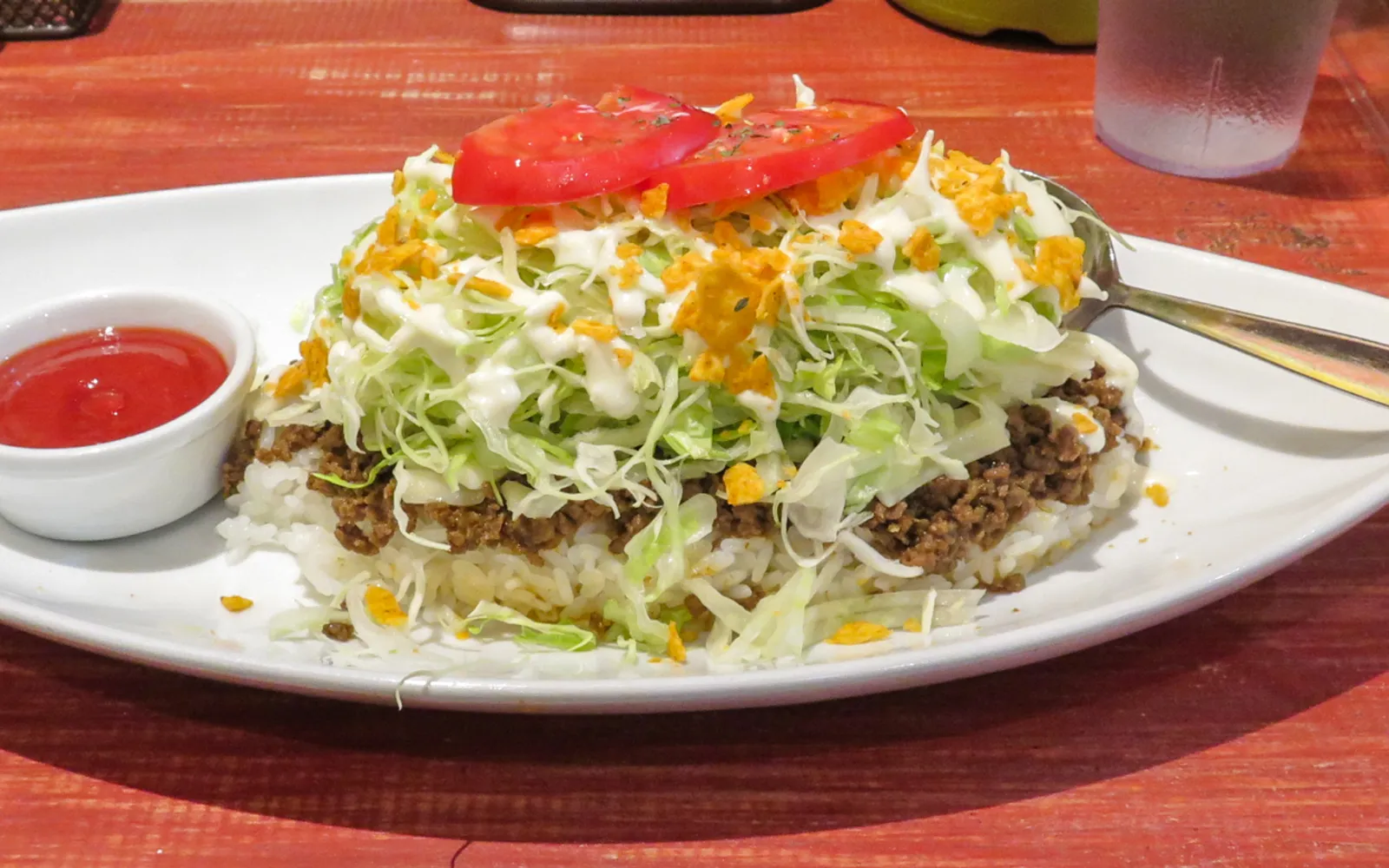
#4 Taco Rice — American-Fusion Rice Bowl · Taco Rice
A genuine fusion dish born from the cultural overlap between American military personnel and Okinawan cooks. It was invented by Matsuzo Gibo in 1984 at King Tacos, a restaurant near the gate of Camp Hansen in Kin. The taco shell was replaced with white rice — cheaper, more filling, and easier to eat. It sits under seasoned ground beef, cheese, shredded lettuce, tomato, and salsa. By now it has spread across Japan and is considered a signature Okinawan dish.
- King Tacos in Kin is the original — it serves both daytime and late-night, and is worth the drive north.
- Order Taco Rice with Cheese and Salsa for the fullest flavor combination.
- Around 700–900 yen — filling and good value.
 #5
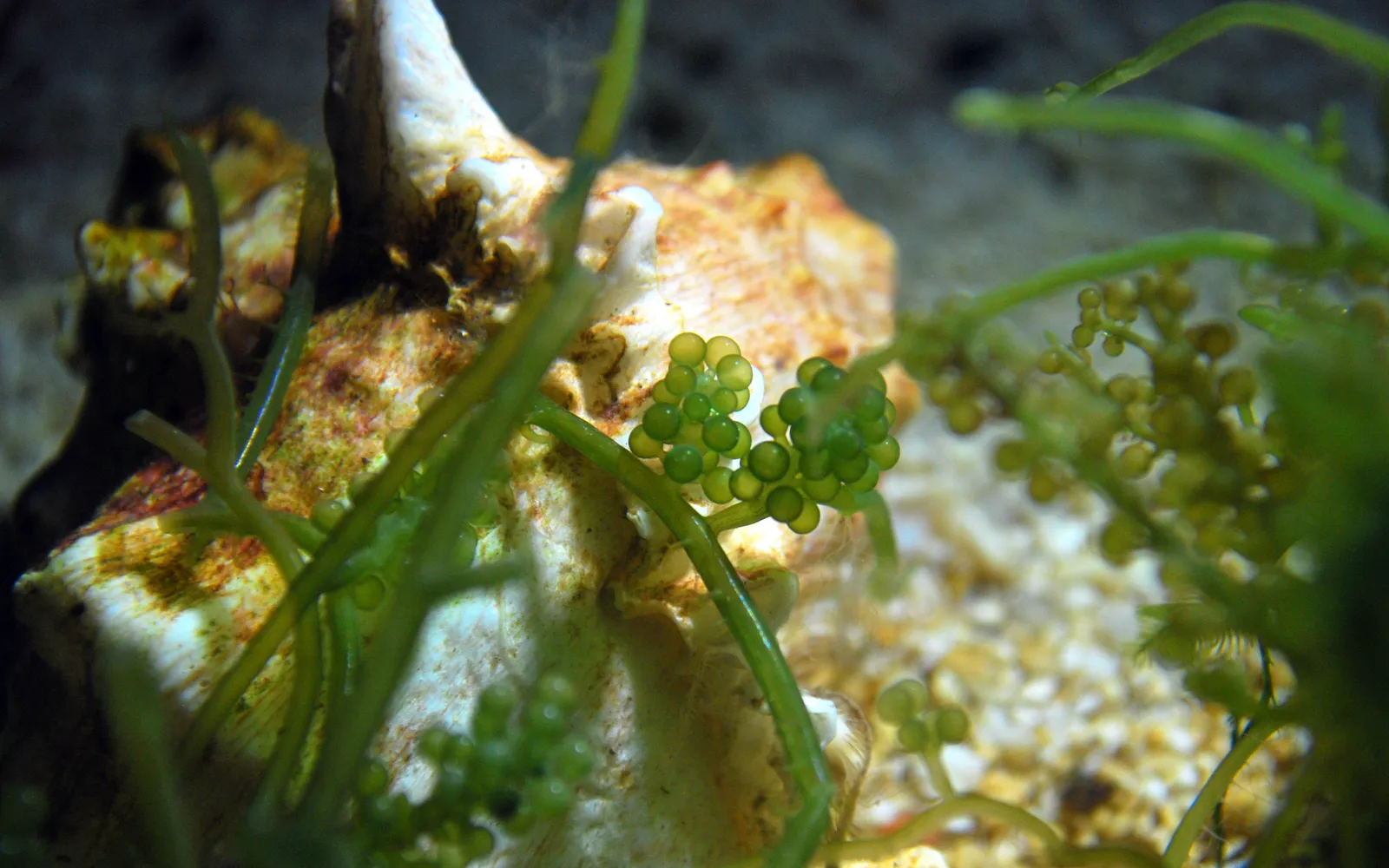
#5 Umibudo — Sea Grapes · Umibudo (Sea Grapes)
A coastal specialty unique to Okinawa. The seaweed (Caulerpa lentillifera) is called <em>umi-budō</em> — sea grapes — for the small round beads lined along each stem. It is prized for its texture: each bead bursts gently on the tongue with a mild, clean ocean flavor. Typically served as a salad with ponzu dipping sauce, or pressed into sushi. It is low in calories and high in minerals.
- Fresh umibudo must be eaten the same day — refrigeration causes the beads to collapse.
- Dried umibudo is sold as a souvenir at Makishi Market; add water and the beads rehydrate back to full texture.
- The flavor is best with a touch of ponzu — the slight acidity of the sauce complements the sea-salt notes well.
 #6
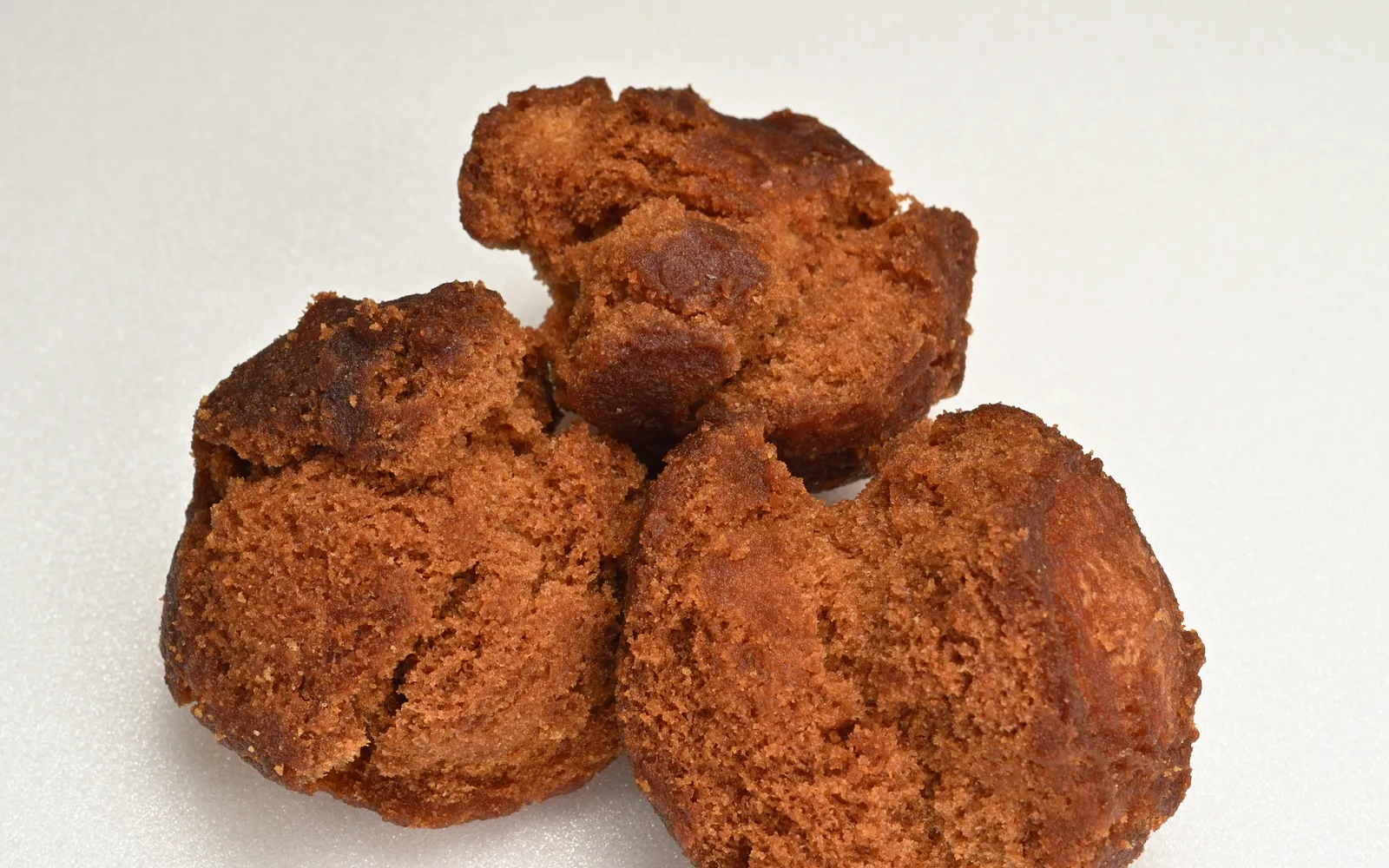
#6 Sata Andagi — Ryukyuan Fried Doughnuts · Sata Andagi
The traditional round fried cake of Okinawa, with roots in Chinese confectionery from the Ryukyu Kingdom era. The name in the Okinawan language means "fried in oil." The dough is wheat flour, egg, sugar, and oil, mixed and formed into balls, then fried in hot oil until the outside splits open naturally — a characteristic that signals they've cooked properly. The interior is soft, light, and just sweet enough. Eaten hot at market stalls and festival grounds, they are Okinawa's go-to street snack.
- Best eaten immediately after frying, still hot — the pre-wrapped bags at airport shops are a pale substitute.
- Flavors vary: kokuto black sugar, macadamia nut, and plain original are the most common.
- Very affordable — roughly 50–80 yen per piece — and easy to carry as a small souvenir.
Where to stay in Okinawa for this trip
A well-located hotel means less commuting and more sightseeing. Here are real, top-rated stays in Okinawa — compare Agoda · Booking · Trip.com in one click.
Hilton Okinawa Chatan Resort
Affiliate links — we may earn a commission at no extra cost to you. Details
Hotel Orion Motobu Resort & Spa
Affiliate links — we may earn a commission at no extra cost to you. Details
Vessel Hotel Campana Okinawa
Affiliate links — we may earn a commission at no extra cost to you. Details
Hotel Collective Naha
Affiliate links — we may earn a commission at no extra cost to you. Details
Tours, tickets & activities in Okinawa
Day tours, attraction tickets and travel essentials for Okinawa — book ahead on Klook with mobile e-tickets.
Affiliate links — we may earn a commission at no extra cost to you.
Before You Pack
The best place to eat through Okinawan food is Naha — along Kokusai-dori, inside Makishi Public Market, and in the streets surrounding it, where hundreds of local restaurants are concentrated. As you go, try pairing the food with awamori (awamori), the Ryukyuan distilled spirit made from long-grain rice and aged in clay pots.