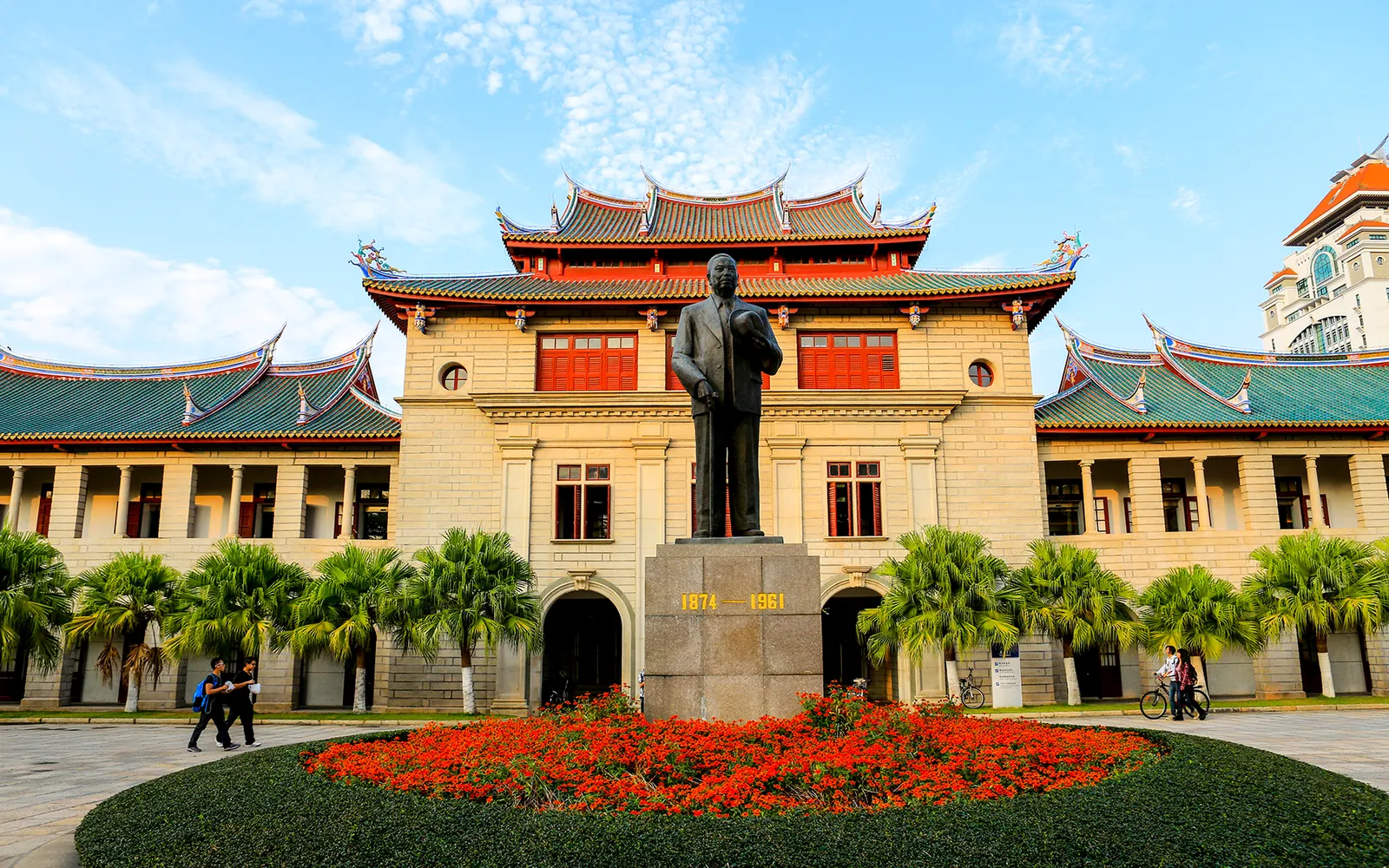
Xiamen's food scene is reason enough to make the trip. Fujian cooking leans on fresh seafood, a light sweetness, and specialty sauces — nothing aggressively spicy, nothing heavy with oil. The Min-Nan oyster omelette is the original template for the dish that crossed the strait to Taiwan and Singapore. Here, at the source, everything is fresher, better, and cheaper. You'd be doing yourself a disservice not to try it.
 #1
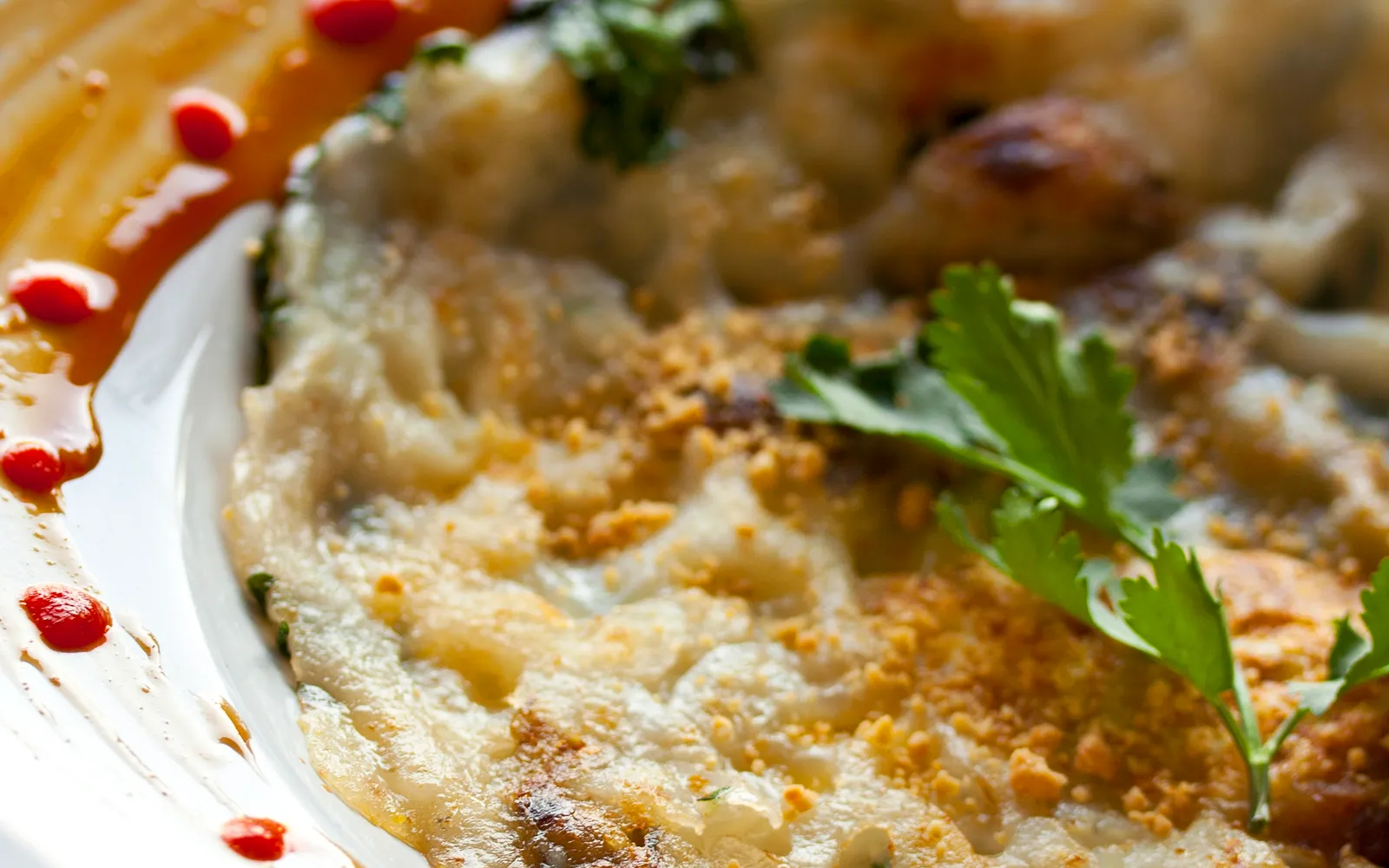
#1 Oyster Omelette (Hoi Zian) · Oyster Omelette
This is the soul of Fujian street food, and the original model for the oyster omelette that became famous in Taiwan and Singapore. Xiamen's version uses large fresh oysters and a thinner tapioca batter, producing a crisp exterior that gives way to a chewy, tender interior. The sweet-tangy chili-orange dipping sauce is non-negotiable — without it, you're missing the point. Prices are remarkably low: 15–25 yuan a plate. Eat it straight off the pan.
- You can ask for extra oysters — the price goes up slightly but it's worth it. Fujian sea oysters are larger and sweeter than versions you'll find elsewhere.
- Check that the pan is hot enough before ordering. An under-heated pan gives you a gummy surface instead of a crisp one. Good stalls have smoke rising constantly.
- The dipping sauce is a house recipe at each stall. Ask whether they have a specialty sauce — some stalls make a fermented chili-orange version you can't get anywhere else.
 #2
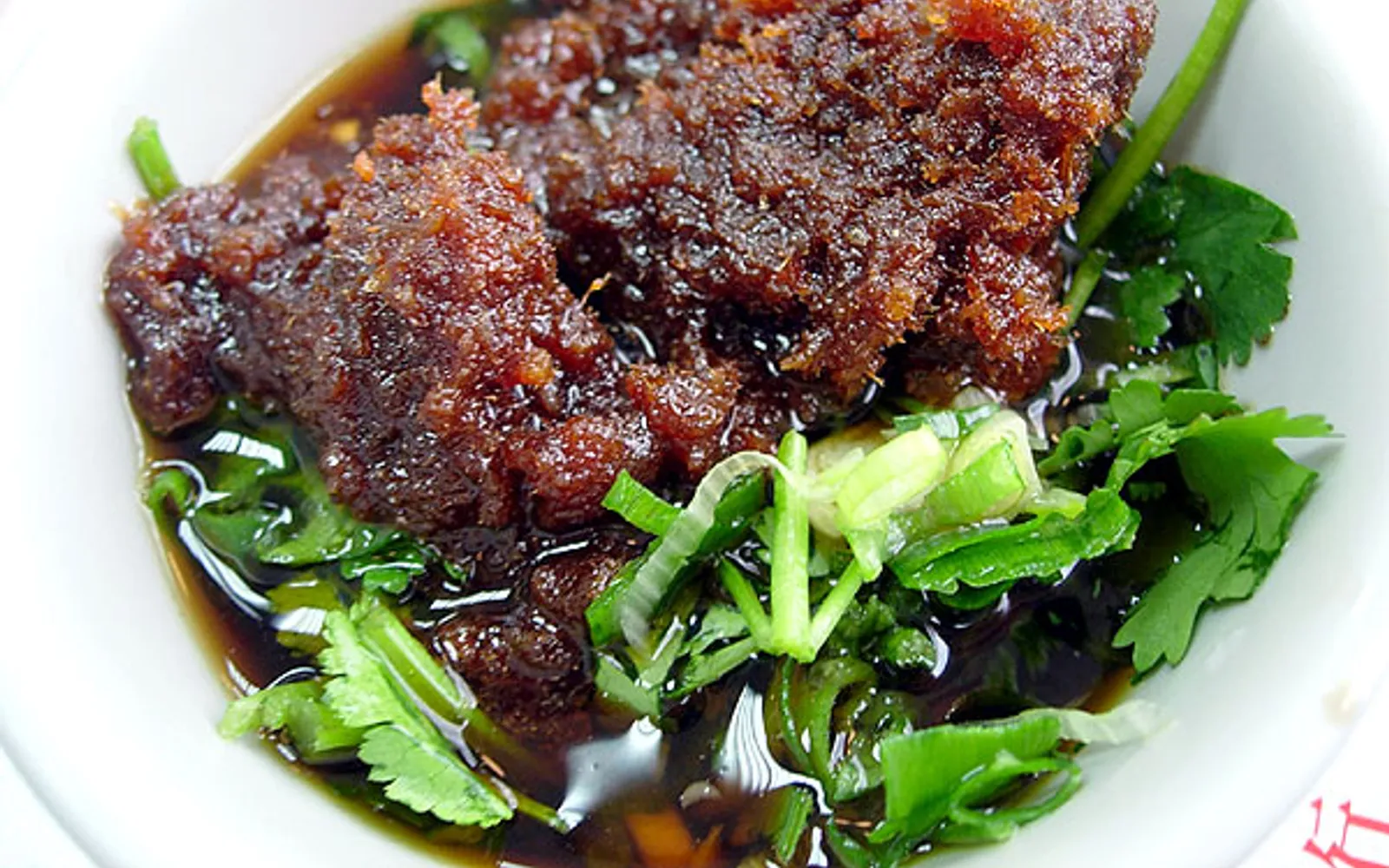
#2 Sa Cha Noodles (Shacha Mian) · Sa Cha Noodles
Sa cha (shacha) is a multi-purpose sauce that originated in Xiamen and spread across Asia. It's made from shrimp paste, dried shrimp, desiccated coconut, onion, garlic, and vegetable oil — salty, aromatic, faintly sweet, with a deep seafood undertone. Shacha mian is the dish: noodles or rice noodles in a diluted sa cha broth with meat and vegetables. It's a staple breakfast and lunch for locals. Bowls run 15–30 yuan.
- Order it both dry (tossed) and soupy to compare — the dry version has a more concentrated sauce.
- Bottled sa cha paste is sold in supermarkets all over Xiamen. It's an excellent thing to bring home: 20–40 yuan a jar.
- Old noodle shops in the alleys beside Nanputuo Temple often open at 6:00. Their broth simmers overnight and has more depth than tourist-market spots.
 #3
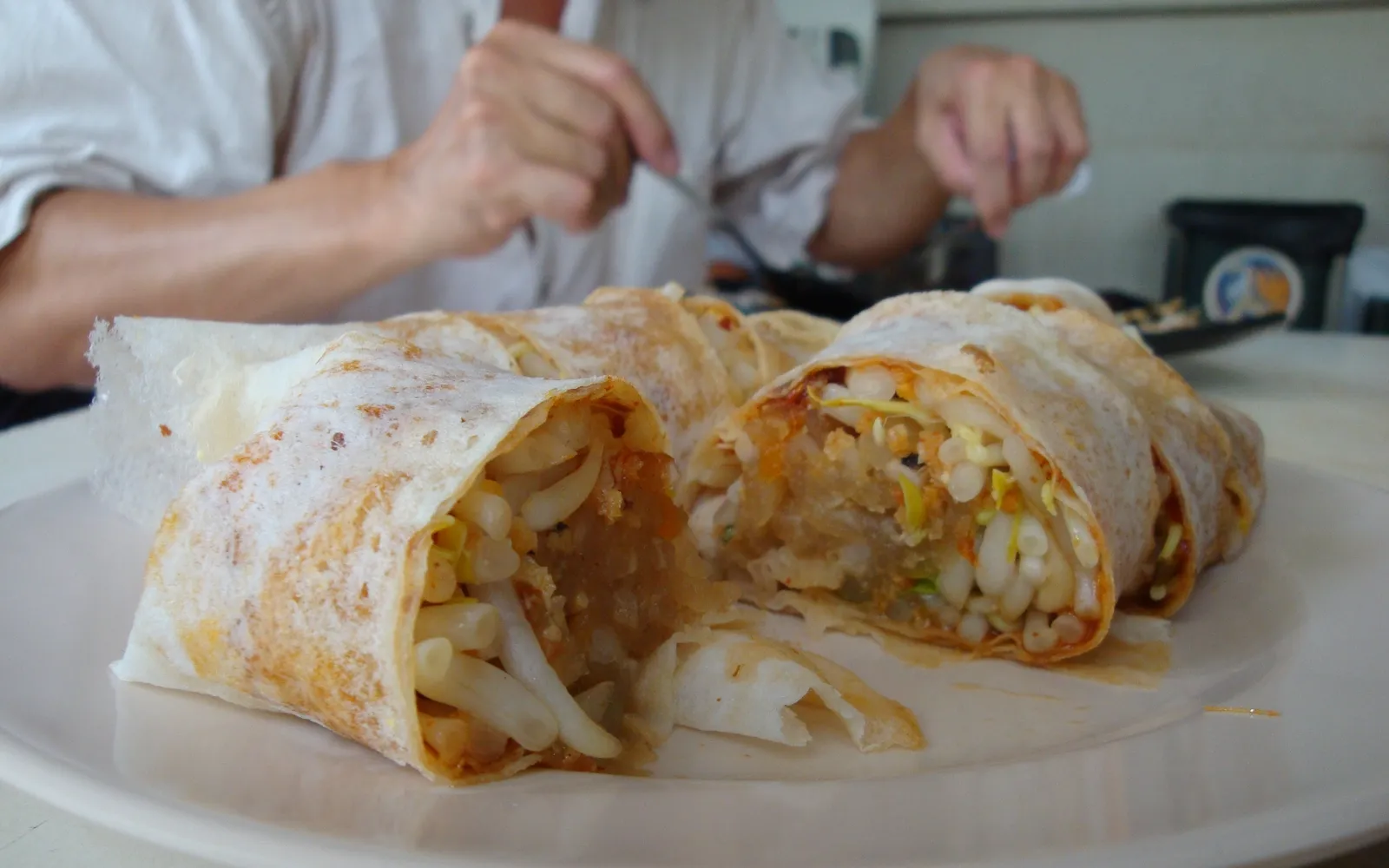
#3 Xiamen Popiah (Min-Nan Fresh Spring Roll) · Popiah
This is the Min-Nan fresh spring roll that became the ancestor of Taiwanese and Singaporean popiah. The filling is braised white radish — soft, lightly sweet — chopped dried shrimp, ground peanuts, fried egg, and pickled vegetables, wrapped in a thin fresh wheat-flour skin made daily. A proprietary sweet-salty sauce goes on top. The result is light and refreshing, not heavy. It works equally well as breakfast or a snack. Rolls run 8–15 yuan each.
- Ask to have it wrapped in front of you so you can watch the technique, and request extra ground peanuts — usually free or at no extra charge.
- The best versions come from home setups where locals sell from their front doors, not market stalls aimed at visitors. Ask someone nearby to point you to the right spot.
- Good popiah skin is almost translucent it's so thin. Thick skin means it's not fresh — find another stall.
 #4
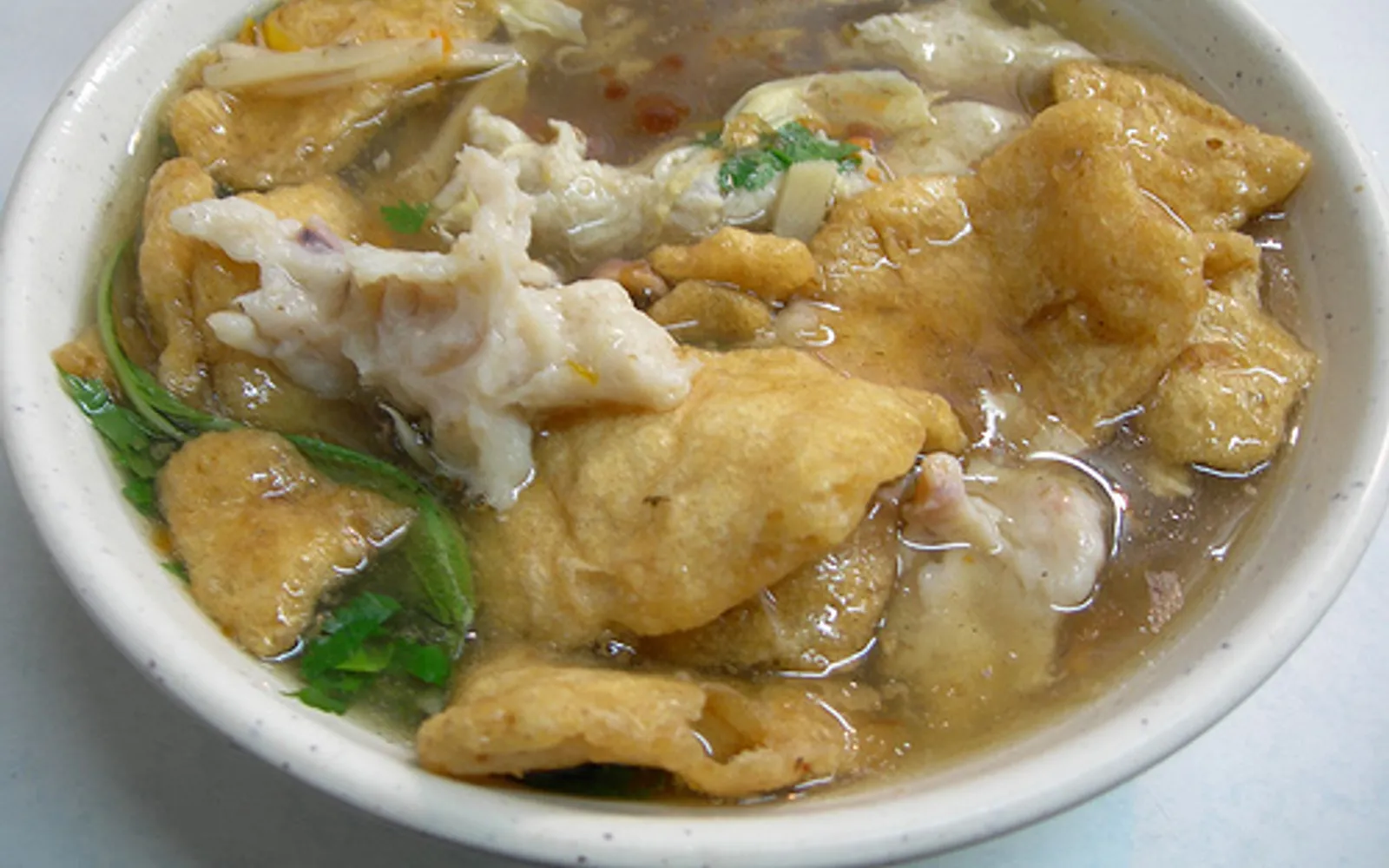
#4 Braised Mussels with Spices (Ta Hai) · Xiamen Braised Mussels
A signature Xiamen seafood dish using fresh mussels from the Taiwan Strait, braised in dark soy sauce with ginger, garlic, dried mandarin peel, and chili until the mussels are tender and the sauce coats every shell. The flavor is deep, savory, and faintly sweet from the fresh shellfish. Pour the sauce over white rice — that's the traditional way, and it's the right way. This is everyday food for locals. Dishes run 30–60 yuan.
- Order with white rice: the sauce is too good to leave in the pot.
- Check freshness before ordering. Live mussels should be closed or only slightly open; shells gaping wide before cooking means they're not fresh.
- Seafood restaurants along the old harbor in Shapowei and near the Xunsi ferry pier tend to have the freshest mussels — they receive direct deliveries from fishing boats.
 #5
#5 Peanut Ice Cream Roll (Hua Sheng Bing) · Peanut Ice Cream Roll
A street dessert that originated on Gulangyu Island and became a symbol of Xiamen. Sugar-peanuts are shaved into fine threads like spun silk, then wrapped around vanilla ice cream, fresh coriander (yes, coriander), and crispy fried dough strips inside a thin wheat wrapper. The mild sweetness of the peanut, the cold of the ice cream, and the fragrance of the herbs come together in a combination that surprises almost everyone the first time. Runs 15–25 yuan.
- You can ask for no coriander if you prefer. Most travelers not used to herb-in-dessert find it unexpected, but if you can handle it, the balance is noticeably better with it.
- Eat it immediately. The peanut threads absorb moisture from the ice cream and turn soggy within about 5 minutes.
- Stalls that shave the peanuts to order in front of you are a reliable freshness signal. Avoid stalls with pre-made rolls wrapped in plastic and waiting.
 #6
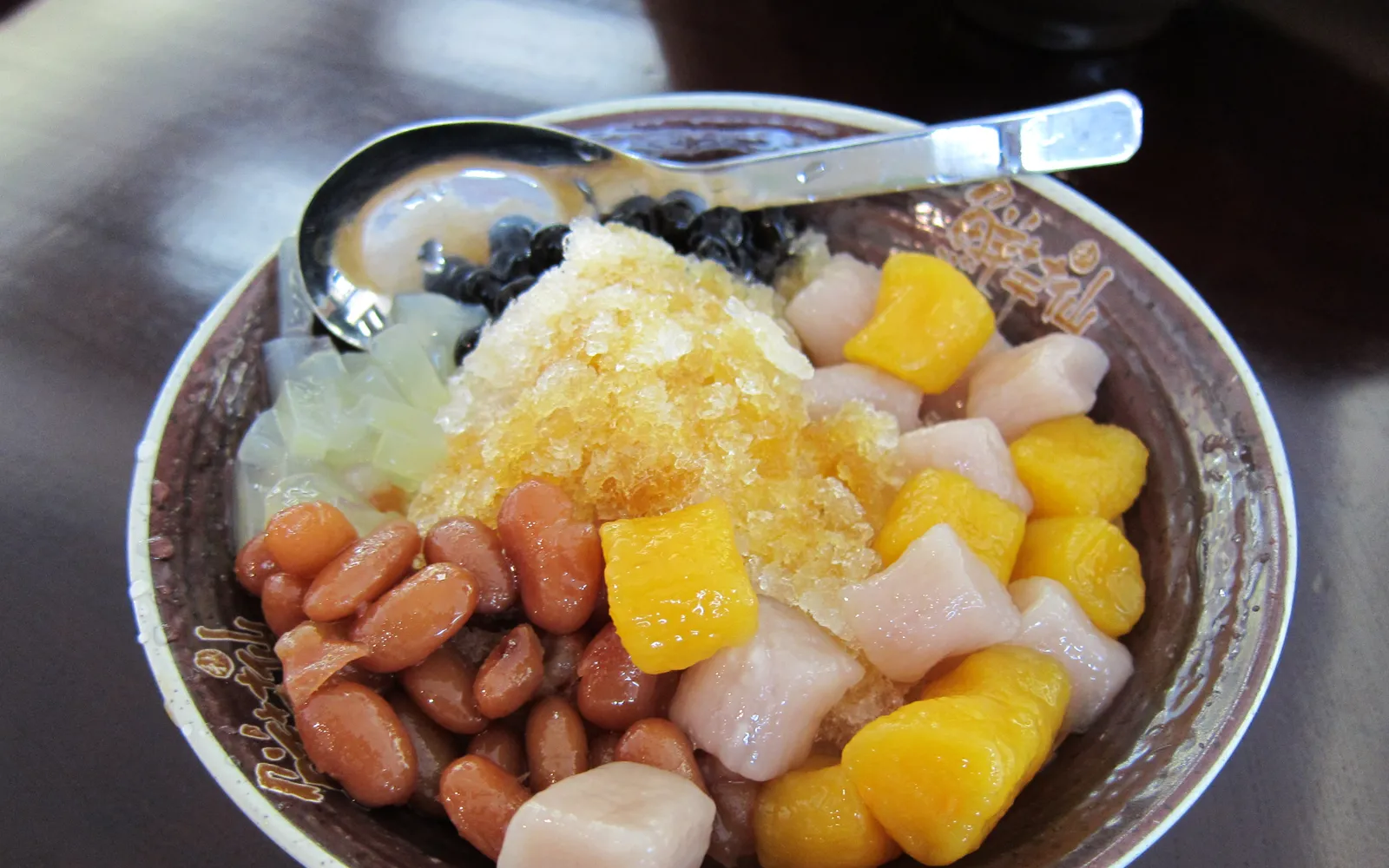
#6 Taro Balls in Sweet Soup (Yu Wan) · Taro Balls in Sweet Soup
A traditional Xiamen dessert made from mashed taro mixed with tapioca starch, hand-rolled into small balls and boiled until soft and springy, then served in hot or cold ginger syrup. Some shops serve both colors in one bowl — white balls are plain tapioca, purple are genuine taro. The flavor is gently sweet, the ginger syrup is warming, and the texture has just the right chew. Xiamen residents have been eating this after dinner for hundreds of years. Bowls run 10–20 yuan.
- Order it hot (wan) in winter or cold (ling) in summer — both are good, just differently. Hot ginger syrup on a cool day is particularly satisfying.
- Good taro balls should be soft inside with the right amount of chew. Too firm means under-cooked; falling apart means the starch ratio is off.
- They travel well as a gift. Dried (raw-frozen) taro balls are sold in supermarkets and local markets — you can cook them at home.
Where to stay in Xiamen for this trip
A well-located hotel means less commuting and more sightseeing. Here are real, top-rated stays in Xiamen — compare Agoda · Booking · Trip.com in one click.
Swiss Grand Xiamen
Affiliate links — we may earn a commission at no extra cost to you. Details
Vishan Garden Boutique Hotel Xiamen
Affiliate links — we may earn a commission at no extra cost to you. Details
Millennium Harbourview Hotel Xiamen
Affiliate links — we may earn a commission at no extra cost to you. Details
JI Hotel Xiamen Zhongshan Road Pedestrian Street
Affiliate links — we may earn a commission at no extra cost to you. Details
Tours, tickets & activities in Xiamen
Day tours, attraction tickets and travel essentials for Xiamen — book ahead on Klook with mobile e-tickets.
Affiliate links — we may earn a commission at no extra cost to you.
Before You Pack
Xiamen's food is at its best at the Zhongshan Road Night Market, the morning markets in the alleys near Nanputuo Temple, and the old-school restaurants in the Shapowei neighborhood. Street food prices here are remarkably low compared to Shanghai or Beijing. The flavor profile of Min-Nan cooking — lightly sweet, seafood-forward, not oily — tends to resonate with a wide range of palates, and the six dishes above cover all the signatures worth seeking out.