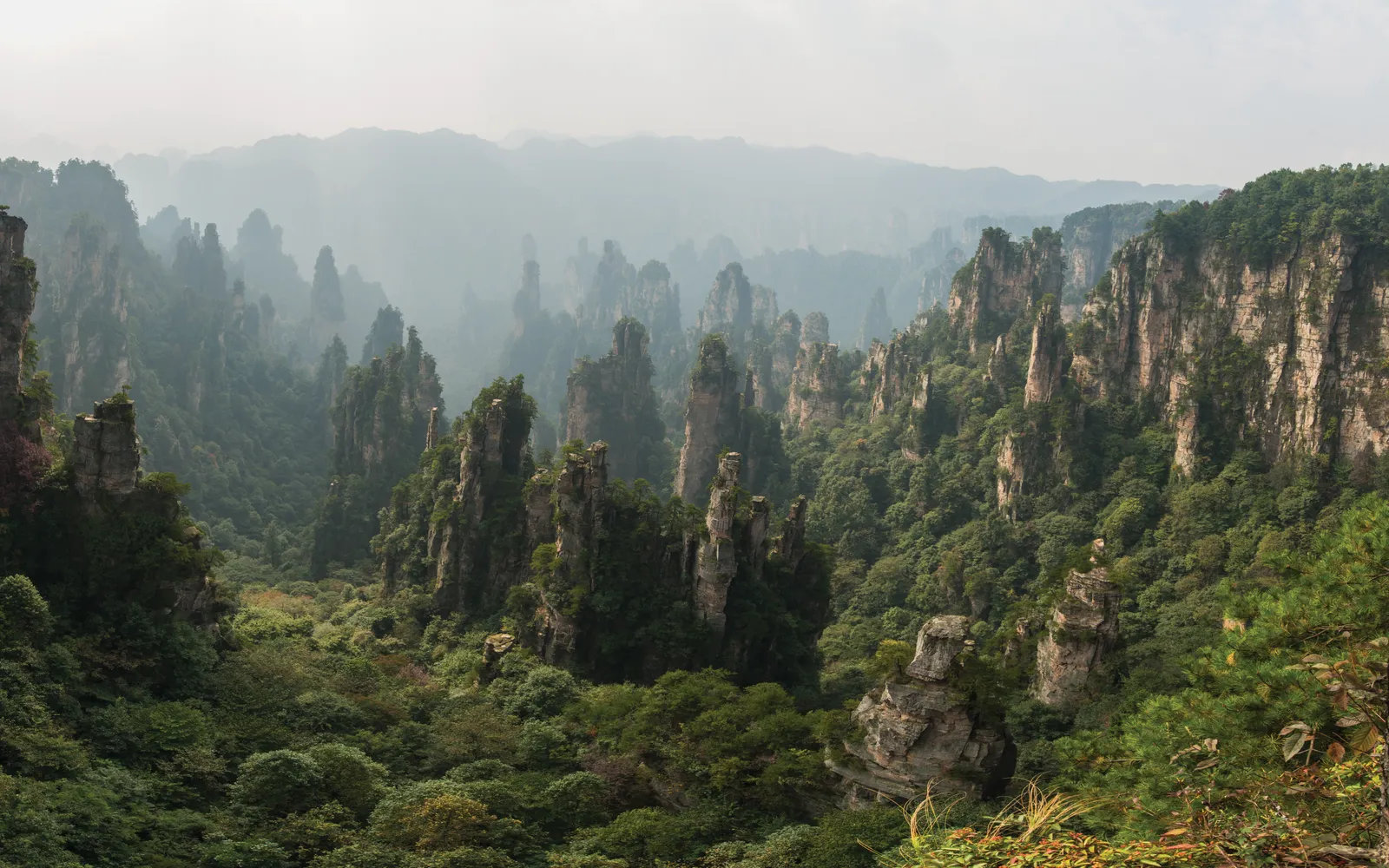
Zhangjiajie food blends the fiery heat of Hunan cooking with the eating traditions of the Tujia people, who have lived in these mountains for thousands of years. The signatures are sour, spicy, smoky, and fermented — all rooted in the practical need to preserve food at altitude. The dishes here read very differently from Cantonese or Sichuan food that most visitors know, and are well worth trying at least once.
 #1
#1 Tujia Sanxia Guo (Tujia Three-Ingredient Hot Pot) · Tujia Sanxia Guo (Tujia Three-Ingredient Hot Pot)
Tujia Sanxia Guo is Zhangjiajie's most iconic dish — and the name says exactly what it is. 'Three-ingredient pot' originally meant three core components: rabbit, Tujia cured bacon, and dried tofu, cooked together with chillies, fermented bean paste, and spices in a flat-bottomed pot. The result is a spicy, numbing, smoky bowl you can order either dry (recommended) or in broth. Locals and visitors alike order it without fail every time they come to Zhangjiajie.
- Order the 'gan guo' (dry pot) version — the flavor is more concentrated than the broth version
- If you're sensitive to heat, tell the kitchen 'shao la' (少辣, less spicy) — most places will adjust
- The best spots sit outside the Scenic Area: prices are often half what you'd pay inside and the cooking is more authentic
 #2
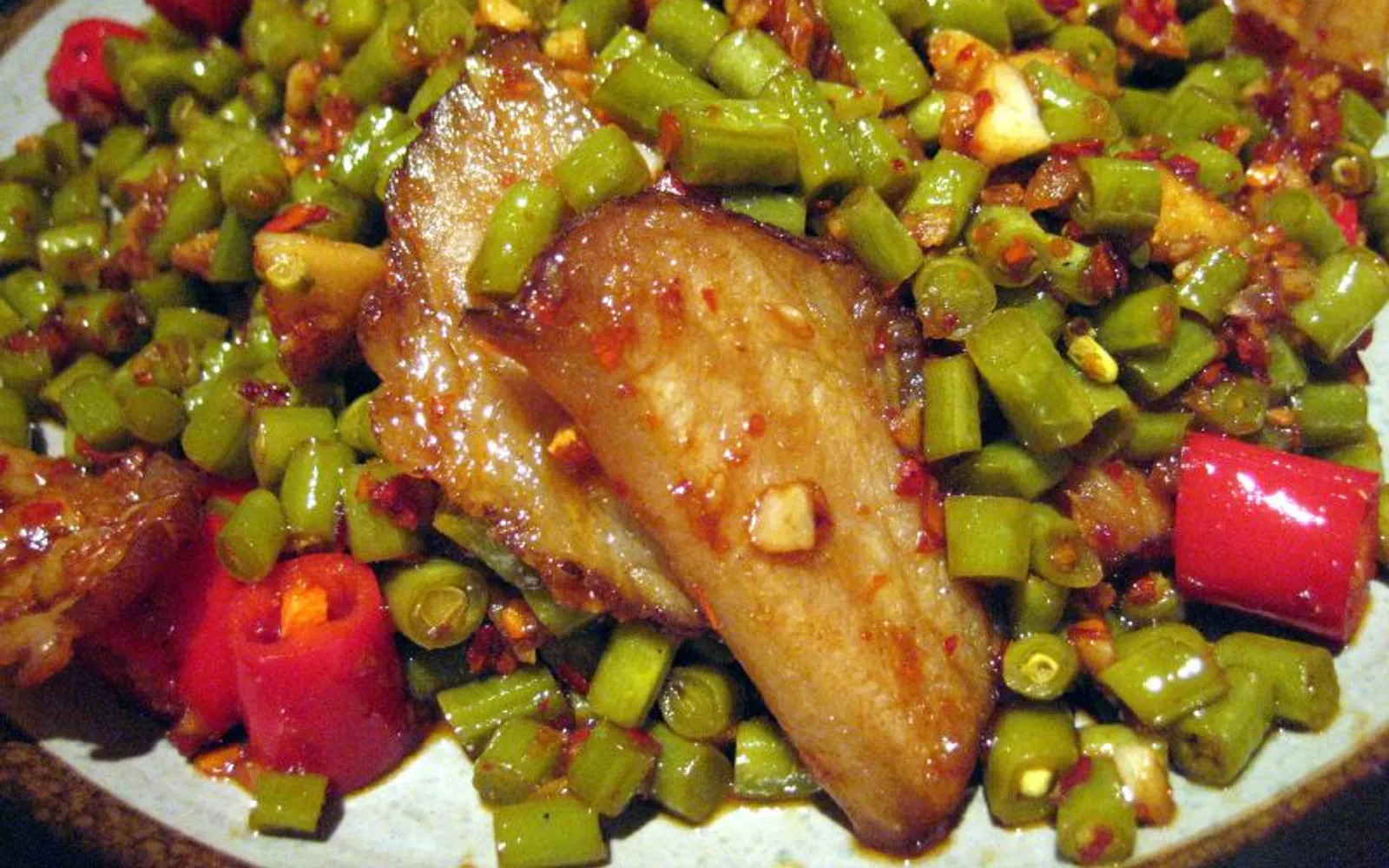
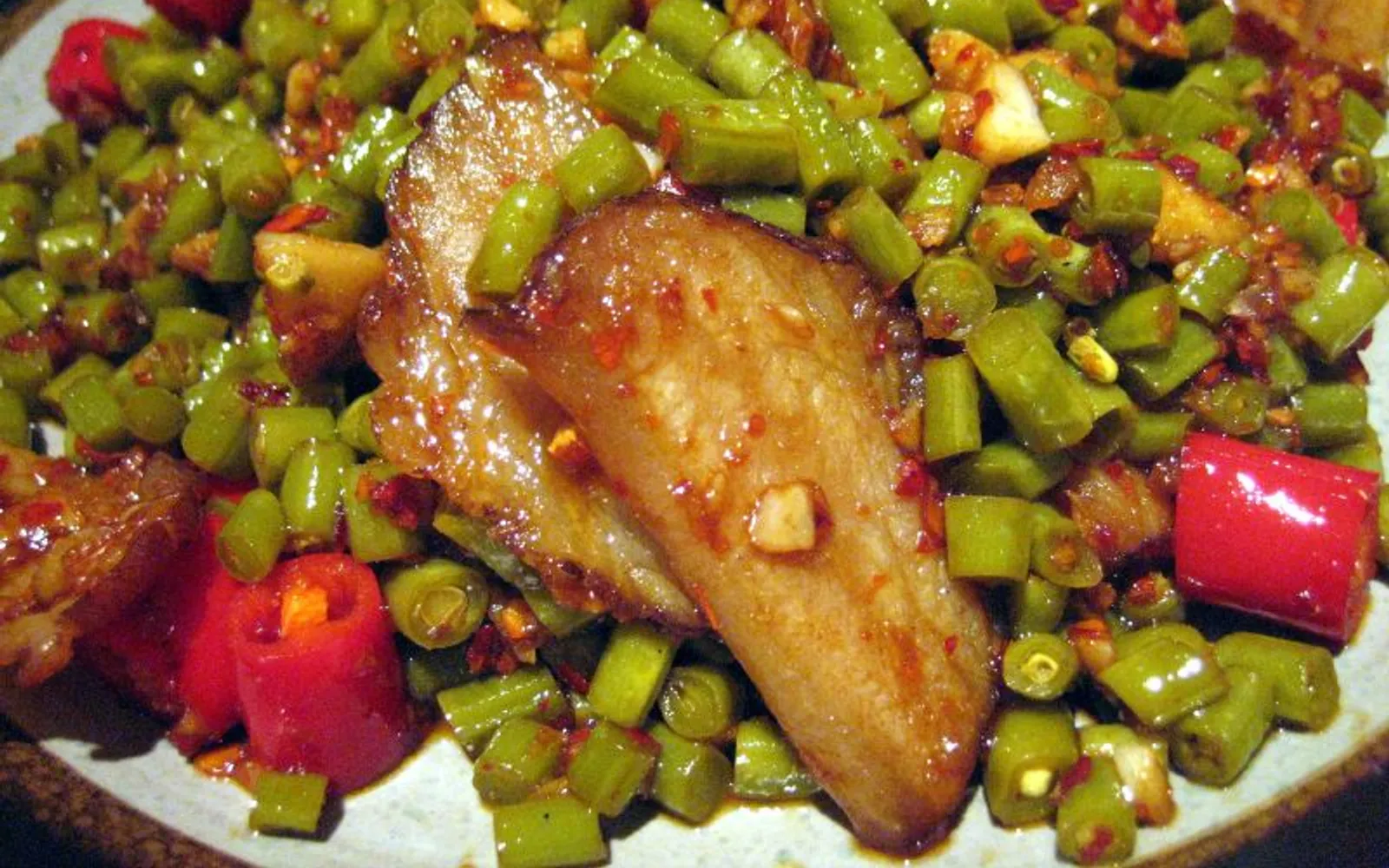
#2 Tujia Cured Smoked Bacon (Tujia Larou) · Tujia Cured Smoked Bacon (Tujia Larou)
Tujia bacon — larou — is pork salted and cold-smoked over hardwood and fragrant plant roots following a method the Tujia people have passed down for hundreds of years. The outside turns deep brown from the smoke; inside, the meat stays tender and richly fatty. It works steamed, stir-fried with green chillies, or tucked inside Sanxia Guo. It's also the most popular takeaway souvenir from Zhangjiajie: easy to pack, long shelf life.
- Buy vacuum-sealed packs if you're taking some home — they travel well
- Authentic Tujia bacon sells in local markets at prices well below the Scenic Area souvenir shops
- Stir-fried with green chillies and garlic is the best way to eat it
 #3
#3 Sour Fish (Suanyu) · Sour Fish (Suanyu)
Sour fish — suanyu — is one of the Tujia people's oldest preparations: fish packed in ground cooked rice and salt, then left to ferment until natural lactic acid develops, giving the flesh a tangy-sweet edge. Done right, it has no fishiness and no oiliness — closer in character to a fish-style aged cheese, in the best sense. It was traditionally made in summer so there'd be protein through the leaner winter months, a clever mountain-larder solution.
- The sourness can be sharp for first-timers — order a small portion to try before committing
- Good restaurants use local freshwater fish, not frozen imports
- Eat it alongside hot plain rice, which softens the tang and makes it easier to enjoy
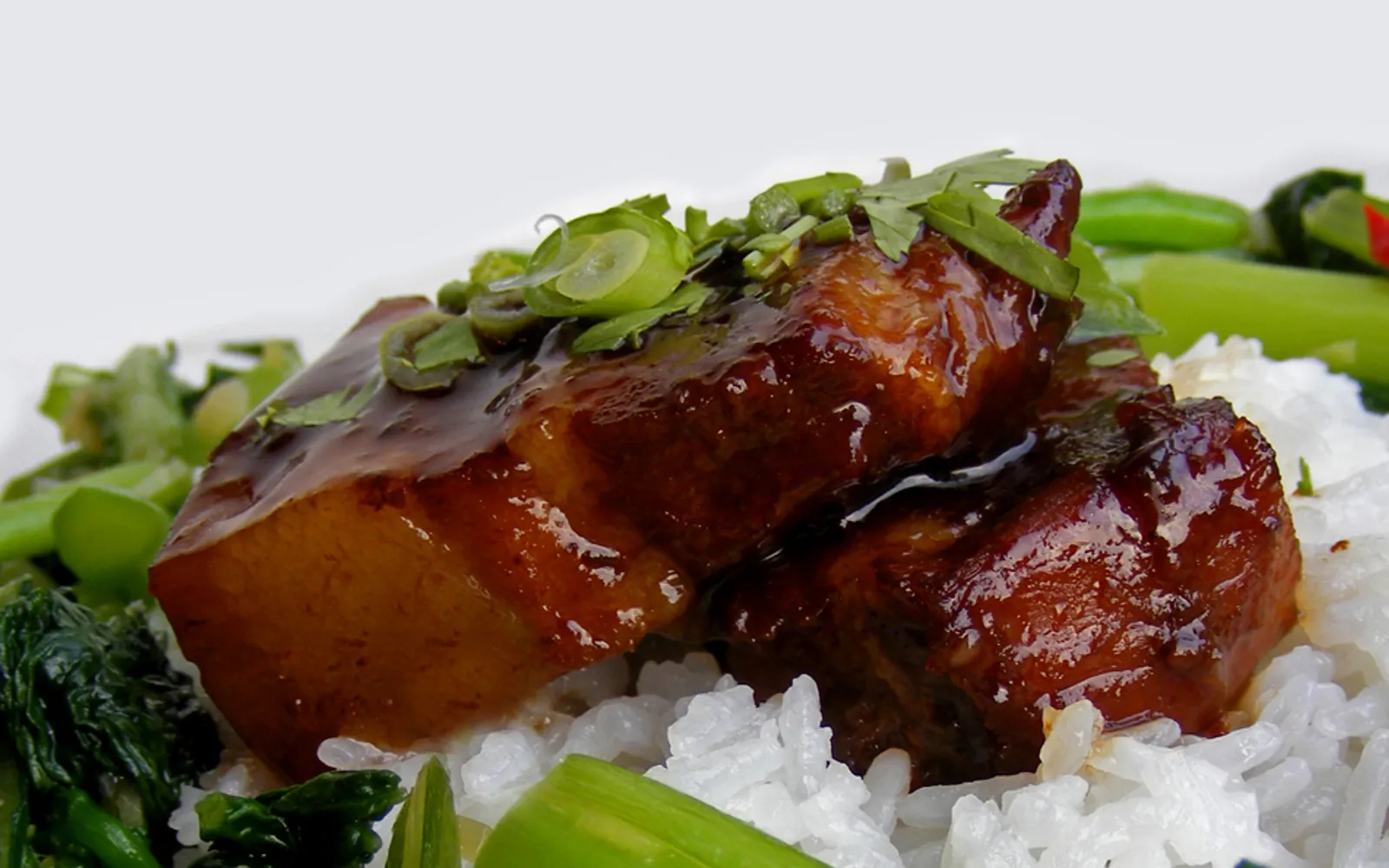 #4
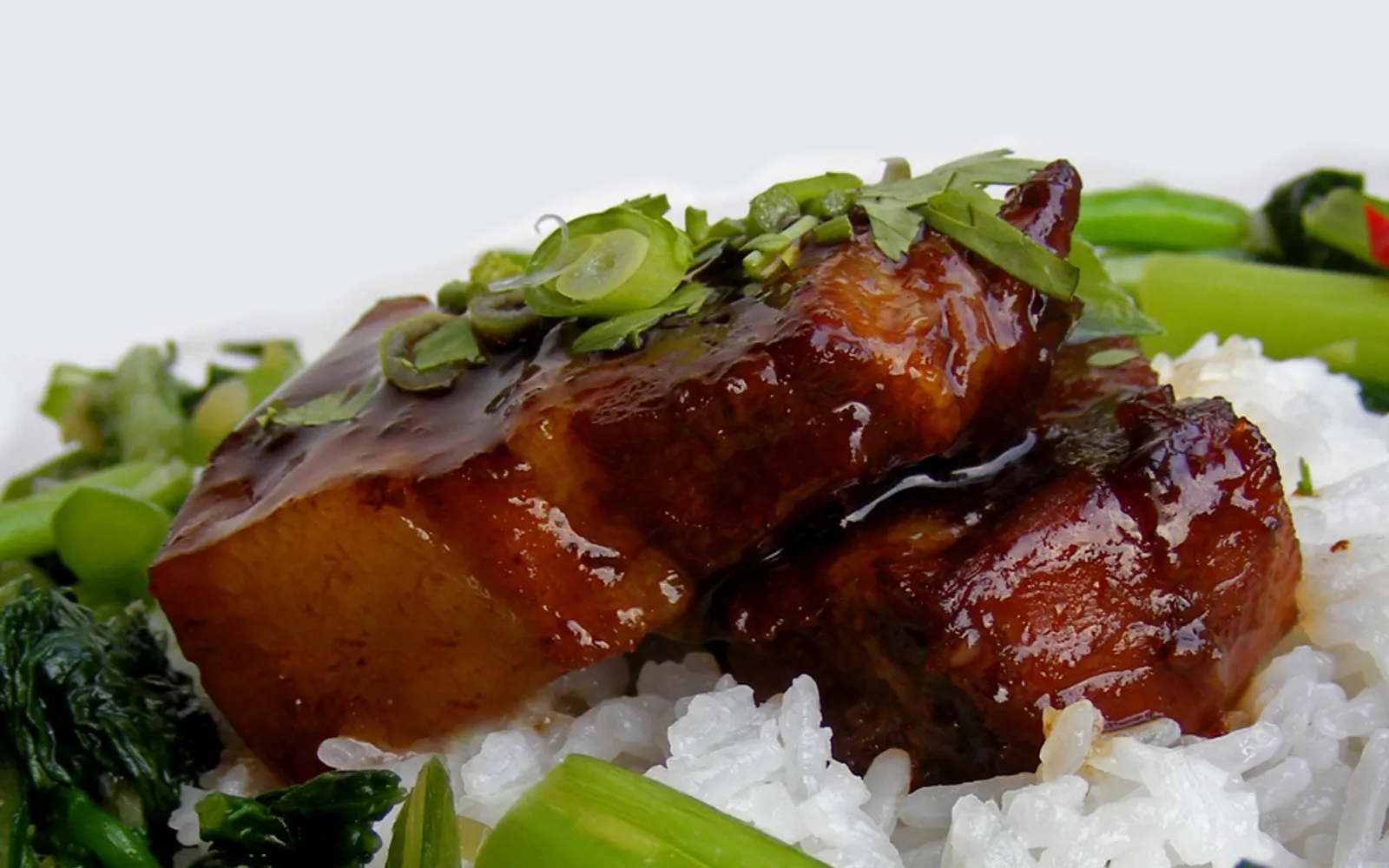
#4 Mao-Style Red-Braised Pork Belly (Mao Shi Hongshaorou) · Mao-Style Red-Braised Pork Belly (Mao Shi Hongshaorou)
Hong Shao Rou in the Mao style is a dish with global name recognition — said to be the favorite of Chairman Mao, who was born in Hunan province. Pork belly is braised low and slow with rock sugar, dark soy sauce, Chinese rice wine, star anise, and ginger until the meat dissolves at the touch of a chopstick and the sauce reduces to a glossy, spice-scented coat. The color comes from caramelized sugar and soy; the flavor opens sweet, then savory, with a warm spice tail. No dish communicates the soul of Hunan cooking more directly.
- A serious kitchen braises the pork for at least 2 hours to get it fully tender — worth asking
- Eat it over hot steamed rice to catch every drop of the braising liquid
- This dish appears on almost every Hunan menu but quality varies enormously
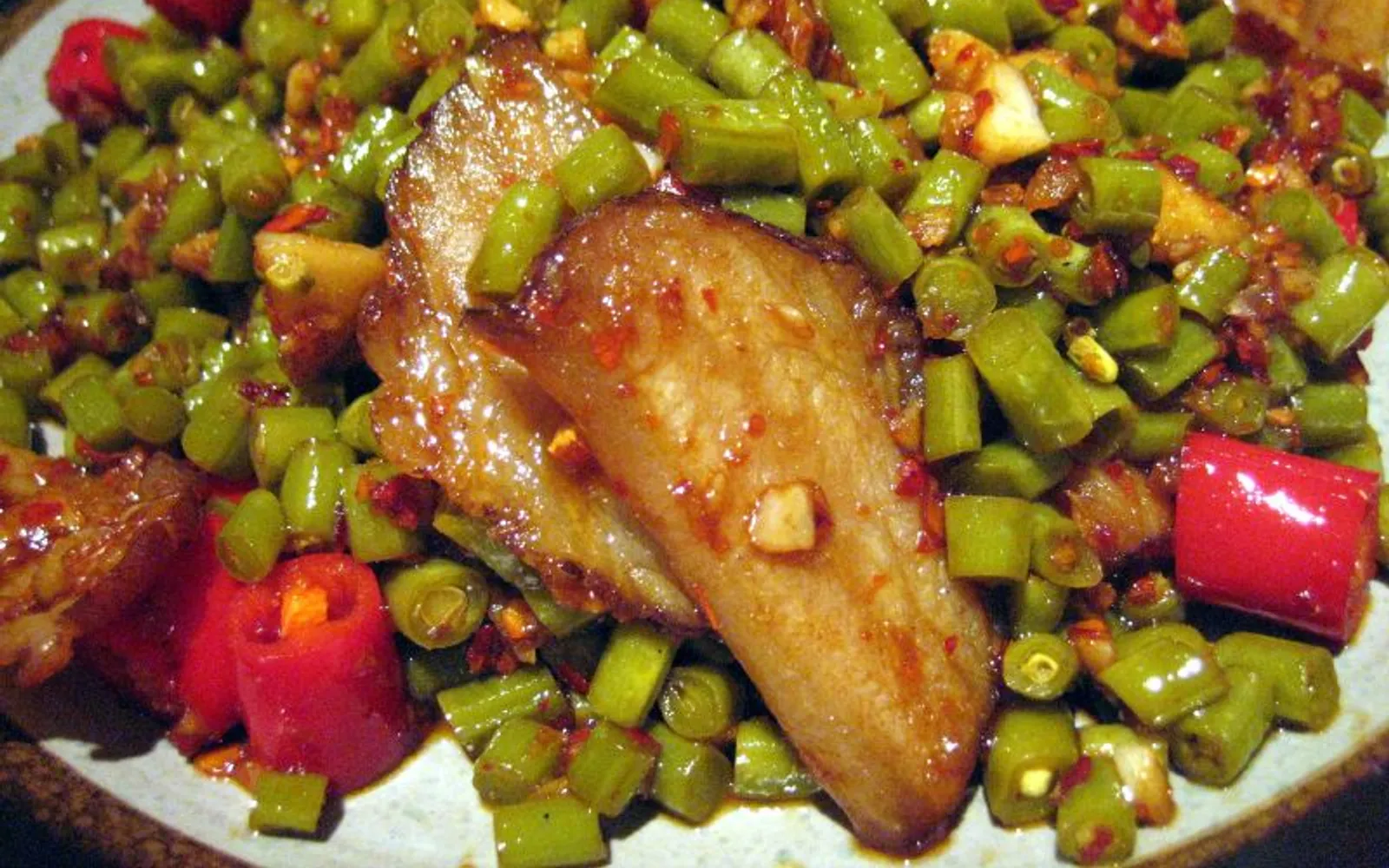 #5
#5 Zhangjiajie Rice Noodles (Mifen) · Zhangjiajie Rice Noodles (Mifen)
Zhangjiajie's mifen stands out for its generous, freshly assembled toppings: beef, braised pork knuckle, wood-ear mushrooms, pickled vegetables, and roasted peanuts are all common additions. The broth is made from pork bones and spices cooked for hours; the soft rice noodles absorb it well. This is what locals eat every morning before work or before heading into the park. A bowl starts at 10 to 15 yuan.
- Eat it as breakfast before entering the park — it'll carry you through a full day of walking
- Ask for 'la jiao' (辣椒, chilli) if you want a kick of local heat
- Stalls near the wet market open from 6 a.m. — the food is fresher and cheaper than in larger restaurants
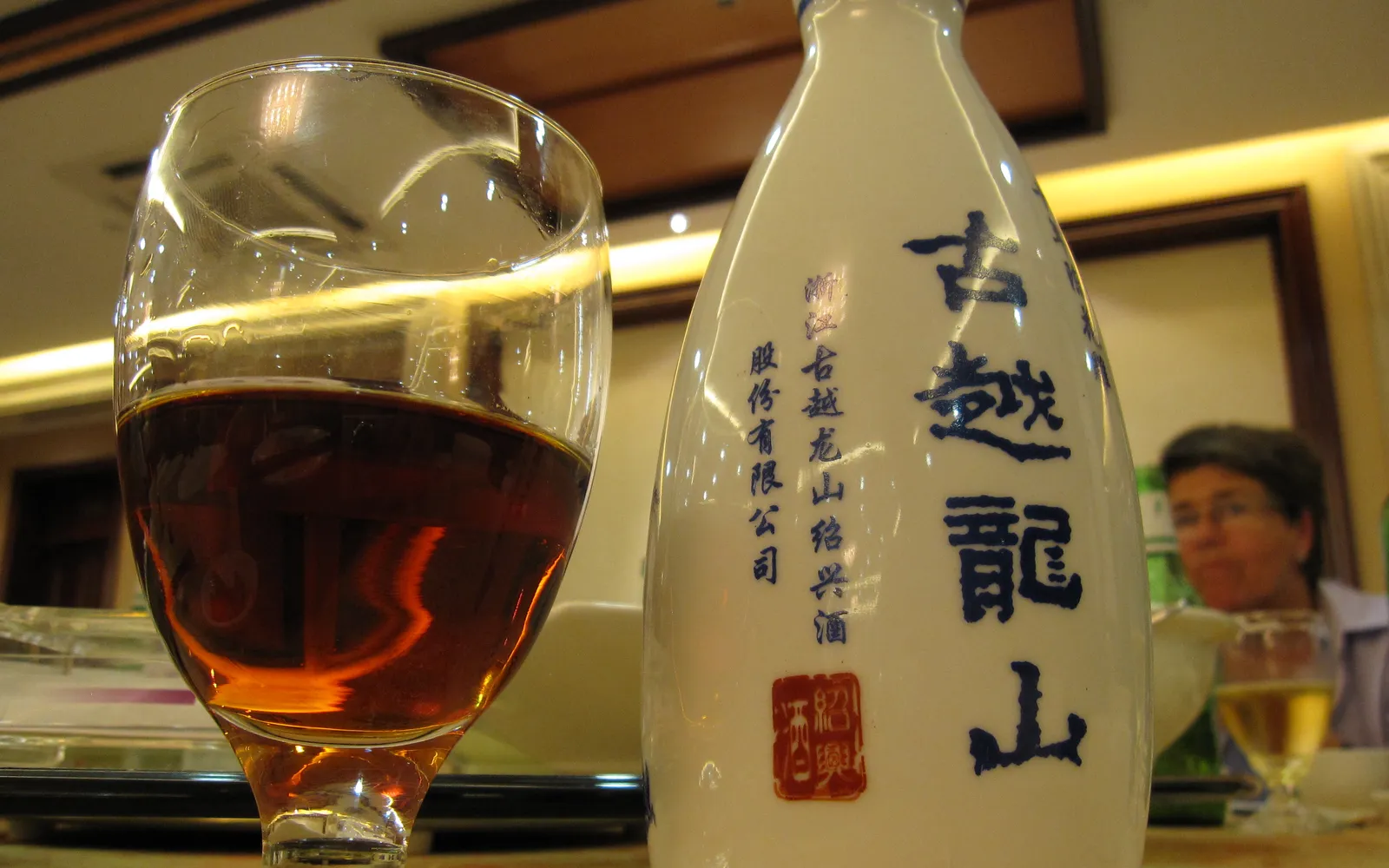 #6
#6 Tujia Glutinous Rice Wine (Nuomi Jiu) · Tujia Glutinous Rice Wine (Nuomi Jiu)
Tujia glutinous rice wine — nuomi jiu — is both a ceremonial and a welcoming drink for the Tujia people, brewed from sticky rice fermented with wild herbs according to traditional family recipes. The flavor is gently sweet with a faint sourness and goes down far easier than most Chinese spirits. Alcohol content is low. It's served warm in winter and cold in summer, and the Tujia bring it out at festivals, weddings, and whenever guests arrive. That hospitality culture makes trying a glass here feel like more than just a drink.
- Small bottles in ceramic clay vessels make excellent gifts and look the part
- Always taste before buying — quality varies considerably between producers
- Pair it with Tujia bacon or spicy dishes to temper the heat
Where to stay in Zhangjiajie for this trip
A well-located hotel means less commuting and more sightseeing. Here are real, top-rated stays in Zhangjiajie — compare Agoda · Booking · Trip.com in one click.
Zhangjiajie Huatian Hotel
Affiliate links — we may earn a commission at no extra cost to you. Details
Xiao Wu Ding Inn Zhangjiajie
Affiliate links — we may earn a commission at no extra cost to you. Details
Zhangjiajie Zhijue Art Guest House
Affiliate links — we may earn a commission at no extra cost to you. Details
Zhangjiajie MINI Inn
Affiliate links — we may earn a commission at no extra cost to you. Details
Tours, tickets & activities in Zhangjiajie
Day tours, attraction tickets and travel essentials for Zhangjiajie — book ahead on Klook with mobile e-tickets.
Affiliate links — we may earn a commission at no extra cost to you.
Before You Pack
Zhangjiajie food — sour, spicy, and smoky — can be intense if you're new to the Hunan style. If bold flavors are your thing, you'll love it here. The practical advice: eat at small Tujia restaurants outside the Scenic Area for lower prices and more authentic cooking.